• Research
  • Emissary
  • About
  • Experts
Carnegie Global logoCarnegie lettermark logo
DemocracyIran
  • Donate
{
  "authors": [
    "Karim Sadjadpour"
  ],
  "type": "testimony",
  "centerAffiliationAll": "dc",
  "centers": [
    "Carnegie Endowment for International Peace",
    "Malcolm H. Kerr Carnegie Middle East Center"
  ],
  "collections": [
    "U.S. Nuclear Policy"
  ],
  "englishNewsletterAll": "ctw",
  "nonEnglishNewsletterAll": "",
  "primaryCenter": "Malcolm H. Kerr Carnegie Middle East Center",
  "programAffiliation": "NPP",
  "programs": [
    "Nuclear Policy",
    "Middle East"
  ],
  "projects": [],
  "regions": [
    "North America",
    "United States",
    "Middle East",
    "Iran"
  ],
  "topics": [
    "Foreign Policy",
    "Nuclear Policy"
  ]
}
Source: Getty

Testimony
Malcolm H. Kerr Carnegie Middle East Center

Iran: Reality, Opinions, and Consequences

The United States must alter its democracy promotion strategy, which has been unconstructive and counterproductive, and make clear that it has no intention of undermining Iran's territorial integrity. A move away from democracy promotion, however, should not signal indifference to human rights abuses.

Link Copied
By Karim Sadjadpour
Published on Oct 30, 2007
Program mobile hero image

Program

Nuclear Policy

The Nuclear Policy Program aims to reduce the risk of nuclear war. Our experts diagnose acute risks stemming from technical and geopolitical developments, generate pragmatic solutions, and use our global network to advance risk-reduction policies. Our work covers deterrence, disarmament, arms control, nonproliferation, and nuclear energy.

Learn More
Program mobile hero image

Program

Middle East

The Middle East Program in Washington combines in-depth regional knowledge with incisive comparative analysis to provide deeply informed recommendations. With expertise in the Gulf, North Africa, Iran, and Israel/Palestine, we examine crosscutting themes of political, economic, and social change in both English and Arabic.

Learn More

Source: Testimony before the House Oversight Committee's National Security and Foreign Affairs Subcommittee

On October 30, 2007, Carnegie's Karim Sadjadpour testified before the Subcommittee on National Security and Foreign Affairs at a hearing on "Iran: Reality, Opinions, and Consequences.”  

Click on the PDF icon above to read Sadjadpour's written testimony.

video
Event Video and Podcast
To view this video, you will need Windows Media Player, or QuickTime.
Download Windows Media Player
Download QuickTime

Click on one of the options below to watch video or listen to audio of the hearing:
 

Windows Media
Windows Media - Video from full Testimony.
QuickTime
QuickTime - Video from the hearing.

mp3
Podcast - Download mp3 audio of full Testimony.


Sadjadpour explained the views of the Iranian people and the effect those views have on Iranian and U.S. foreign policy. He made the following points:

  • The discontent in Iran is deeply felt, widespread, and largely economic, but factors such as the Iraq war have tempered Iranian desire for abrupt change.
  • Tehran is not a microcosm of Iran.
  • Iranian President Mahmoud Ahmadinejad has failed to deliver on campaign promises, but his fate is uncertain.
  • The degree of popular support for the nuclear issue has been exaggerated.
  • The government’s enmity toward the U.S. and Israel doesn’t resonate on the Iranian street, but the U.S. has lost political capital among Iranians.
  • The Iranian public has little impact on the country’s foreign policy.

Outlining the implications for U.S. foreign policy he said:

  • In the current climate, U.S. democracy promotion efforts have been unconstructive and counterproductive.
  • Objective, professional, Persian-language news sources would be well-received in Iran.
  • A sudden upheaval or abrupt political change is unlikely to be for the better.
  • The United States should make it clear that it has no intention of undermining Iran’s territorial integrity.
  • Altering democracy promotion efforts does not mean indifference to human rights abuses.

About the Author

Karim Sadjadpour

Senior Fellow, Middle East Program

Karim Sadjadpour is a senior fellow at the Carnegie Endowment for International Peace, where he focuses on Iran and U.S. foreign policy toward the Middle East.

    Recent Work

  • Q&A
    What’s Keeping the Iranian Regime in Power—for Now

      Aaron David Miller, Karim Sadjadpour, Robin Wright
  • Q&A
    How Washington and Tehran Are Assessing Their Next Steps

      Aaron David Miller, David Petraeus, Karim Sadjadpour

Karim Sadjadpour
Senior Fellow, Middle East Program
Karim Sadjadpour
Foreign PolicyNuclear PolicyNorth AmericaUnited StatesMiddle EastIran

Carnegie does not take institutional positions on public policy issues; the views represented herein are those of the author(s) and do not necessarily reflect the views of Carnegie, its staff, or its trustees.
More Work from Carnegie Endowment for International Peace

  • Commentary
    Carnegie Politika
    What’s Having More Impact on Russian Oil Export Revenues: Ukrainian Strikes or Rising Prices?

    Although Ukrainian strikes have led to a noticeable decline in the physical volume of Russian oil exports, the rise in prices has more than made up for it.

      • Sergey Vakulenko

      Sergey Vakulenko

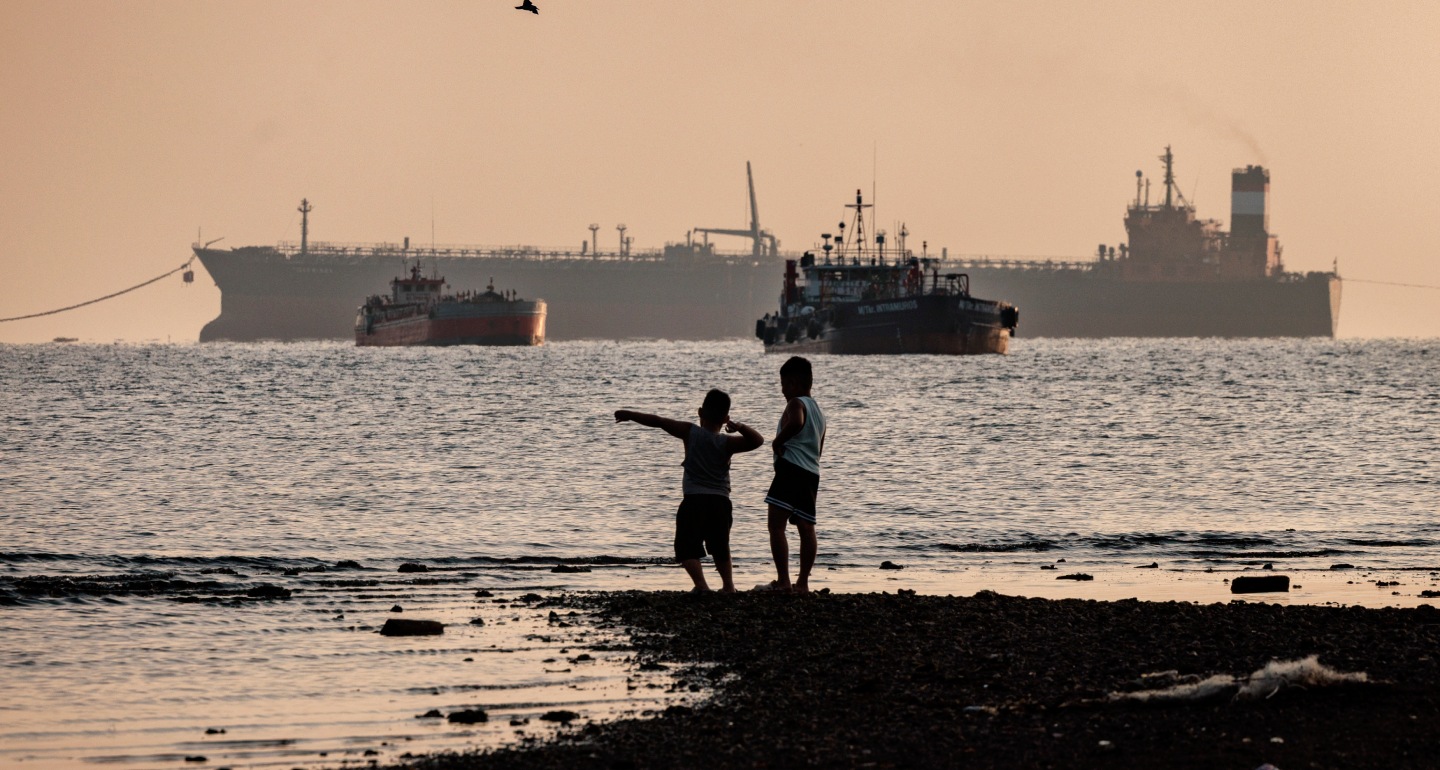
  • Shipping port at dawn from above
    Commentary
    Emissary
    The U.S. Export-Import Bank Was Built for a Different Era. Here's How to Fix It.

    Five problems—and solutions—to make it actually work as a tool of great power competition.
      • Afren Akhter

      Afreen Akhter

  • Commentary
    Carnegie Politika
    Russia Is Meddling for Meddling’s Sake in the Middle East

    The Russian leadership wants to avoid a dangerous precedent in which it is squeezed out of Iran by the United States and Israel—and left powerless to respond in any meaningful way.

      Nikita Smagin

  • Man speaking into two mics
    Commentary
    Emissary
    Three Scenarios for the Gulf States After the Iran War

    One is hopeful. One is realistic. One is cautionary.

      • Andrew Leber

      Andrew Leber, Sam Worby

  • Commentary
    Strategic Europe
    The Fog of AI War

    In Ukraine, Gaza, and Iran, AI warfare has come to dominate, with barely any oversight or accountability. Europe must lead the charge on the responsible use of new military technologies.

      Raluca Csernatoni

Get more news and analysis from
Carnegie Endowment for International Peace
Carnegie global logo, stacked
1779 Massachusetts Avenue NWWashington, DC, 20036-2103Phone: 202 483 7600Fax: 202 483 1840
  • Research
  • Emissary
  • About
  • Experts
  • Donate
  • Programs
  • Events
  • Blogs
  • Podcasts
  • Contact
  • Annual Reports
  • Careers
  • Privacy
  • For Media
  • Government Resources
Get more news and analysis from
Carnegie Endowment for International Peace
© 2026 Carnegie Endowment for International Peace. All rights reserved.