

Article
Deborah Gordon, Stephen D. Ziman
{
  "authors": [
    "Deborah Gordon"
  ],
  "type": "legacyinthemedia",
  "centerAffiliationAll": "dc",
  "centers": [
    "Carnegie Endowment for International Peace"
  ],
  "collections": [],
  "englishNewsletterAll": "ctw",
  "nonEnglishNewsletterAll": "",
  "primaryCenter": "Carnegie Endowment for International Peace",
  "programAffiliation": "SCP",
  "programs": [
    "Sustainability, Climate, and Geopolitics"
  ],
  "projects": [
    "Carnegie Oil Initiative"
  ],
  "regions": [
    "North America",
    "United States"
  ],
  "topics": [
    "Climate Change"
  ]
}
Source: Getty
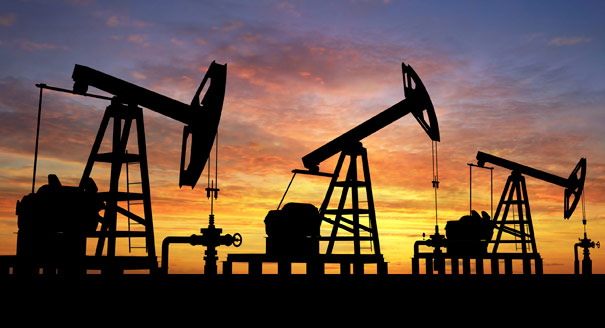
The American public does not know enough about changing oil resources in order to make reasoned decisions. Oil data transparency is needed for economic, safety, security, and climate reasons.
Source: Hill
In a recent piece on the Congress Blog, Sen. Bill Cassidy (R-La.) made a strong case for considering oil’s climate impacts along with its geopolitical implications when devising public policy on oil. He writes: “America leads the world in both emissions reductions and production of oil and natural gas due to industry investment and advanced technology.” Evaluating energy opportunities in light of pressing climate realities, and put through the lens of American innovation, will serve to clarify Congressional action.
But what do the oil data currently tell—or not tell—us? Cassidy dug into the numbers, citing Carnegie’s Oil-Climate Index (OCI) as having determined that “Iran emits almost three times the GHG per barrel during production of crude oil than that of U.S. producers in the Gulf of Mexico.” This highlights an important fact about the wide differences between the carbon intensity of different oils. In the 5 percent of current global production captured in Phase 1 of the OCI, there is a demonstrated 80 percent difference in total GHG emissions between the lowest- and highest-emitting oils.However, the thirty oils modeled in Phase 1 of the OCI did not include Iranian and Louisiana oils due to a lack of available data. As such, we weren’t able to estimate barrel forward total GHG emissions for either of these oils. In Phase 2 to be published in 2016, Carnegie plans to model a limited set of Louisiana and Iranian oils for which there is limited data available.
This discrepancy demonstrates a broader point. The reality is that Congress—and the American public—simply do not know enough about changing oil resources in order to make reasoned decisions. Twenty-first century oil data transparency is a burning need for a host of reasons—economic, safety, security, and climate. Congress should establish and fund an up-to-date, consistent, verifiable, open-source oil data reporting regime. The U.S. Department of Energy is currently unable to fully collect data due to budgetary rules. This creates blind spots with unintended consequences.
It is also important that policymakers know that the GHG emissions to produce a barrel of oil only tell part of the story. Production emissions only account for part of their total climate impacts—and production emissions vary significantly from oil to oil. For those oils modeled by the OCI to date, production emissions account for an average 15 percent of the total GHG emissions footprint. And their portion of the total ranges significantly from a scant 5 percent to upwards of 33 percent. The bottom line is that comparing oils based on their total GHG emissions results in a more honest accounting from a climate perspective.
Knowledge is power. Whether decision-making involves lifting the U.S. crude oil export ban, America’s oil swap with Mexico, establishing new safety rules for crude transport by rail, or designing a smart carbon tax, robust public data collection is paramount. This data will increase the efficiency of oil markets. It will inform decisions that could influence security and ultimately address funding terrorism. It will improve safety in oil transport and operations. It will facilitate climate planning. And it will spur oil innovations. All good reasons to act.

Former Director and Senior Fellow, Energy and Climate Program
Gordon was director of Carnegie’s Energy and Climate Program, where her research focuses on oil and climate change issues in North America and globally.
Recent Work
Deborah Gordon, Stephen D. Ziman
Deborah Gordon, Smriti Kumble, David Livingston
Carnegie does not take institutional positions on public policy issues; the views represented herein are those of the author(s) and do not necessarily reflect the views of Carnegie, its staff, or its trustees.

AI capabilities are moving fast. Most institutions—including governments—can’t keep up.


Anton Leicht, Scott Singer

The Bureau of Industry and Security needs to adjust its focus and practices to maintain its position as the U.S. government’s primary champion of international technological competition.

Geoffrey Irving
They face an uphill climb, but they could draw on a strategy that other diplomats have used in the past.


Shana Tabak, Alejandro Martin Rodriguez

European Commission President Ursula von der Leyen is about to give her annual address on the state of the EU. Here’s what she won’t—but should—say.

Rym Momtaz
Understanding the climatic pain points is necessary for policymakers hoping to minimize the war’s negative environmental consequences.


Alejandro Martin Rodriguez, Joy Arkeh, Sarah Yerkes