

Commentary
Tatiana Stanovaya
{
  "authors": [
    "Tatiana Stanovaya"
  ],
  "type": "commentary",
  "blog": "Carnegie Politika",
  "centerAffiliationAll": "dc",
  "centers": [
    "Carnegie Endowment for International Peace",
    "Carnegie Russia Eurasia Center"
  ],
  "collections": [],
  "englishNewsletterAll": "ctw",
  "nonEnglishNewsletterAll": "",
  "primaryCenter": "Carnegie Russia Eurasia Center",
  "programAffiliation": "russia",
  "programs": [
    "Russia and Eurasia"
  ],
  "projects": [],
  "regions": [
    "Russia",
    "Caucasus"
  ],
  "topics": [
    "Political Reform",
    "Economy",
    "Domestic Politics"
  ]
}
Source: Getty
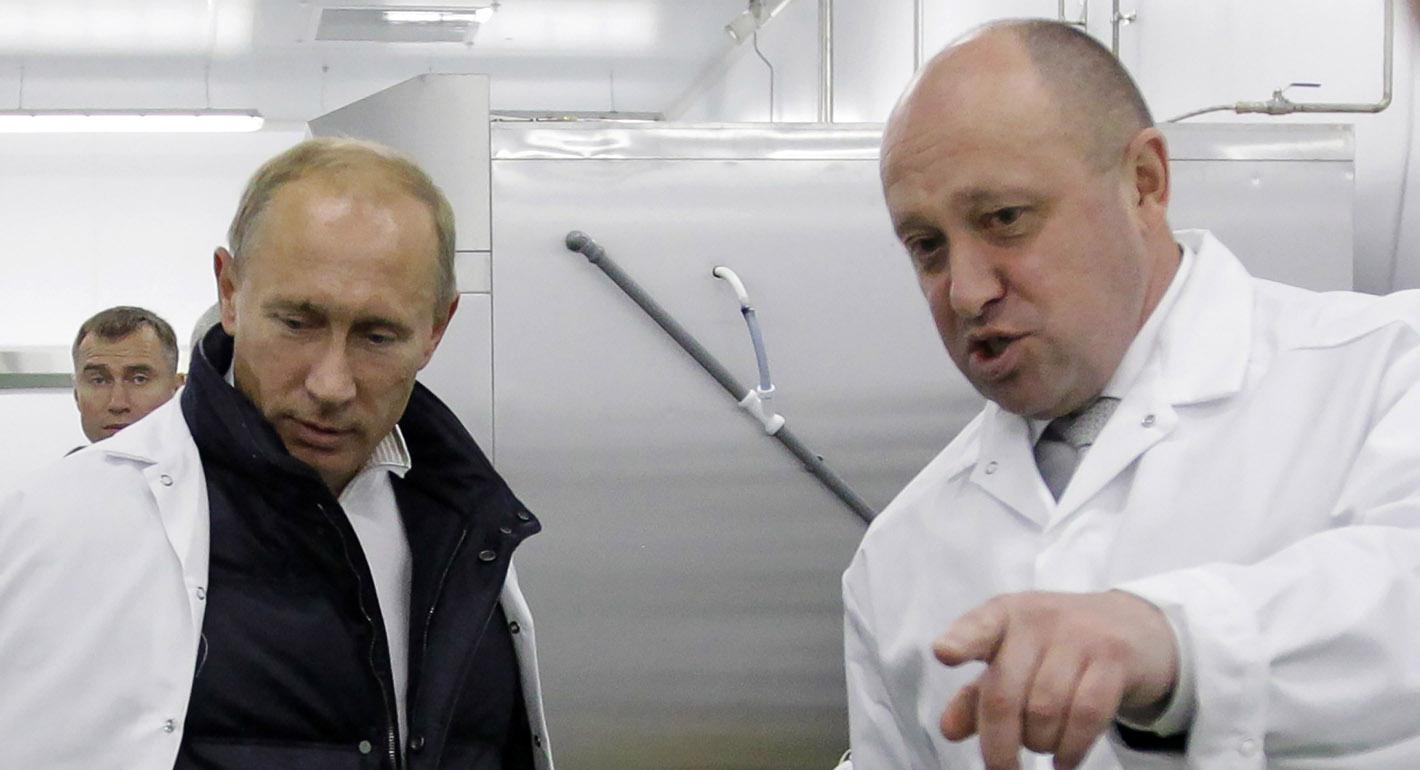
The Wagner mercenary boss Yevgeny Prigozhin is visibly transforming into a full-fledged politician with his own views, which are nothing short of revolutionary.
Russia’s invasion of Ukraine has brought unprecedented infamy to Yevgeny Prigozhin, head of the Wagner mercenary group, both at home and abroad. He is both praised and demonized, while debate rages over how close he really is to President Vladimir Putin, what privileges he enjoys, and even whether he harbors presidential ambitions. Any success for Prigozhin is seen as proof of his might and glittering future, while every failure is seen as a sign of his imminent downfall. For now, neither version is entirely realistic.
Despite his enormous newfound notoriety, Prigozhin is still only acting as a private individual. His relationship with the state is informal, and therefore fragile, and could end without warning. Prigozhin has never been close enough to Putin to be trusted with anything on a state level. He didn’t have the chance to impress the president at work or as a friend as others did, such as those who worked with Putin in the early years of his career.
Instead, Prigozhin’s unique chance arose following the annexation of Crimea. The conflicts in both the Donbas and then Syria, plus Russia’s standoff with the West, meant that a market emerged for “gray” geopolitical tactics that unwieldy official institutions would struggle to deliver. Prigozhin started using informal tools of influence—mercenaries and media mechanisms such as troll factories—that were new to Russia and enabled it to operate out of sight and without being held accountable.
Prigozhin had hit the mother lode: if the state was unable to effectively solve certain tasks (or simply did not want to be seen doing so), these quasi-state tools could fill the gap. Putin liked this approach, which is also in demand in the war against Ukraine.
Still, the businessman’s position remains informal. Putin has agreed to outsource certain state functions, but has not legitimized Prigozhin himself. The president has never seen the shady entrepreneur as a replacement for official institutions such as the army or security services, nor has he ever tried to use Prigozhin as a counterbalance to those institutions, for that would be completely at odds with Putin’s concept of complete and coordinated power.
Prigozhin shot to success not because Putin backed him in an attempt to stop any of the generals getting too high and mighty: there was no sign of that happening. Quite simply, the situation at the front was disastrous, and needed improving by any means possible. In Putin’s worldview, resources like private military companies should work to strengthen the position of the state, not weaken it.
Prigozhin doesn’t just lack formal status: he doesn’t have direct access to Putin on his own terms either, largely relying on friends or close associates of the president and senior officials to act as intermediaries. For a long time, it was believed that the influential Kovalchuk brothers were Prigozhin’s informal handlers and had helped the businessman to forge ties to the presidential administration.
Thanks to them, Prigozhin was able to get information about his initiatives to the president, who, if he liked the idea, would then informally order the corresponding organs to cooperate, which enabled the businessman to establish ties at a lower level—while making enemies along the way.
In Syria, Wagner effectively operated as a contractor for the General Staff, which connected Prigozhin to high-ranking officers of the GRU, Russia’s military intelligence agency—and led to the group’s first conflicts with the Defense Ministry. Meanwhile, Wagner’s presence in various African countries helped the company to establish special relationships with Russian ambassadors there, which annoyed the Foreign Ministry.
More recently, it is Prigozhin’s unorthodox recruitment methods—trawling Russian prisons for new mercenaries—that have ruffled feathers. His recruitment drive has infuriated the Federal Penitentiary Service (FSIN), Justice Ministry, Prosecutor General’s Office, and Federal Security Service (FSB), which worked to have these men locked up, only for them now to be potentially released back into society—if they survive the war.
Both Prigozhin’s horizontal connections (the GRU, FSIN, and governors) and his vertical ties (the Kovalchuks, and presidential administration head Anton Vayno) mean that the businessman is entirely dependent on others, and that his opportunities are limited. There is no guarantee of universal official assistance, not to mention any financing.
When Prigozhin was granted a certain degree of autonomy to operate in the war against Ukraine, his simmering conflict with the military leadership, in the form of Chief of Staff Valery Gerasimov and Defense Minister Sergei Shoigu, promptly intensified. After several months of a humiliating campaign launched by Prigozhin against them with the help of his media assets, the two defense officials managed to convince the president that Wagner’s independence was a threat to the army.
In response, Putin put Gerasimov in charge of the whole “special operation,” showing just how quickly he can redress a situation and ignoring the opinion of both Prigozhin and his adoring military bloggers, along with an entire camp of pro-war activists who openly despise Gerasimov and Shoigu.
The businessman’s attacks on officials, parliamentary deputies, and political parties have not won him any favor within the elite, which considers Prigozhin’s autonomy, ambition, and rhetoric nothing short of a threat to the state. He may have carte blanche from Putin within his area of responsibility (Wagner’s activities, troll factories, certain minor media) but outside of it, he is politically helpless.
Prigozhin’s other endeavors are notably less successful: his futile war against St. Petersburg Governor Alexander Beglov, his empty threats to get YouTube blocked in Russia, and his frequent legal defeats. He doesn’t have his own political instruments, and the openly anti-mainstream political ideas he promotes are radical and manifestly unrealistic. Even his ties to the Kovalchuks are growing looser: their agendas are gradually diverging, and it’s increasingly difficult for the brothers to put in a good word for their protégé-bulldozer.
Prigozhin’s long-standing relationship with the presidential administration is also beginning to crack. The domestic policy overseers don’t like his political demagogy, his attacks on official institutions, or his attempts to troll Putin’s staff by threatening to form a political party, which would be a headache for everyone in the Kremlin.
In other words, Prigozhin has no shortage of enemies. Now the security services, for which Prigozhin’s private army packed with criminals is a major bugbear, have joined the attacks against him, as evidenced by the sharp uptick in criticism of the businessman and Wagner on Telegram channels.
Finally, Prigozhin’s alleged popularity among ordinary Russians is greatly exaggerated. In polls examining people’s trust in politicians, he is hardly ever mentioned: in a Levada Center survey at the end of last year, just three people out of 1,600 polled named him.
Still, none of these difficulties signify Prigozhin’s imminent downfall. He still has the ability to get limited information to Putin, who considers him a true patriot fighting for the future of the motherland: not always elegantly, but often more effectively than his official rivals.
The intensity and existential nature of the war against Ukraine, combined with Russia’s lack of victories, has noticeably increased Prigozhin’s political weight. But that in no way makes him particularly close to Putin.
If anything, the opposite is true: every day, the gap is growing between the role that Putin has assigned to Wagner and the place that Prigozhin himself believes he deserves. For the president, a private military company is a convenient asset for any power with geopolitical ambitions, but it should operate exclusively in the state’s interests and avoid the limelight. It should not undertake its own initiatives, and it certainly should not have a political agenda.
Until recently, that’s how Prigozhin operated. But now, he hasn’t just become a public figure; he is visibly transforming into a full-fledged politician with his own views, which are nothing short of revolutionary.
For now, Prigozhin is not prepared to challenge Putin. But—and it’s an important “but”—it’s hard to remain sane and level-headed when you’ve lost a large part of your personal army to the bloody meat grinder of war.
As long as Putin is relatively strong and capable of maintaining the balance between various groups of influence, Prigozhin is not dangerous. But the slightest change could prompt Prigozhin to challenge the authorities: perhaps not Putin himself, at first. War makes monsters of men, and their recklessness and desperation can become a challenge to the state if it shows even the slightest sign of weakness.

Senior Fellow, Carnegie Russia Eurasia Center
Tatiana Stanovaya is a senior fellow at the Carnegie Russia Eurasia Center.
Recent Work
Tatiana Stanovaya
Tatiana Stanovaya
Carnegie does not take institutional positions on public policy issues; the views represented herein are those of the author(s) and do not necessarily reflect the views of Carnegie, its staff, or its trustees.

Putin’s conservative staffing policies and search for ever greater control have cemented parliament’s transformation into a bureaucratic appendage of the executive branch.

Andrey Pertsev

Russia’s AI-driven propaganda campaigns operate in a fragmented, chaotic, and often illogical manner. That’s not necessarily a problem for the Kremlin, though: It’s much easier to mimic genuine public debate that way.

Ilya Klishin

Russian strikes are weakening the economy sustaining Ukraine’s war effort. Closing the growing funding gap will require more European support and politically contentious reforms in Kyiv.

Balázs Jarábik

Ex-president Gurbanguly Berdimuhamedov remains interested in politics, but his son Serdar, Turkmenistan’s current president, is becoming increasingly independent and willing to break with his father’s legacy. If their covert rivalry goes too far, both risk losing power.

Galiya Ibragimova

Despite a new textbook, an influx of Russian teachers and managers, and an end to the teaching of Ukrainian, the Kremlin is unlikely to have “reprogrammed” locals.

Konstantin Skorkin