• Research
  • Emissary
  • About
  • Experts
Carnegie Global logoCarnegie lettermark logo
DemocracyIran
  • Donate
{
  "authors": [
    "Michele Dunne",
    "Andrew Miller"
  ],
  "type": "commentary",
  "centerAffiliationAll": "dc",
  "centers": [
    "Carnegie Endowment for International Peace"
  ],
  "collections": [],
  "englishNewsletterAll": "menaTransitions",
  "nonEnglishNewsletterAll": "",
  "primaryCenter": "Carnegie Endowment for International Peace",
  "programAffiliation": "MEP",
  "programs": [
    "Middle East"
  ],
  "projects": [],
  "regions": [
    "North Africa",
    "Egypt"
  ],
  "topics": [
    "Political Reform",
    "Foreign Policy"
  ]
}
Source: Getty

Commentary

Nine Reasons Why Declaring the Muslim Brotherhood a Terrorist Organization Would Be a Mistake

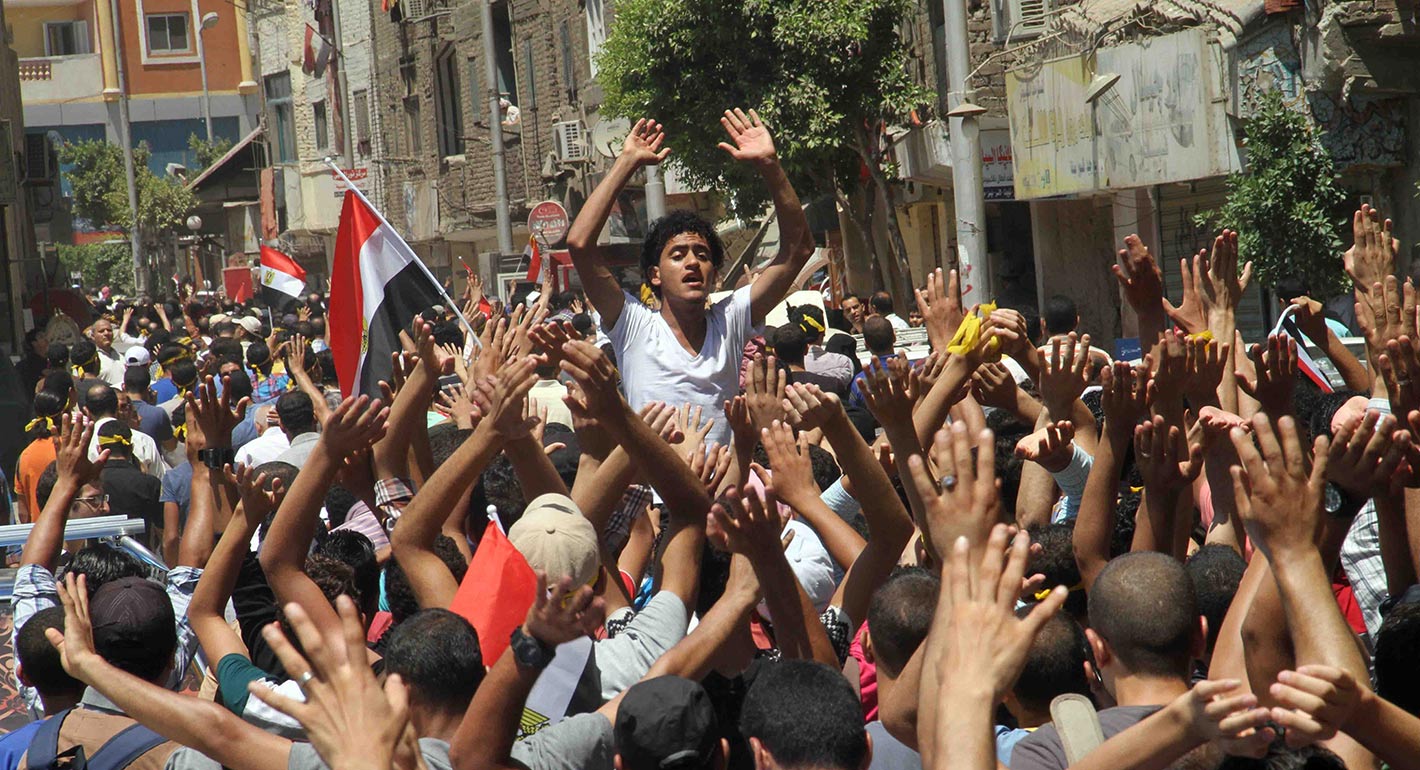
U.S. President Donald Trump wishes to designate the Muslim Brotherhood, a collection of loosely affiliated Islamist groups, as a terrorist organization. Here is why that would be deeply unwise.

Link Copied
By Michele Dunne and Andrew Miller
Published on May 3, 2019
Program mobile hero image

Program

Middle East

The Middle East Program in Washington combines in-depth regional knowledge with incisive comparative analysis to provide deeply informed recommendations. With expertise in the Gulf, North Africa, Iran, and Israel/Palestine, we examine crosscutting themes of political, economic, and social change in both English and Arabic.

Learn More

There are legal, diplomatic, pragmatic, and civil rights reasons why such a designation would undermine efforts to keep Americans safe from terrorism.

  1. The Muslim Brotherhood (MB) does not fit the legal definition of a foreign terrorist organization. There is no credible evidence that, as an organization, it is using violence to pursue political aims, and it has not deliberately targeted Americans.
  2. The few offshoots of the Muslim Brotherhood that have become violent—Hamas, Hassm, Liwa al-Thawra—have already been designated as terrorist organizations. Designating the Muslim Brotherhood more broadly would not give the United States added tools to go after these groups.
  3. Sweepingly targeting the Muslim Brotherhood would create a cascade of diplomatic problems because political parties with Brotherhood roots serve in parliaments and even governments in many countries. But even a narrower designation of a single Muslim Brotherhood chapter, such as the Egyptian Muslim Brotherhood, would still do just as much damage to U.S. interests for all the reasons that follow.
  4. U.S. law does not permit designation based only on ideology rather than violent actions. To do so would politicize the process.
  5. By joining countries (for example, Egypt, Saudi Arabia, and the U.A.E.) that designate groups as terrorist for political reasons, the United States would tarnish the international legitimacy of its other designations and erode the credibility of its counterterrorism efforts.
  6. Anti-U.S. sentiment among Muslims worldwide would rise. Most Muslims around the world would see the designation as the latest of a series of anti-Muslim steps by the Trump administration, such as the travel ban and the changed U.S. policy on Jerusalem. The U.S. president already stands accused of stoking Islamophobia internationally.
  7. The self-proclaimed Islamic State and al-Qaeda would celebrate such a designation as vindication of their argument that non-violent political activity is futile. They would use the designation in their efforts to recruit desperate and isolated Islamist youth, who once believed in peaceful politics.
  8. Designation could bring devastating consequences for Muslims in the United States, who currently make up less than 2 percent of the population. Anyone suspected of ties to the organization could risk having their assets frozen, or could be deported if they are not citizens. Islamophobic groups—with contacts inside the Trump administration—would press the FBI to investigate every U.S. mosque or Muslim charity for possible ties to Muslim Brotherhood-supported hospitals, clinics, and religious organizations throughout the world.
  9. Designating the Muslim Brotherhood would inevitably divert U.S. counterterrorism resources away from the real terrorists that are actually seeking to kill Americans, such as branches of the Islamic State and al-Qaeda.

In the end, designating the Muslim Brotherhood as a foreign terrorist organization would be a counterproductive political stunt that would make all Americans less safe.

About the Authors

Michele Dunne

Former Nonresident Scholar, Middle East Program

Michele Dunne was a nonresident scholar in Carnegie’s Middle East Program, where her research focused on political and economic change in Arab countries, particularly Egypt, as well as U.S. policy in the Middle East.

Andrew Miller

Former Nonresident Scholar, Middle East Program

Andrew Miller was a nonresident scholar in Carnegie’s Middle East Program.

Authors

Michele Dunne
Former Nonresident Scholar, Middle East Program
Michele Dunne
Andrew Miller
Former Nonresident Scholar, Middle East Program
Political ReformForeign PolicyNorth AfricaEgypt

Carnegie does not take institutional positions on public policy issues; the views represented herein are those of the author(s) and do not necessarily reflect the views of Carnegie, its staff, or its trustees.
More Work from Carnegie Endowment for International Peace

  • Commentary
    Carnegie Politika
    What’s Behind South Korea’s Rift With Ukraine and Turn Toward Russia?

    There are limits as to how far the shift in South Korea’s foreign policy will go.

      James D.J. Brown

  • Commentary
    A New Age of Nuclear Policy: Perspectives from Gen Z

    As the nuclear order rapidly evolves, what can Europeans and other key players do to strengthen deterrence and reduce risks?

      • Jamie Kwong

      Jamie Kwong, ed.

  • Commentary
    Strategic Europe
    Taking the Pulse: Can Europe Fund Ukraine Without Russian Assets?

    A sizeable funding shortfall looks increasingly likely to hit Ukraine in 2027. Can the Europeans, with their strained budgets and economies, come up with the cash without seizing frozen Russian assets?

      • Rym Momtaz

      Rym Momtaz, ed.

  • Commentary
    Carnegie Politika
    How Realistic Is a U.S.-Brokered Gas Deal Between Russia and the EU?

    A gas deal would create palpable economic value, but it wouldn’t fundamentally change the position of either Russia or the EU.

      • Sergey Vakulenko

      Sergey Vakulenko

  • Commentary
    Strategic Europe
    No, A Democratic Congress Won’t Save Europe

    A blue wave has swept over the U.S. midterms, with Democrats regaining control of both houses of Congress. But Europeans hoping for a return to business as usual should think again.

      • Rym Momtaz

      Rym Momtaz

Get more news and analysis from
Carnegie This Week
Carnegie global logo, stacked
1779 Massachusetts Avenue NWWashington, DC, 20036-2103Phone: 202 483 7600
  • Research
  • Emissary
  • About
  • Experts
  • Donate
  • Programs
  • Events
  • Blogs
  • Podcasts
  • Contact
  • Annual Reports
  • Careers
  • Privacy
  • For Media
  • Government Resources
Get more news and analysis from
Carnegie This Week
© 2026 Carnegie Endowment for International Peace. All rights reserved.