• Research
  • Emissary
  • About
  • Experts
Carnegie Global logoCarnegie lettermark logo
DemocracyIran
  • Donate
{
  "authors": [
    "Se Young Jang"
  ],
  "type": "other",
  "centerAffiliationAll": "dc",
  "centers": [
    "Carnegie Endowment for International Peace"
  ],
  "collections": [
    "Korean Peninsula"
  ],
  "englishNewsletterAll": "ctw",
  "nonEnglishNewsletterAll": "",
  "primaryCenter": "Carnegie Endowment for International Peace",
  "programAffiliation": "NPP",
  "programs": [
    "Nuclear Policy"
  ],
  "projects": [],
  "regions": [
    "North America",
    "East Asia",
    "North Korea"
  ],
  "topics": [
    "Democracy",
    "Foreign Policy",
    "Nuclear Policy",
    "Global Governance"
  ]
}

Source: Getty

Other

Rapid Round-Up: Trump-Kim Summit

Though the joint statement from the Trump-Kim summit remains vague, the meeting could be an effective confidence-building measure in steps toward implementing a denuclearization agreement.

Link Copied
By Se Young Jang
Published on Jun 12, 2018
Program mobile hero image

Program

Nuclear Policy

The Nuclear Policy Program aims to reduce the risk of nuclear war. Our experts diagnose acute risks stemming from technical and geopolitical developments, generate pragmatic solutions, and use our global network to advance risk-reduction policies. Our work covers deterrence, disarmament, arms control, nonproliferation, and nuclear energy.

Learn More

Source: Asia and the Pacific Policy Society

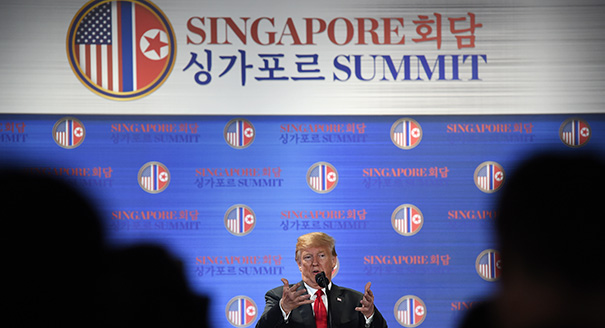
Reality is sometimes beyond our imagination. Last year when Donald Trump and Kim Jong-un were involved in a war of words sharply criticising each other, we never imagined that the two leaders would ever be able to meet face-to-face and talk about opening a new chapter for the two long-term adversaries.

During the 12 June summit, the first ever between a sitting US president and a North Korean leader, Trump and Kim put forward their first steps on dismantling the 70-year old Cold War regime in Korea since the Peninsula was divided in 1948. This summit, accompanied by the Panmunjom Declaration in April between the two Koreas, signals a great geopolitical shift in Northeast Asia.

On a practical level, the joint statement of the Trump-Kim summit remains somewhat vague because it does not contain concrete arrangements or a roadmap on denuclearization and security guarantees. However, such a meeting between the top leaders from Washington and Pyongyang can be one of the most effective confidence-building measures which would allow the implementation of the agreement. Trump also appears to accept the necessity of a phased approach toward denuclearisation, instead of demanding Pyongyang to immediately hand over or dismantle all their nuclear weapons and intercontinental ballistic missiles. This is at least a positive signal for the time being.

Both Trump and Kim need to make this deal a success for domestic reasons. To succeed, more concrete work needs to be done at the working level, and South Korea and other regional powers should be appropriately informed and consulted. In this sense, the coming weeks or months will be critical to see how sincere and ready the two countries are to bring peace to the Korean Peninsula.

This article was originally published in Asia and the Pacify Policy Society.

About the Author

Se Young Jang

Former Nonresident Scholar, Nuclear Policy Program

Se Young Jang was a nonresident scholar in the Nuclear Policy Program at the Carnegie Endowment for International Peace.

Se Young Jang
Former Nonresident Scholar, Nuclear Policy Program
DemocracyForeign PolicyNuclear PolicyGlobal GovernanceNorth AmericaEast AsiaNorth Korea

Carnegie does not take institutional positions on public policy issues; the views represented herein are those of the author(s) and do not necessarily reflect the views of Carnegie, its staff, or its trustees.

More Work from Carnegie Endowment for International Peace

  • Commentary
    Carnegie Politika
    What Does Nuclear Proliferation in East Asia Mean for Russia?

    Troubled by the growing salience of nuclear debates in East Asia, Moscow has responded in its usual way: with condemnation and threats. But by exacerbating insecurity, Russia is forcing South Korea and Japan to consider radical security options.

      James D.J. Brown

  • Vietnam's Top Leader To Lam meets with young representatives from China and Vietnam participating in the "Red Study Tours" at the Great Hall of the People on April 15, 2026 in Beijing, China. T
    Commentary
    Why Vietnam Is Swinging in China’s Direction

    Hanoi and Beijing have long treated each other as distant cousins rather than comrades in arms. That might be changing as both sides draw closer to hedge against uncertainty and America’s erratic behavior.

      • Nguyen-khac-giang

      Nguyễn Khắc Giang

  • Smoke rising over a  bridge
    Commentary
    Emissary
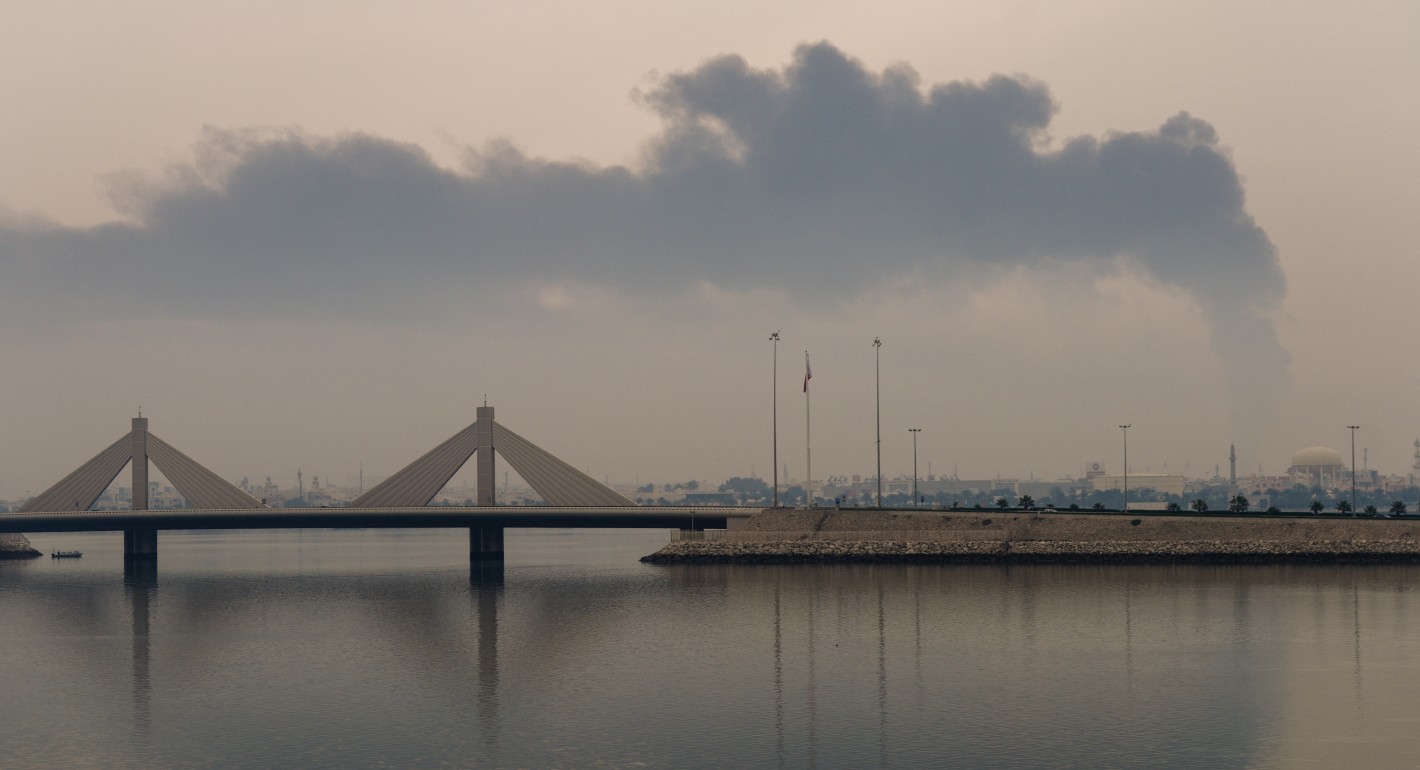
    The Iran War Is a Stress Test for Gulf States

    The conflict is exposing the flaws and fissures of their domestic governance and social cohesion.

      Frederic Wehrey, Charles H. Johnson

  • Commentary
    Strategic Europe
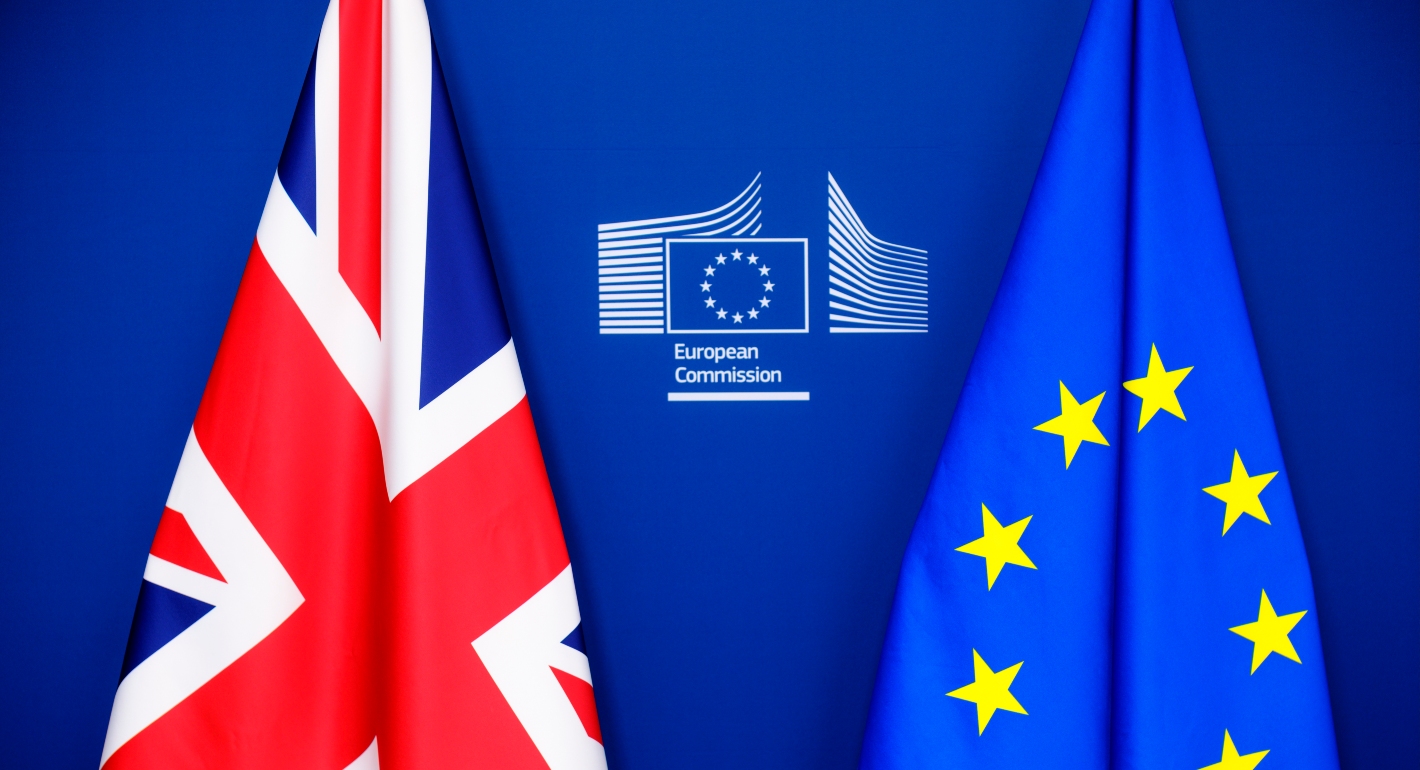
    Taking the Pulse: Is the EU Ready for Rapprochement With the UK?

    Closer EU-UK ties could help address urgent European concerns. But is the EU ready for rapprochement with the United Kingdom?

      • Rym Momtaz

      Rym Momtaz, ed.

  • Duterte stands with his fist raised and a crowd of people stand behind him
    Paper
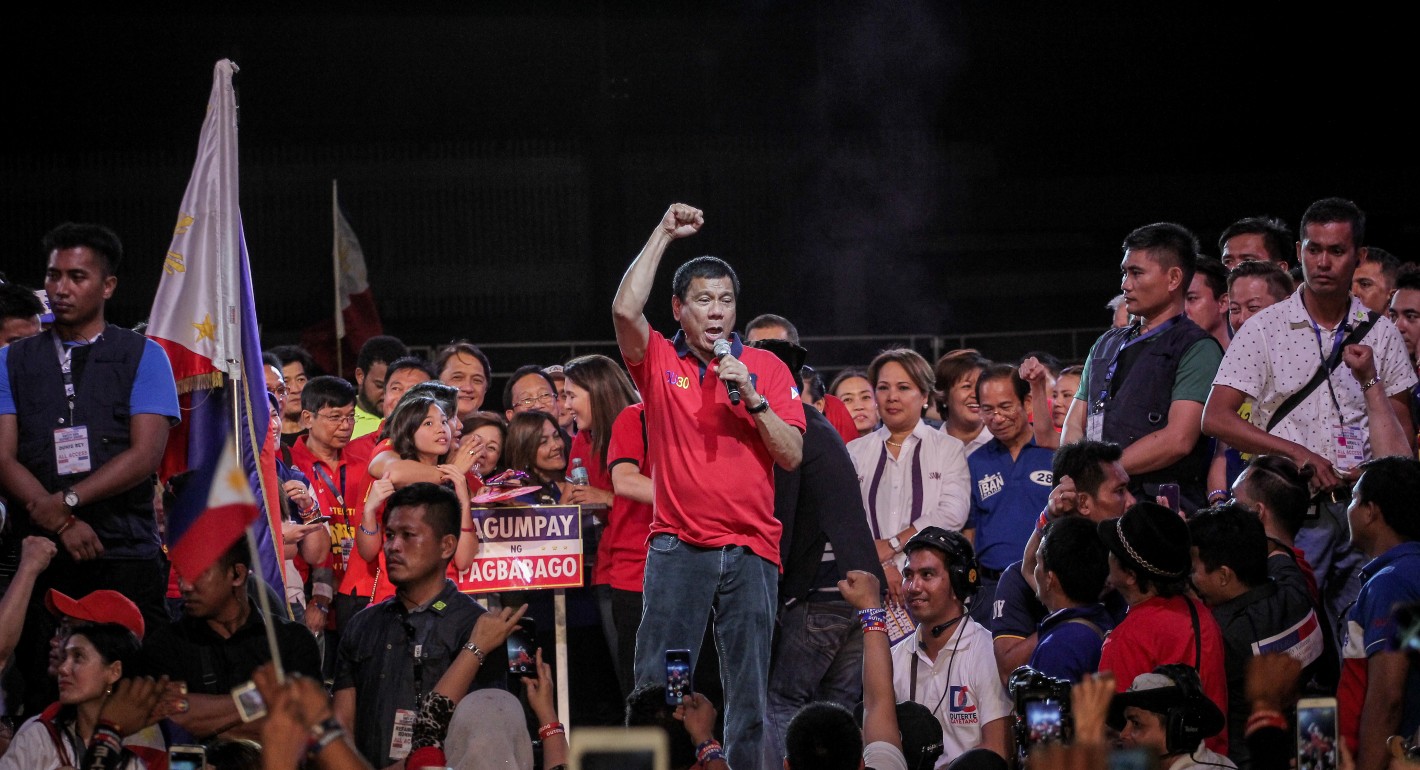
    Duterte’s Populist Foreign Policy as Illiberal Defiance: Consequences and Prospects

    In the Philippines, Duterte-era discourse emphasizing sovereignty, anti-Western skepticism, and strongman diplomacy mirrors tenets of populist foreign policy around the world.

      Aries A. Arugay

Get more news and analysis from
Carnegie Endowment for International Peace
Carnegie global logo, stacked
1779 Massachusetts Avenue NWWashington, DC, 20036-2103Phone: 202 483 7600
  • Research
  • Emissary
  • About
  • Experts
  • Donate
  • Programs
  • Events
  • Blogs
  • Podcasts
  • Contact
  • Annual Reports
  • Careers
  • Privacy
  • For Media
  • Government Resources
Get more news and analysis from
Carnegie Endowment for International Peace
© 2026 Carnegie Endowment for International Peace. All rights reserved.