• Research
  • Emissary
  • About
  • Experts
Carnegie Global logoCarnegie lettermark logo
DemocracyIran
  • Donate
{
  "authors": [
    "Pierre Goldschmidt"
  ],
  "type": "legacyinthemedia",
  "centerAffiliationAll": "dc",
  "centers": [
    "Carnegie Endowment for International Peace"
  ],
  "collections": [],
  "englishNewsletterAll": "ctw",
  "nonEnglishNewsletterAll": "",
  "primaryCenter": "Carnegie Endowment for International Peace",
  "programAffiliation": "NPP",
  "programs": [
    "Nuclear Policy"
  ],
  "projects": [],
  "regions": [
    "North America",
    "South America"
  ],
  "topics": [
    "Nuclear Policy",
    "Nuclear Energy"
  ]
}
Source: Getty

In The Media

The Future of the NPT: Should It be Enhanced, Changed or Replaced?

Brazil's refusal to implement the Additional Protocol to its safeguards agreement with the IAEA weakens the nonproliferation regime as a whole. Brazil should lead by example and sign and ratify the Protocol before the opening of the 2010 NPT Review Conference.

Link Copied
By Pierre Goldschmidt
Published on Oct 29, 2009
Program mobile hero image

Program

Nuclear Policy

The Nuclear Policy Program works to reduce the risk of nuclear catastrophe. Our experts identify and analyze dangers, and then use our global network to advance concrete and pragmatic risk-reduction policies relating to deterrence and international security, arms control, nonproliferation, and nuclear energy.

Learn More

Source: Paper presented in Rio de Janeiro

The Future of the NPT: Should It be Enhanced, ChanSpeaking at an International Seminar jointly organized by the Nonproliferation for Global Security Foundation (NPSGlobal) and the Brazilian Center for International Relations (CEBRI) in Rio de Janeiro on the future of the Nuclear Non-Proliferation Treaty (NPT), Pierre Goldschmidt said that the NPT should neither be changed nor replaced, but fully implemented and enforced. The nonproliferation regime will only be effective if the International Atomic Energy Agency (IAEA) Secretariat is able to promptly detect undeclared nuclear material and activities; if cases of non-compliance are duly reported to the IAEA Board of Directors and the UN Security Council; and if the Security Council acts effectively when a non-compliant state does not fully cooperate with the IAEA. Goldschmidt insists that the IAEA must use its legal authority to conduct “special inspections” to verify the possible existence of undeclared activities in states, such as Syria, that deny IAEA access to suspect locations. He also recommends that all IAEA member states be requested to provide to the Secretariat relevant information on the export and import of specified equipment as well as on export denials, and makes concrete proposals on how to respond to cases of non-compliance and withdrawal from the NPT.

Brazil’s refusal to implement the Additional Protocol to its safeguards agreement with the IAEA weakens the nonproliferation regime as a whole and blocks the Nuclear Suppliers Group from making the Additional Protocol an export condition for sensitive nuclear fuel cycle-related activities. Moreover, a PhD thesis recently published in Brazil on numerical simulations of thermonuclear detonations and ensuing statements by high-ranking Brazilian officials about lending support to the development of nuclear weapons have been particularly worrisome. As a great nation and a key member of the IAEA, Brazil should lead by example and comply with IAEA General Conference resolutions by signing and ratifying the IAEA’s Additional Protocol, hopefully before the opening of the 2010 NPT Review Conference.

Additional resources from the seminar are now available at the NPSGlobal website.
About the Author

Pierre Goldschmidt

Former Nonresident Senior Associate, Nuclear Policy Program

Goldschmidt was a nonresident senior associate at the Carnegie Endowment.

    Recent Work

  • Article
    A Realistic Approach Toward a Middle East Free of WMD

      Pierre Goldschmidt

  • Article
    Serious Deficiencies Exposed by Latest IAEA Safeguards Implementation Report

      Pierre Goldschmidt

Pierre Goldschmidt
Former Nonresident Senior Associate, Nuclear Policy Program
Pierre Goldschmidt
Nuclear PolicyNuclear EnergyNorth AmericaSouth America

Carnegie does not take institutional positions on public policy issues; the views represented herein are those of the author(s) and do not necessarily reflect the views of Carnegie, its staff, or its trustees.

More Work from Carnegie Endowment for International Peace

  • Article
    Can China Turn Its Small Modular Reactor Ambitions into Commercial Reality?

    China has showcased its engineering prowess with small modular reactor demonstration projects. But turning these technological achievements into commercial success will be a greater challenge.

      Tong Zhao

  • Inside Detail of Nuclear Reactor
    Paper
    Can Nuclear Fuel Be Delivered in Time to Power Advanced Nuclear Reactors?

    Producing nuclear fuel quickly enough remains a major risk factor for the emerging advanced reactor industry.

      • Elmer Dyke

      Elmer W. Dyke

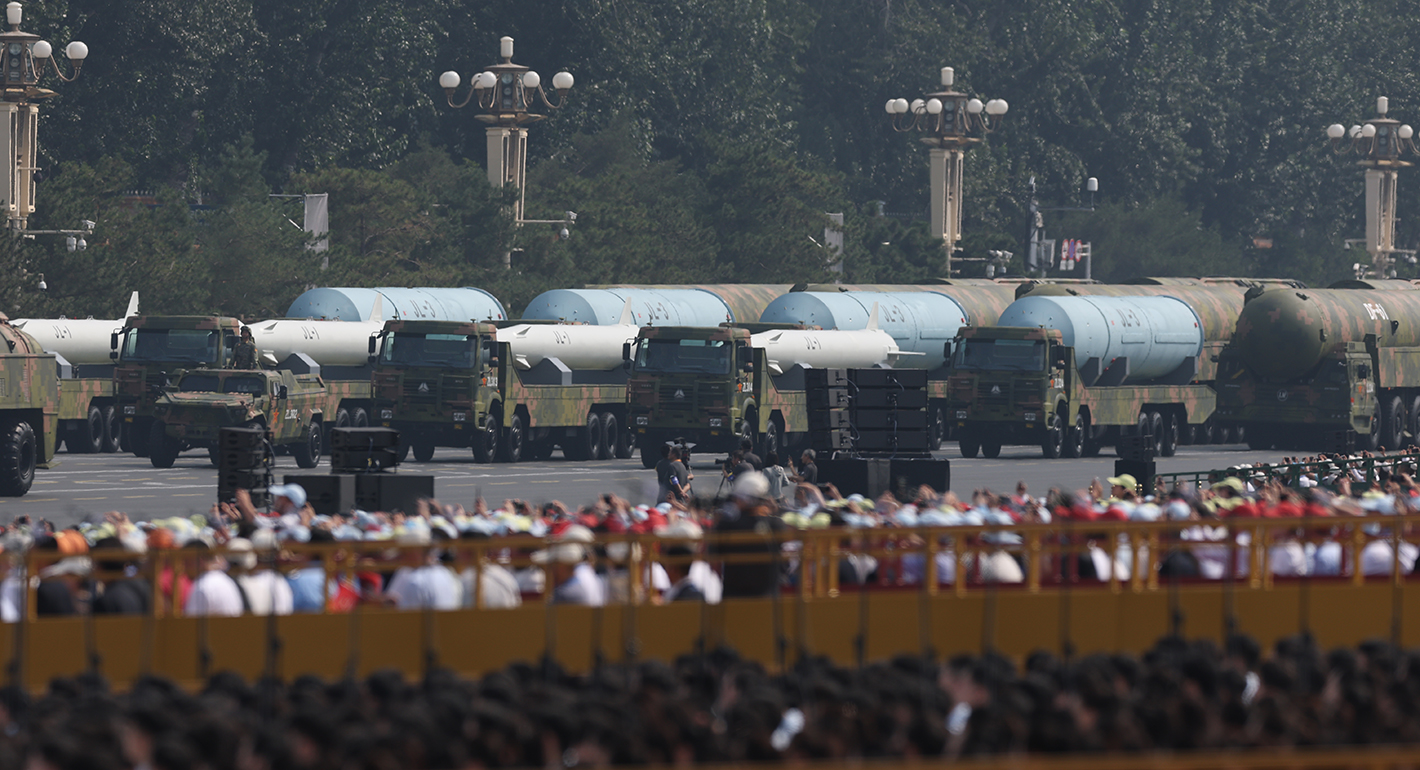
  • The nuclear missile formation passes through Tian'anmen Square during a military parade on September 3, 2025 in Beijing, China.
    Paper
    Untangling the Nuclear Knot: A Constructive Agenda for Managing China’s Nuclear Relations with the United States and Its Allies

    The nuclear relationship between China and the United States is increasingly shaped by widening perception gaps rather than deliberate strategic design.

      Tong Zhao
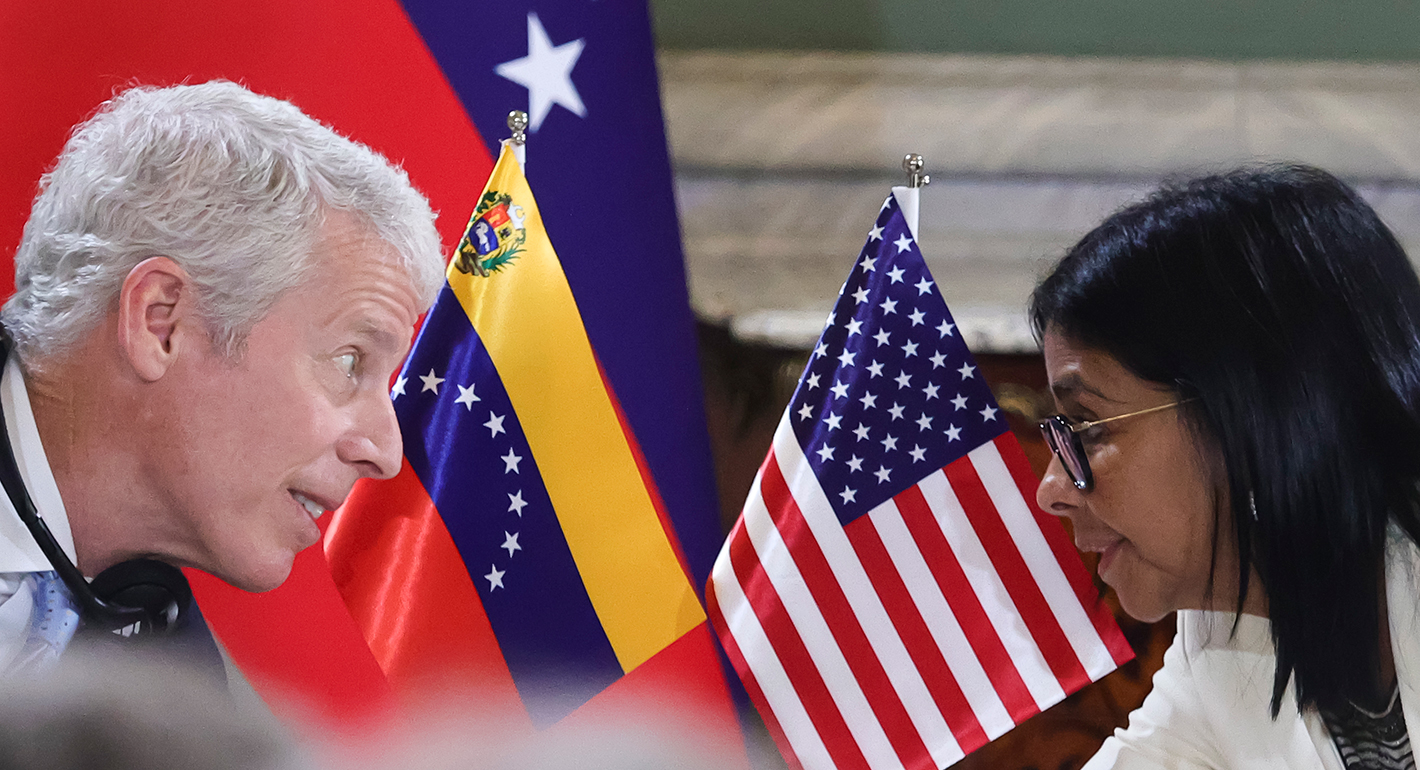
  • .S. Secretary of Energy Chris Wright speaks with Venezuela's interim president, Delcy Rodríguez during a press conference regarding the oil agreement reached by the US government and Venezuela on September 2, 2026 in Caracas, Venezuela.
    Paper
    Recasting American Power in Latin America

    Washington needs to recognize that influence in the Western Hemisphere comes from presence, delivery, and reliability. It also must recognize that while the United States remains the key external actor, it no longer operates in a permissive environment and cannot presume deference from regional players who have other options, namely China.

      Juan S. Gonzalez

  • Research
    In Pursuit of Nuclear-Powered Submarines: Australia, South Korea, And Japan

    A look at why states without nuclear weapons are seeking naval nuclear propulsion, whether they can legally and technically deliver it, what it will cost them, and what responsible stewardship of the capability would look like.

      Jamie Kwong

Get more news and analysis from
Carnegie Endowment for International Peace
Carnegie global logo, stacked
1779 Massachusetts Avenue NWWashington, DC, 20036-2103Phone: 202 483 7600
  • Research
  • Emissary
  • About
  • Experts
  • Donate
  • Programs
  • Events
  • Blogs
  • Podcasts
  • Contact
  • Annual Reports
  • Careers
  • Privacy
  • For Media
  • Government Resources
Get more news and analysis from
Carnegie Endowment for International Peace
© 2026 Carnegie Endowment for International Peace. All rights reserved.