

In The Media
Lahcen Achy
{
  "authors": [
    "Lahcen Achy"
  ],
  "type": "legacyinthemedia",
  "centerAffiliationAll": "",
  "centers": [
    "Carnegie Endowment for International Peace",
    "Malcolm H. Kerr Carnegie Middle East Center"
  ],
  "collections": [],
  "englishNewsletterAll": "",
  "nonEnglishNewsletterAll": "",
  "primaryCenter": "Malcolm H. Kerr Carnegie Middle East Center",
  "programAffiliation": "",
  "programs": [],
  "projects": [],
  "regions": [
    "Maghreb"
  ],
  "topics": [
    "Economy"
  ]
}
Source: Getty
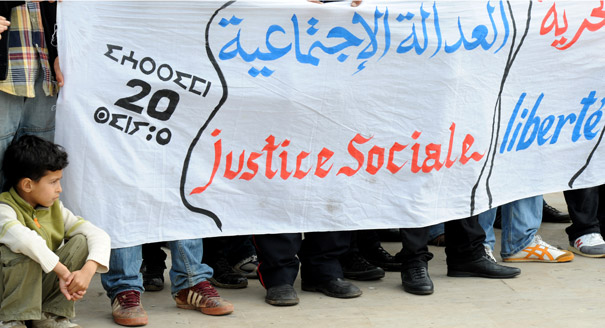
The Moroccan government is trying to reform the kingdom’s pension structure, but the absence of any concrete measures could prevent retirement funds from meeting their financial obligations in the coming years.
Source: Al-Hayat
In consultation with representatives of labor and business, the Moroccan government is studying alternative options to deal with the financial imbalances in the kingdom’s retirement schemes. Absence of any concrete measures could prevent retirement funds from meeting their financial obligations in the coming years. A study carried out by Morocco’s High Planning Commission revealed that the gap between the pensions currently being disbursed and the contributions paid from employee salaries is likely to result in a deficit of 7.4 percent of GDP by 2050 compared to a surplus of 1 percent in 2005.
Morocco has three principal pension systems: one for civil servants, one for employees of state owned enterprises, and one for the private sector workforce. These systems differ in their contribution rates and in the method used to calculate their benefits at retirement, resulting in inequality among employees depending on their economic sector. Another study undertaken at the government’s request suggests that the financial reserves of the pension fund for civil servants will eventually become fully depleted; declaring bankruptcy by 2021 if no reform is implemented.
The issue of pension reform surfaced in Morocco more than a decade ago. The debate led to the establishment in 2004 of a national committee, chaired by the head of the government, tasked with reforming the country’s pension system. Since the establishment of this committee the issue of pension funds has been examined in depth, and a number of possible remedies have been proposed to ensure the sustainability of the system. However, no decisions have been made to implement reform proposals into practice. The public in Morocco is closely following efforts to tackle this tricky issue by the incumbent Justice and Development Party–led government.The problem of pension-system funding is usually linked to population aging, as has been the case in a number of developed countries where the working-age population has declined in proportion to the population of pensioners. This is not the case in Morocco; in the last three decades, the country saw significant growth of the population aged between fifteen and fifty-nine (the retirement age is sixty in Morocco). This group has grown from 50 percent of the population to around 65 percent, while the share of the population over sixty years old increased only from 6 percent to 8 percent of the population.
Three main factors explain the current situation in Morocco.
First, no more than 45 percent of the working-age population is actually employed, due to low workforce participation among women and high unemployment rates, particularly among young people.
Second, the current pension system covers barely one-third of the working population in Morocco, in comparison with 60 percent in middle-income countries and 80 percent in OECD member states. This is mainly a result of the spread of unregulated businesses that employ workers informally and the presence of a large segment of self-employed people who are excluded from access to existing pension schemes.
The third factor contributing to the pension system issue in Morocco is the existence of a fragmented system with a limited number of subscribers. This reduces the viability of a fully-fledged “Pay-As-You-Go” (PAYG) pension system in Morocco. The number of pensioners among civil servants and employees in state owned enterprises has seen a significant increase in recent years compared to the growth in flow of new employees. The latest figures indicate that the ratio of contributors to pensioners in the government is equal to three, in comparison with double that number a decade ago. This ratio is expected to continue its decline, given the rapid aging of the population of civil servants.
Taken together, these factors confirm the urgent need for a comprehensive approach to addressing Morocco’s pension system imbalances that must be financially viable, socially acceptable and politically feasible. This approach should promote the economic participation of women (which does not exceed 25 percent), increase investments in order to provide more employment opportunities, expand pension system’s coverage, and ensure an adequate retirement income through a basic mandatory tax-funded system that is inclusive of all categories of society.
The basic pension system should be complemented through a mandatory PAYG system adapted to different economic sectors and professions; and an optional scheme tailored to the needs and financial resources of each individual.
The exclusive reliance on parametric adjustments that solely postpone the retirement age, increase contributions, and cut benefits by amending the way pensions are calculated will be unpopular due to their impact on medium- and low-income categories and likely to be insufficient in achieving long-term financial sustainability in the pension system.
Will the government remain locked into in a narrow approach through fine-tuning the parameters of the current pension system, with all of its distortions and deficiencies? Or, will it shows its ability to come up with alternative social policies that implements a broad-based social protection and effectively acknowledges social and economic rights for all social categories marking the beginning of a new inclusive social era?
Former Nonresident Senior Associate, Middle East Center
Achy is an economist with expertise in development, institutional economics, trade, and labor and a focus on the Middle East and North Africa.
Recent Work
Lahcen Achy
Lahcen Achy

The demands of the Kremlin’s war in Ukraine, demographic problems, and public hostility toward Central Asians mean Russia does not have enough workers.
Salavat Abylkalikov
The U.S.-China Summit produced a welcome commitment to build a constructive, strategically stable relationship. However, the United States has a full agenda, including the USMCA review beginning this week, that will likely target Chinese practices of concern. If China views these efforts as inconsistent with the agreements reached in Beijing, it may slow or halt progress in response.

Barbara Weisel
Between the United States’ market-driven approach and China's state-led industrial strategy, Europe is reckoning with how it can remain competitive in the global economy. But is Europe in danger of becoming a U.S. or China colony?

Noah Barkin, Anu Bradford
Minsk’s faith in the future of its larger neighbor’s economy is fading as Belarusian firms in Russia see record losses.

Olga Loiko
During our visit, we observed a democracy that has learned from its difficult past and is working toward an even more dynamic future.

Sarah Yerkes, Natalie Triche