

Commentary
Bayram Balci
{
  "authors": [
    "Bayram Balci"
  ],
  "type": "legacyinthemedia",
  "centerAffiliationAll": "dc",
  "centers": [
    "Carnegie Endowment for International Peace"
  ],
  "collections": [],
  "englishNewsletterAll": "menaTransitions",
  "nonEnglishNewsletterAll": "",
  "primaryCenter": "Carnegie Endowment for International Peace",
  "programAffiliation": "MEP",
  "programs": [
    "Middle East"
  ],
  "projects": [],
  "regions": [
    "Middle East",
    "Türkiye",
    "Central Asia",
    "Turkmenistan"
  ],
  "topics": [
    "Foreign Policy"
  ]
}
Source: Getty
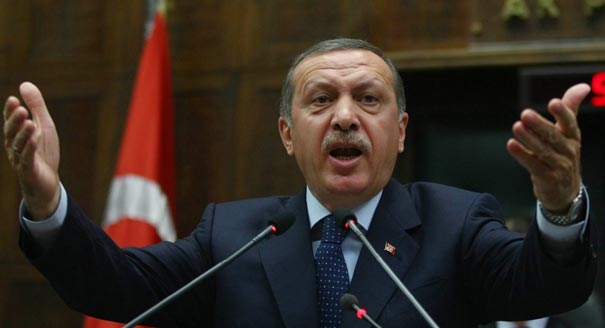
The Turkish government places real importance on Central Asia because Ankara wants to develop the common heritage of Turkey and Central Asia, in terms of language, ethnicity, and even religion.
Source: World Politics Review
The Turkish government continues to place real importance on this region because Ankara wants to develop the common heritage of Turkey and Central Asia, in terms of language, ethnicity and even religion. It is difficult for Turkey to maintain strong relations with Central Asian countries at the moment, mainly because of their authoritarian political and even economic systems, but in the future Ankara hopes these obstacles will be overcome and Turkey will become more influential in this region.
Balci: All of the Central Asian republics were formed during Soviet times, and since they are purely products of this authoritarian legacy, they still face real difficulties in reforming and creating more plural and democratic political systems and societies. Turkey wanted to support democratic reforms in these countries and was even charged by its Western allies at the beginning of 1990s to encourage this transition. But the situation was more complex than it had seemed at first, and Turkish authorities were forced to accept local regimes as they are. Like many Western countries, Turkey supported existing regimes out of concern for regional security and stability.
A good example of this policy is the Turkey-Uzbekistan relationship. In 1993, the two main opposition figures in Uzbekistan—Muhammad Salih, chairman of the Erk political party, and Abdurrahman Polat, chairman of the Birlik political party—were expelled from Uzbekistan and took refuge in Turkey. Ankara wanted to help them, but when Turkish-Uzbek relations soured because of their presence in Turkey, the Turkish government asked them to leave, which they did.
Balci: Turkey initially had huge ambitions in Central Asia, even with regard to security or strategic partnerships. However, when Turkey realized that its capacities were limited and that Central Asian countries were cautious and even suspicious about Turkish ambitions, they clearly opted for more cultural and economic cooperation. That is why Turkey now has more of a soft-power presence in Central Asia, through education and culture, than through political influence and energy diplomacy. The Turkish strategy seems to be “reinforce the cultural cooperation and then the rest will come automatically.”
Central Asia was a higher priority for Turkish governments before Erdogan, whose foreign policy was more focused on European Union membership from his election in 2002 through 2009. After Turkey was disappointed by EU responses to its membership plan, Ankara instead turned its focus toward an assertive policy in the Middle East.
Former Nonresident Scholar, Russia and Eurasia Program
Balci was a nonresident scholar in Carnegie’s Russia and Eurasia Program, where his research focuses on Turkey and Turkish foreign policy in Central Asia and the Caucasus.
Recent Work
Bayram Balci
Bayram Balci, Daniyar Kosnazarov
Carnegie does not take institutional positions on public policy issues; the views represented herein are those of the author(s) and do not necessarily reflect the views of Carnegie, its staff, or its trustees.
Washington needs to recognize that influence in the Western Hemisphere comes from presence, delivery, and reliability. It also must recognize that while the United States remains the key external actor, it no longer operates in a permissive environment and cannot presume deference from regional players who have other options, namely China.
Juan S. Gonzalez

Minsk clearly expected the dialogue with Washington to yield more results, in particular the lifting of EU sanctions and permission to export potash.

Artyom Shraibman

A summer of escalation in the Black Sea has hurt Ukraine economically and is exacerbating world food security. A truce is needed—as is a broader reframing of Europe’s Ukraine strategy.

Thomas de Waal

As the U.S. stumbles in its war with Iran, we are likely to see an acceleration of its disengagement from the region.

Michael Young

Why governance of rapidly evolving technology will be distributed and complex.


Stewart Patrick, Scott Singer