

Article
Frederic Wehrey, Charles H. Johnson
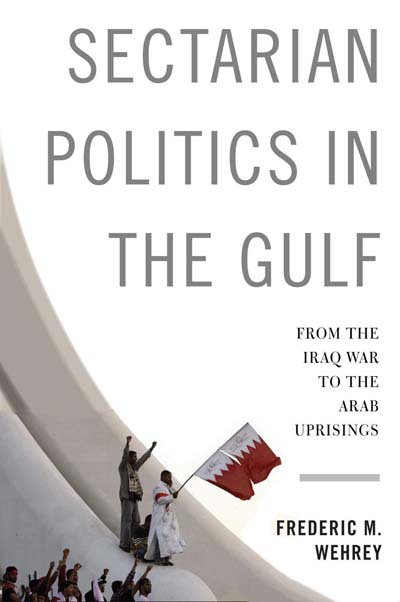
Although religious differences and regional influences play a role, the rise of sectarianism in the Gulf is ultimately rooted in longstanding problems of governance and elite manipulation of Sunni-Shia identities.
Source: Columbia University Press
Beginning with the 2003 invasion of Iraq and concluding with the aftermath of the 2011 Arab uprisings, Frederic M. Wehrey investigates the roots of the Shi’a-Sunni divide now dominating the Persian Gulf's political landscape. Focusing on three Gulf states affected most by sectarian tensions–Bahrain, Saudi Arabia, and Kuwait—Wehrey identifies the factors that have exacerbated or tempered sectarianism, including domestic political institutions, the media, clerical establishments, and the contagion effect of external regional events, such as the Iraq war, the 2006 Lebanon conflict, the Arab uprisings, and Syria's civil war. In addition to his analysis, Wehrey builds a historical narrative of Shi’a activism in the Arab Gulf since 2003, linking regional events to the development of local Shi’a strategies and attitudes toward citizenship, political reform, and transnational identity. He finds that, while the Gulf Shi’a were inspired by their coreligionists in Iraq, Iran, and Lebanon, they ultimately pursued greater rights through a nonsectarian, nationalist approach. He also discovers that sectarianism in the region has largely been the product of the institutional weaknesses of Gulf states, leading to excessive alarm by entrenched Sunni elites and calculated attempts by regimes to discredit Shi’a political actors as proxies for Iran, Iraq, or Lebanese Hezbollah. Wehrey conducts interviews with nearly every major Shi’a leader, opinion shaper, and activist in the Gulf Arab states, as well as prominent Sunni voices, and consults diverse Arabic-language sources.This is an excellent book and an important piece of scholarship. Frederic M. Wehrey has written a compelling, thoughtful, and original analysis of the new politics of sectarianism in the Persian Gulf since 2003. He is well positioned to write such a book, having traveled extensively in the region and spent considerable time with the most important political figures in Kuwait, Saudi Arabia, and Bahrain. His tone is commanding, the research is impressive, and the result is timely and vital. Wehrey's book is the best study I have seen yet of these pressing matters.
—Toby Jones, Rutgers University
Sectarian Politics in the Gulf represents the most up-to-date and insightful study on the politics of sectarianism in three key Gulf countries: Saudi Arabia, Kuwait and Bahrain. Far from being an intrinsic or innate feature of these societies, Prof. Wehrey shows in careful detail how sectarianism is invoked, produced and instrumentalized, and for very specific goals by governments, clerics as well as members of the Shii opposition. The book's argument situates sectarianism within local and regional political dynamics and contexts, and through this underscores that as a political phenomenon sectarianism cannot be apprehended by historically-rooted religious hatred. Based on a careful reading of primary sources and extensive fieldwork in the region, including in-depth interviews with many of the key activists, this book provides the most comprehensive and readable account of religious politics in the Gulf today.
—Bernard Haykel, Princeton University
Wehrey has written a finely grained, insightful, and carefully researched contemporary study of Sectarian Politics in the Gulf. He offers insights on the broader Arab world and reveals that sectarian identity is no artificial construct but a culturally embedded and historically honed aspect of self. Yet he also demonstrates that sectarianism has been wielded cynically by both powerful rulers (Saudi Arabia) and insecure, easily manipulated monarchs (as in Bahrain) to foment division and divert legitimate accusations of injustice, discrimination, and opprobrious violations of basic human rights. This is the best book on the topic and a must read for policy makers.
—Augustus Richard Norton, Boston University
Offering coherent and lucid analysis of what has become a main feature of Gulf politics since the Arab Spring, this book is a must read for anybody interested in Gulf political dynamics and sectarianism in the Middle East.
—Laurence Louër, author of Transnational Shia Politics in the Gulf and Shiism and Politics in the Middle East
Wehrey’s new book offers a theoretically sophisticated and empirically rich overview of the politics of Sunni-Shiite relations across the Gulf. His extensive research on the ground across the Gulf comes through powerfully, as does his balanced analytical sensibility. It should be required reading for anyone interested in Sunni-Shiite relations or in the regional politics of the Gulf.
—Marc Lynch, Foreign Policy Middle East Channel
In this magisterial account, Fred Wehrey goes a long way in demystifying and dissecting the issue of sectarianism in the Gulf…. [His] account is particularly refreshing for bringing scholarly gravitas to a subject that is all too often discussed in glib and superficial terms. Sectarian Politics in the Gulf is a must read that offers a fresh and innovative contribution to the literature in international relations and comparative government. It is extremely well written and laid out. The book belongs on the syllabus of any class dealing with Gulf security and on the desk of policy planners and decision makers around the world.
—International Journal of Middle East Studies

Senior Fellow, Middle East Program
Frederic Wehrey is a senior fellow in the Middle East Program at the Carnegie Endowment for International Peace, where his research focuses on governance, conflict, and security in Libya, North Africa, and the Persian Gulf.
Recent Work
Frederic Wehrey, Charles H. Johnson
Frederic Wehrey, Charles H. Johnson
Carnegie does not take institutional positions on public policy issues; the views represented herein are those of the author(s) and do not necessarily reflect the views of Carnegie, its staff, or its trustees.

Ex-president Gurbanguly Berdimuhamedov remains interested in politics, but his son Serdar, Turkmenistan’s current president, is becoming increasingly independent and willing to break with his father’s legacy. If their covert rivalry goes too far, both risk losing power.

Galiya Ibragimova

A notable degree of participative democracy has firmly arrived in Europe. But to have more far-reaching impact, democratic deliberation needs to move into a radically new phase.

Richard Youngs
As the U.S.-led Coalition withdraws, the Kurds’ reliance on Baghdad, and on themselves, will only increase.
Wladimir van Wilgenburg

Sergei Kiriyenko used Russia’s parliamentary vote to further hone his strategy of corporate mobilization that is designed to maximize votes for United Russia.

Andrey Pertsev

Before the next wave of EU enlargement takes place, the union needs to grapple with thorny questions of how power is distributed among its members.


Emil Sondaj Hansen, Ditte Brasso Sørensen