

Commentary
Saied’s main accomplishment has been to destroy a decade’s worth of democratic progress.
Sarah Yerkes
{
  "authors": [
    "Yusuf Ahmad",
    "Alyssa Dougherty",
    "Rachel Kleinfeld",
    "Alejandro Ponce"
  ],
  "type": "other",
  "centerAffiliationAll": "dc",
  "centers": [
    "Carnegie Endowment for International Peace"
  ],
  "collections": [],
  "englishNewsletterAll": "democracy",
  "nonEnglishNewsletterAll": "",
  "primaryCenter": "Carnegie Endowment for International Peace",
  "programAffiliation": "DCG",
  "programs": [
    "Democracy, Conflict, and Governance"
  ],
  "projects": [],
  "regions": [],
  "topics": [
    "Democracy"
  ]
}
Source: Getty
This literature review seeks to highlight specific policy interventions against risk factors that predispose comm- unities towards gangs, organized crime, and electoral violence; and interventions that attack each of those types of violence directly.
Source: World Justice Project and Carnegie Endowment for International Peace
This literature review seeks to highlight specific policy interventions against risk factors that predispose communities towards gangs, organized crime, and electoral violence; and interventions that attack each of those types of violence directly. This is by no means a comprehensive report, given the extensive scholarship that has been dedicated to these three issues. It is, however, a starting point from which we can begin to explore the success or failure of policy interventions, and the contexts in which they have been found to work or fail. We hope to add to this review before and following the workshop, with the help of workshop participants.
Yusuf Ahmad
Former Junior Fellow, Democracy Program
Alyssa Dougherty

Senior Fellow, Democracy, Conflict, and Governance Program
Rachel Kleinfeld is a senior fellow in Carnegie’s Democracy, Conflict, and Governance Program, where she focuses on issues of rule of law, security, and governance in democracies experiencing polarization, violence, and other governance problems.
Alejandro Ponce
Alejandro Ponce is the Chief Research Officer of the World Justice Project. He joined the WJP as Senior Economist and is one of the original designers and a lead author of the WJP Rule of Law Index. He previously worked as a researcher at Yale University and an economist at the World Bank.
Carnegie does not take institutional positions on public policy issues; the views represented herein are those of the author(s) and do not necessarily reflect the views of Carnegie, its staff, or its trustees.

Saied’s main accomplishment has been to destroy a decade’s worth of democratic progress.

Sarah Yerkes

Even if the terms of a ceasefire or peace settlement are satisfactory to most Ukrainians, the country’s democracy will face its fair share of challenges.
Petro Burkovskyi, Olexiy Haran

The hybrid warfare landscape is evolving rapidly, leaving policymakers without clear strategies. To better inform their work in addressing emerging challenges, governments must dig deeper into the underlying dynamics at play.


Raluca Csernatoni, Alicia Wanless
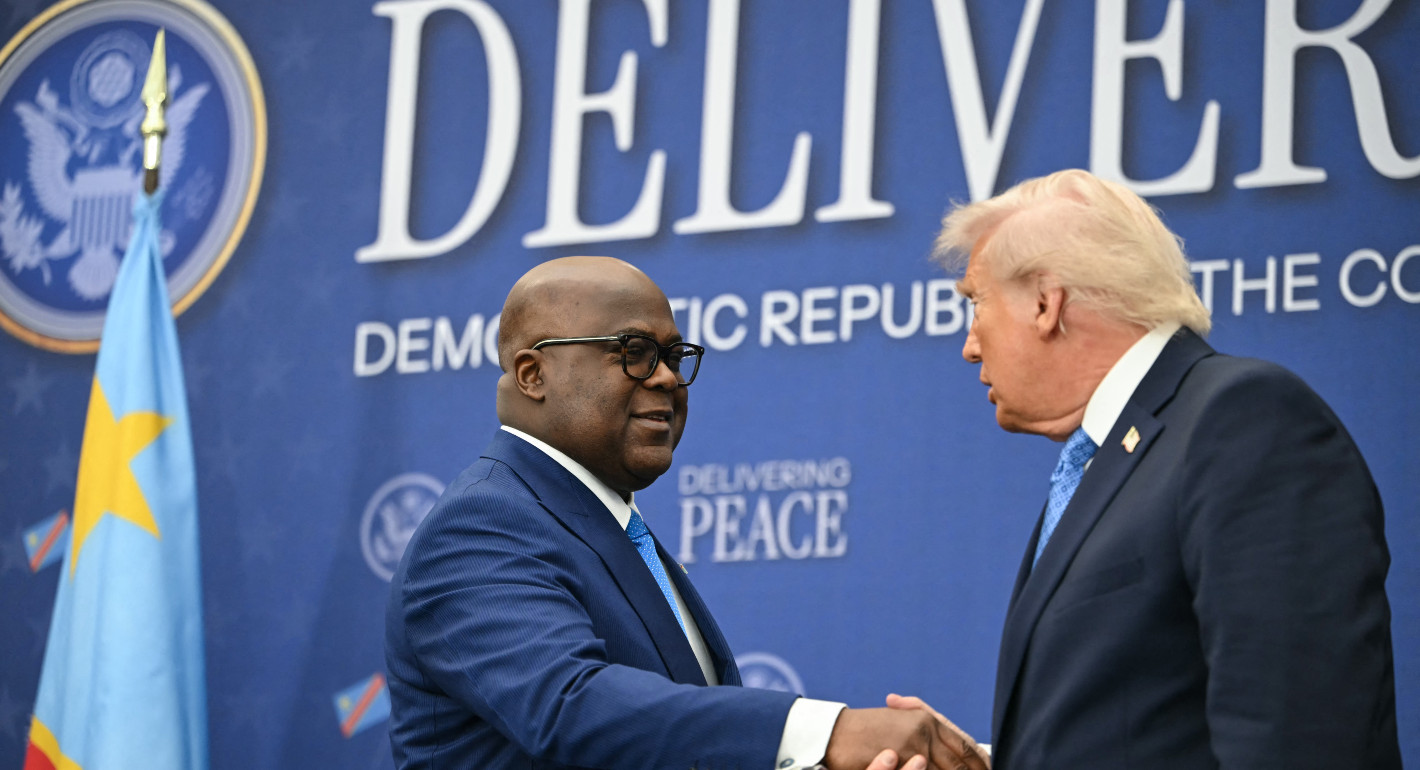
President Tshisekedi is implicating Washington in his pursuit of a third term. Staying silent may prove detrimental to the United States in the long run.

Christian-Géraud Neema

Ultimately, Zelensky sided neither with the reform camp nor with the military establishment as such, but with political control.

Balázs Jarábik