

Paper
Christopher S. Chivvis, Rohan Mukherjee, Milan Vaishnav
{
  "authors": [
    "Milan Vaishnav"
  ],
  "type": "other",
  "centerAffiliationAll": "dc",
  "centers": [
    "Carnegie Endowment for International Peace",
    "Carnegie India"
  ],
  "collections": [],
  "englishNewsletterAll": "ctw",
  "nonEnglishNewsletterAll": "",
  "primaryCenter": "Carnegie Endowment for International Peace",
  "programAffiliation": "SAP",
  "programs": [
    "South Asia"
  ],
  "projects": [],
  "regions": [
    "South Asia",
    "India"
  ],
  "topics": [
    "Political Reform",
    "Economy",
    "Domestic Politics"
  ]
}
Source: Getty
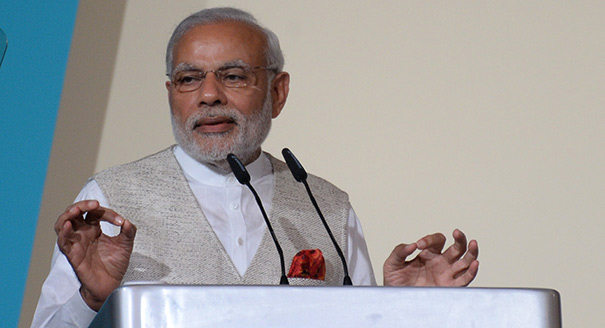
Some 75 percent of the money going to political parties is from undocumented sources. Modi’s crackdown on black money will therefore be hugely disruptive for the upcoming elections in Punjab and Uttar Pradesh.
Source: Quartz
Narendra Modi’s masterstroke aimed at clamping down on black money in Asia’s third-largest economy could have an unintended (at least ostensibly) outcome: choking funding to political parties and their election campaigns.
Campaign financing in India has typically been driven by unofficial funds. Data over the last decade shows that some 75% of the money going to political parties is from undocumented sources, Milan Vaishnav, senior associate in the South Asia program at Carnegie Endowment for International Peace, explained in an interview on Nov. 08.
Vaishnav, whose research mainly focuses on the Indian political economy, said that with polls around the corner in key Indian states such as Uttar Pradesh (UP) and Punjab, the pulling out of the Rs500 and Rs1,000 currency notes could spell bad news for most political parties, including the Narendra Modi-led Bharatiya Janata Party (BJP).
By putting himself at the forefront of the political messaging intended through this move, evidently the prime minister, too, is keen on milking it. Yet, there is a risk of it backfiring, Vaishnav said.
Edited excerpts from the interview:
It’s going to be hugely disruptive. Parties are going to have to scramble to find alternative sources of funding and the smaller parties are going to have the toughest time. From the perspective of the Bharatiya Janata Party (BJP), which probably has the most diversified sources, this will choke up some of its funding, but (it will) also (hit) their rivals.
It is interesting to think of a historical analogy. In 1969, Indira Gandhi banned corporate donations to political parties. Now, she knew that this was going to choke up money going to the Swatantra Party and the Jansangh, who were kind of conservative. But the Congress could find other ways—either extort from businesses or get money through other channels. So it was a politically savvy move but didn’t do much to deal with the underlying issues.
This (Modi’s) move has greater potential than that. It will actually make a dent on black money, but bigger parties with diversified sources of funding are going to end up less impacted than smaller ones which depend on small-scale cash donations.
They don’t have to disclose the source of any contribution that is below Rs20,000.
I think there are going to be two impacts. One, it is going to complicate the common practice of cash handouts on the eve of elections because there won’t be many small notes in circulation. Small entrepreneurs and builders, who fund small political parties, are also going to face difficulty.
But parties are very good and very smart about adapting. My research shows that, already, rather than giving out lump sums to parties, builders would just pay on behalf of the party. If I am a political party and I make a big advertisement buy and I am presented with an invoice from the media house, the builder directly assumes those costs and no cash changes hands.
Similarly, it has become very costly for parties to hand out cash because there’s a fear that the Election Commission will seize it. So now they give away free mobile phone recharges, alcohol, and all kinds of other gifts. Parties are finding clever ways to circumvent the rules and they will continue to do so.
No, it is not a stretch at all. This is a government which has hit the halfway mark and is now thinking of how to set itself up for 2019. That includes doing well in a number of key state elections. UP and Punjab are the immediate ones and this is an opportunity for the prime minister to burnish his credentials. Someone who promised to tackle black money and has very little to show for it now can say “Look, I have done this.” And even though there may be negative externalities associated with that move, every person in India is going to know that this prime minister has taken a tough decision. What surprised me about it is that it is so risky and this is a government that has shown little appetite for big risks.
Absolutely! I’d be surprised if we didn’t see a big move towards gold as a safe place to park one’s money. The myth about black money is, you know, that there are millions of Indians with cash stuffed under their mattresses. People have already diversified their portfolio and their holdings.
He came on national television. Everybody dropped everything to watch what he was saying and undoubtedly this will now be played ad nauseam and his words will be reprinted in the English and vernacular press. He could have sent the RBI governor, he could have sent out the finance minister. But the fact that he did this, and everybody (media) was forced to cover it, means he was trying to send a signal. He wanted voters to hear it directly from him.
Remember, the BJP’s strategy is to bank on Modi’s image. Look at the UP elections, there is no chief ministerial candidate and there isn’t likely to be one. This move is trying to facilitate a direct connect between the aam aadmi and the prime minister. We have to wait and see how this plays out.
Demonetisation has been on the anvil before, and people find ways of adapting. We have to ask ourselves, why is the black economy in India so big? It is big because there are policies and regulations that create incentives for people to move towards black market. Those are the things that need to be actually addressed.
People and businesses who have funded BJP may be upset because they could think this is an attack on them. The builder lobby is incredibly powerful and real estate is probably the number one sector to be affected. It relies so much on cash transactions and bank finance is very scarce in real estate. Ordinary Indians are going to find that basic transactions will become exceedingly difficult for the next several weeks or months. This may breed disenchantment among them. We also need to see how well-equipped the system is.

Director and Senior Fellow, South Asia Program
Milan Vaishnav is a senior fellow and director of the South Asia Program and the host of the Grand Tamasha podcast at the Carnegie Endowment for International Peace. His primary research focus is the political economy of India, and he examines issues such as corruption and governance, state capacity, federalism, and electoral behavior. He also conducts research on the Indian diaspora.
Recent Work
Christopher S. Chivvis, Rohan Mukherjee, Milan Vaishnav



Sophia Besch, Eric Ciaramella, Steve Feldstein, …
Carnegie does not take institutional positions on public policy issues; the views represented herein are those of the author(s) and do not necessarily reflect the views of Carnegie, its staff, or its trustees.

Russian strikes are weakening the economy sustaining Ukraine’s war effort. Closing the growing funding gap will require more European support and politically contentious reforms in Kyiv.

Balázs Jarábik

Ex-president Gurbanguly Berdimuhamedov remains interested in politics, but his son Serdar, Turkmenistan’s current president, is becoming increasingly independent and willing to break with his father’s legacy. If their covert rivalry goes too far, both risk losing power.

Galiya Ibragimova

A notable degree of participative democracy has firmly arrived in Europe. But to have more far-reaching impact, democratic deliberation needs to move into a radically new phase.

Richard Youngs
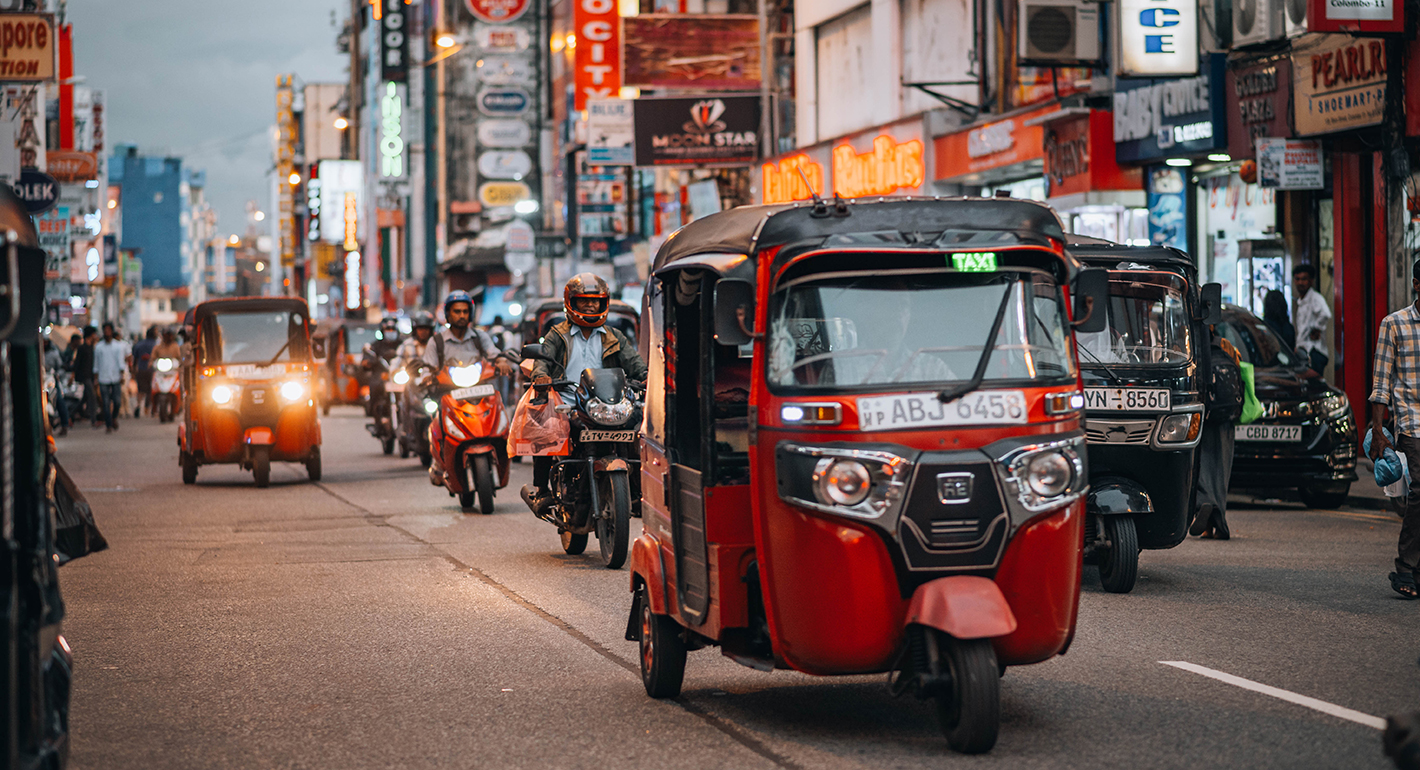
Economic recovery has brought Sri Lanka a modicum of stability, but domestic strains and great-power rivalry could test how long it lasts.
Avinash Paliwal
Today’s global democratic recession is partly rooted in a common perception that democracies have a delivery problem, with many citizens in both autocracies and democracies alike now believing that strongmen can achieve better governance outcomes. But a study of four countries in Africa reveals that democratic-leaning governments have demonstrated better governance performance than autocratic governments.


Sarah Yerkes, Natalie Triche, Amr Hamzawy