

Commentary
Russian strikes are weakening the economy sustaining Ukraine’s war effort. Closing the growing funding gap will require more European support and politically contentious reforms in Kyiv.
Balázs Jarábik
{
  "authors": [
    "Devesh Kapur",
    "Milan Vaishnav"
  ],
  "type": "legacyinthemedia",
  "centerAffiliationAll": "dc",
  "centers": [
    "Carnegie Endowment for International Peace"
  ],
  "collections": [],
  "englishNewsletterAll": "ctw",
  "nonEnglishNewsletterAll": "",
  "primaryCenter": "Carnegie Endowment for International Peace",
  "programAffiliation": "SAP",
  "programs": [
    "South Asia"
  ],
  "projects": [
    "India Elects 2019"
  ],
  "regions": [
    "South Asia",
    "India"
  ],
  "topics": [
    "Political Reform",
    "Democracy",
    "Economy"
  ]
}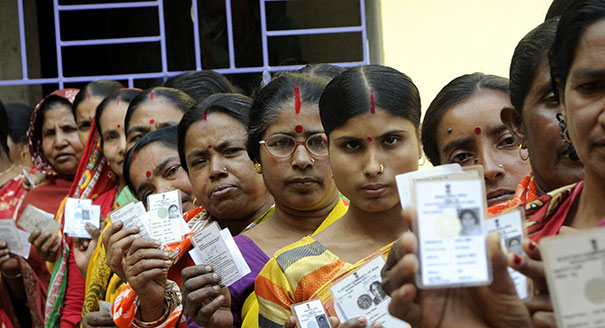
Source: Getty
India is no stranger to the dilemma of money in politics, but this nexus has not been the subject of sustained scholarly attention.
Source: Hindustan Times
The issue of money in politics is a matter of pressing concern across the democratic world. Recent headlines, for instance, reveal that scandals linked with political finance irregularities dot the globe.
In France, former president Nicolas Sarkozy is being investigated on allegations that his 2007 campaign received millions of dollars from late Libyan dictator Muammar Gaddafi.
In Brazil, former president Luiz Inácio Lula da Silva was sentenced to a dozen years in jail after a court convicted him of trading government favours in exchange for bribes from a construction interest. And in the United States, President Donald Trump faces charges that secret payments made on his behalf to an adult actress may have violated campaign finance disclosure laws.
India is no stranger to the dilemma of money in politics and the illegality, quid pro quos, and shady deals that often emerge as a result of the desperate hunt for campaign cash. Unfortunately, the nexus between money and politics in India—as in much of the developing world—has not been the subject of sustained scholarly attention. This is not because of a lack of interest, but rather a paucity of data.
Money often works differently—and to different ends—in developing democracies. In advanced democracies, which are by no means scandal-free, there exist well-established systems of monitoring and accounting for political finance and robust enforcement. These systems, while imperfect, are likely to deter the leveraging of illicit funds to a large extent. In many developing democracies, however, limited transparency, resource challenges, and weak enforcement often incentivise undocumented money. Hence, the widespread belief that true flows of money in politics significantly dwarf reported flows.
In a new volume, Costs of Democracy: Political Finance in India, we led a group of political scientists concerned with deepening our understanding of political finance in India.
The methods--surveys, candidate affidavit data, ethnographic fieldwork--are as diverse as the settings, ranging from urban Mumbai to rural Bihar.
Over the next four days, we will share some of our key takeaways in these pages. These columns are an attempt to respond to several pressing questions: What are the sources of political finance? On what do campaigns spend and why? How does money operate at different levels of government? And what reform steps should the government contemplate to address the challenges of money in politics? In India, these are far from academic concerns; in the wake of demonetization and the introduction of electoral bonds, the country is host to a contentious debate over how it should manage the mounting pressures of money in politics.
It is clear from our collective research that private sources of campaign funding have grown exponentially. One prominent trend is the rise of self-financing candidates.

In 2004, 30% of Lok Sabha Members of Parliament were crorepatis (that is, their self-disclosed assets totaled at least one crore). By 2014, that share jumped to 82%. The data demonstrate that there is a massive wealth premium in elections; of the 21,000 candidates who contested the last three general elections, the wealthiest 20% of candidates were more than twenty times more likely to win election that the poorest 20%. Even among highly competitive candidates (those who finish either first or second in their race), the richer of the two candidates has a clear advantage. Survey evidence from north India confirms that politicians from panchayat presidents to MPs are highly reliant on their own resources.
Of course, private sector funding often complements a politician’s own finances, especially at the state and national levels.
But there is a widespread misimpression in India that this space is dominated by titans of industry. Our own investigations reveal that much of the action is at what TN Ninan calls the “mezzanine level”— medium-sized firms and businesspeople who are reliant on routine government approvals. Indeed, our own work points to the nexus between state-level politicians and builders in the real estate and construction industry—where government’s heavy regulatory footprint is well-documented. Evidence suggests that politicians help builders negotiate the labyrinth of regulatory permissions dealing with land in exchange for cash infusions around election time.
While the sources of political finance may be obscured, much of what is spent is used on fairly mundane matters: compensating supporters for attending meetings; paying wages of political workers; and covering expenses on food incurred during the campaign sprint.
In this sense, politics operates like another sector of the economy—albeit one which lacks a three-digit industry code. This is not to deny the role that handouts of cash and alcohol play on the eve of elections; handouts constitute a sizeable share of a candidate’s total poll budget. But pre-electoral goodies are rarely directly exchanged for votes; in India, the secret ballot ensures there is no ironclad method of purchasing support. Hence, a more accurate term for pre-election distribution is gift giving rather than vote buying—a rational strategy when a candidate seeks to boost her own credibility or to simply match what other rivals are doing—which over time has created an electoral finance arms race.
Money will always be a part of democratic politics. But it is worth remembering why the rising costs of democracy are such a cause for concern: it is not simply the significance of the funds involved, but also the broader impacts money can have on political behaviour. For instance, money has a powerful “selection effect” on who stands for election. evident in the rising number of candidates with criminal cases, as one of us has documented.
Raising money from supporters also incentivises quid pro quos in policymaking. Rising election costs contribute to growing inequality. Most importantly, at the heart of any successful democracy is a sense of legitimacy about the process and the existence of a level-playing field.
Distortions in electoral finance can undermine that legitimacy and threaten democracy itself. In our view, there can hardly be a worthier, yet more underexplored, line of research for scholars to pursue, and for the public to understand.
This article was originally published in the Hindustan Times.
Devesh Kapur
Starr Foundation Professor, Johns Hopkins (SAIS)
Devesh Kapur is the Starr Foundation Professor of South Asian studies at the Johns Hopkins School of Advanced International Studies (SAIS). He is the author of three books on migration, including The Other One Percent: Indians in America (with Sanjoy Chakravorty and Nirvikar Singh).

Director and Senior Fellow, South Asia Program
Milan Vaishnav is a senior fellow and director of the South Asia Program and the host of the Grand Tamasha podcast at the Carnegie Endowment for International Peace. His primary research focus is the political economy of India, and he examines issues such as corruption and governance, state capacity, federalism, and electoral behavior. He also conducts research on the Indian diaspora.
Carnegie does not take institutional positions on public policy issues; the views represented herein are those of the author(s) and do not necessarily reflect the views of Carnegie, its staff, or its trustees.

Russian strikes are weakening the economy sustaining Ukraine’s war effort. Closing the growing funding gap will require more European support and politically contentious reforms in Kyiv.

Balázs Jarábik

Ex-president Gurbanguly Berdimuhamedov remains interested in politics, but his son Serdar, Turkmenistan’s current president, is becoming increasingly independent and willing to break with his father’s legacy. If their covert rivalry goes too far, both risk losing power.

Galiya Ibragimova

A notable degree of participative democracy has firmly arrived in Europe. But to have more far-reaching impact, democratic deliberation needs to move into a radically new phase.

Richard Youngs
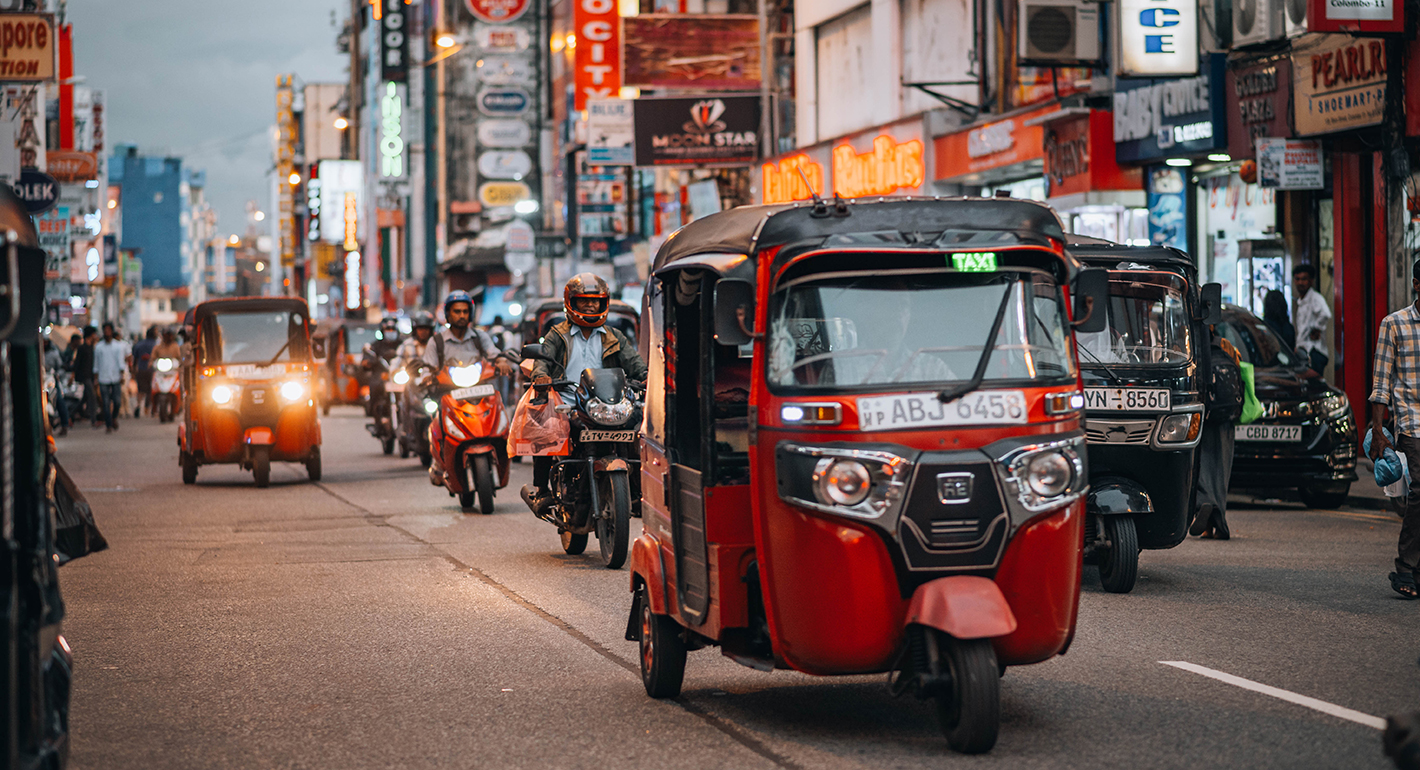
Economic recovery has brought Sri Lanka a modicum of stability, but domestic strains and great-power rivalry could test how long it lasts.
Avinash Paliwal
Today’s global democratic recession is partly rooted in a common perception that democracies have a delivery problem, with many citizens in both autocracies and democracies alike now believing that strongmen can achieve better governance outcomes. But a study of four countries in Africa reveals that democratic-leaning governments have demonstrated better governance performance than autocratic governments.


Sarah Yerkes, Natalie Triche, Amr Hamzawy