

In The Media
Martha Brill Olcott

Source: Getty
The democratic activists who orchestrated Georgia's "rose revolution" made history when President Eduard Shevarnadze agreed to resign from office. The process of political succession in Georgia is now in full swing, and power seems likely to move to a new generation of leaders, men and women who have reached political maturity in the last days of the Soviet Union, or even later.

The events of November 22 and 23 will continue to resonate in Georgia and in neighboring states for months to come.
Georgia is peaceful now, but the situation remains fraught with danger. Regional leaders in large parts of the country don't recognize the authority of Nino Burdzhanadze, the speaker of the Parliament, who in accordance with the constitution has taken over as acting president. Burdzhanadze has promised that new parliamentary elections will be held within a 45 day period, this time under conditions that show a respect for democratic norms, and that a new president will be elected in this timeframe as well.
Holding "free and fair elections" in Georgia will be a daunting task, even with increased technical assistance from the U.S. and from the OSCE. Corrupt elections don't just happen, they occur because powerful political interests benefit from the manipulation of outcomes.
Edward Shevarnadze is a spent political force, and his decision to go quietly into retirement rather than try and hold power through force has earned him new respect in Washington, in Europe and in Moscow, at a time when his reputation in western capitals had been suffering because of the increasingly less democratic behavior of his regime.
Those political groupings that benefited from the irregularities and falsifications of Georgia's November 2 elections, though, are not going to disappear as quietly or as quickly.
Aslan Abashidze, chairman of the Adjar state council, has declared a state of emergency in that region. His "union of revival" was a major beneficiary of some of the most egregious election abuses in the now annulled parliamentary elections. Abashidze also has national political ambitions, which were largely kept in check through Shevarnadze's allowing him to function as a virtual head of state and in this autonomous region in western Georgia. The local government in Southern Ossetia has also functioned with little regard to the opinions of the ruling elite in Tbilisi. Elections will have to be held in all these areas, but once again will not be held in Abkhazia whose leadership demands full independence from Georgia and which fought a stalemated war to attain it.
For all their success of last weekend, Burdzhanadze and other prominent opposition figures, like former Minister of Justice Mikhail Saashvili and former parliamentary speaker Zhurab Zhvania, face an uphill battle winning support for a permanent transfer of power in accordance with democratic principles.
Having to organize presidential and parliamentary elections simultaneously will be very challenging, which is one reason why initially they were set to be held over a year apart. It is far from clear that the newly elected president have enough power to overturn election results in parts of the country that are effectively outside of Tbilisi's control if they are deemed the result of irregular practices.
Shevarnadze's reluctance to use force must at least in part have been the result of uncertainty as to whether the country's police, interior ministry troops and army would respond to his command. Any decision to use force by his successor is likely to be even more fraught with risk.
It is also unclear who this successor will be, or even whether Georgia's pro-democracy forces will unify behind a single candidate, or whether they will squabble among themselves as was the case in neighboring Azerbaijan in October.
One can only hope that the transfer of authority will occur peacefully, and that Georgia's next president will be a popular enough choice to begin the term of office
with a mandate to rule. The tasks that this person will face are daunting, as they include battling corruption in Georgia's economy, and trying to restore the writ of the national government over the divided population of this small mountainous country.
Many people will be watching with great interest, and not all with the same good will. Leaders in neighboring Azerbaijan, and in the Central Asian states would like to see order preserved in Georgia in the abstract, but are certain to be unhappy over the successful ouster of a former communist party leader. Such leaders are supposed to be able to outthink the opposition.
Policy-makers in Washington and Moscow will each be eager to see their own national interests preserved. Georgia is to be the transit point for Azerbaijan's oil, to be shipped through Turkey and bypassing Russia, a plan that has been strongly supported by the U.S. government. By contrast Russia, which still has bases in Georgia, feels pushed out of a country that Russians have long felt a strong cultural affinity towards. In the events of last weekend there was a rare confluence of interests of the two states.
It will take real statesmanship to maintain a balance between competing domestic and international forces as Georgia's political drama continues to unfold. Let us hope that Georgia's flower-bearing democrats are up to the task.
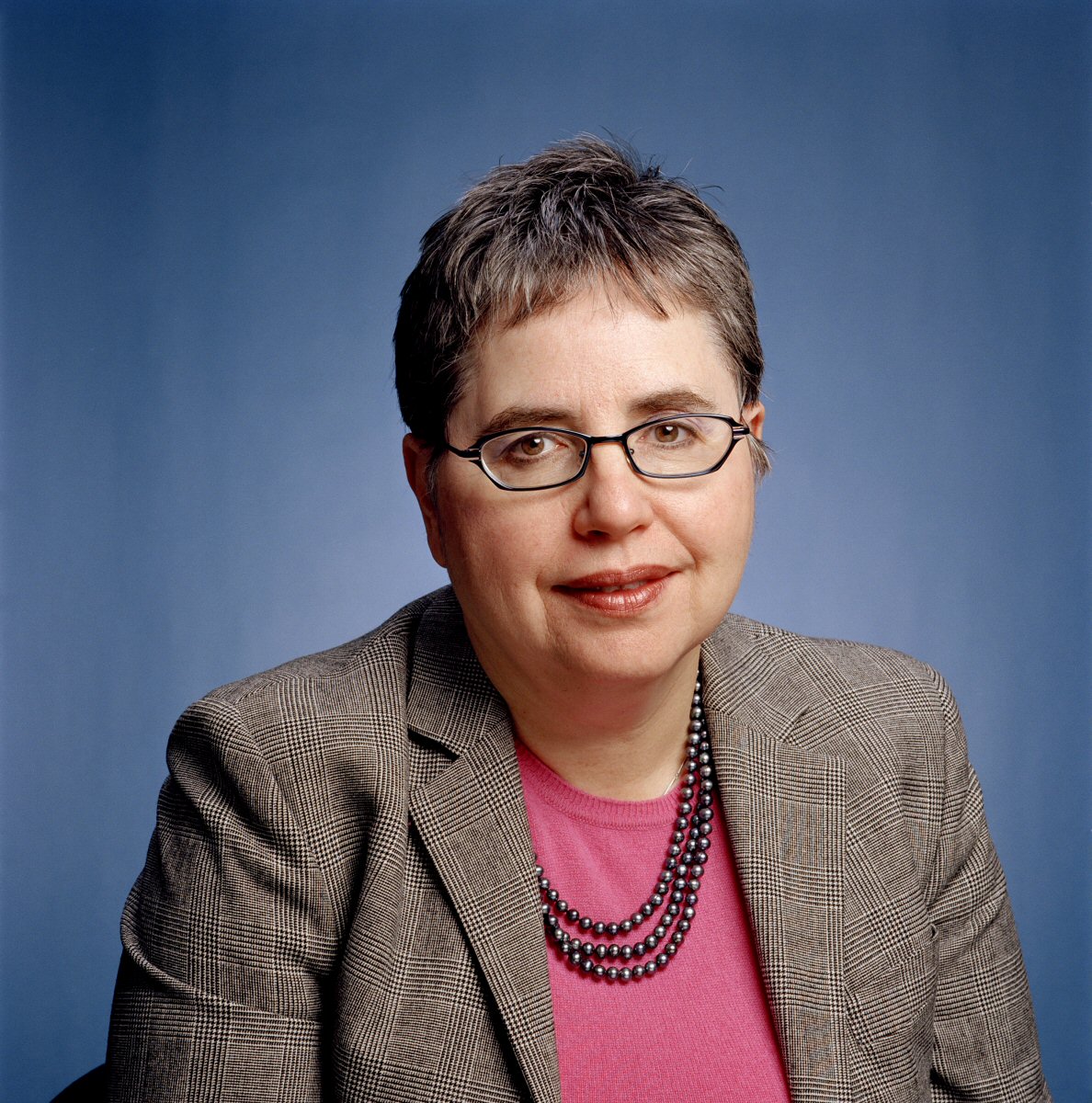
Former Senior Associate, Russia and Eurasia Program and, Co-director, al-Farabi Carnegie Program on Central Asia
Olcott is professor emerita at Colgate University, having taught political science there from 1974 to 2002. Prior to her work at the endowment, Olcott served as a special consultant to former secretary of state Lawrence Eagleburger.
Recent Work
Martha Brill Olcott
Martha Brill Olcott
Carnegie does not take institutional positions on public policy issues; the views represented herein are those of the author(s) and do not necessarily reflect the views of Carnegie, its staff, or its trustees.

China’s political future will be shaped between now and next October. As the Communist Party enters its intense “campaign season” to prepare for a major political transition in 2027, reading Beijing's actions and responses may become more difficult as domestic politics weigh on its behavior more than usual.

Damien Ma

Putin’s conservative staffing policies and search for ever greater control have cemented parliament’s transformation into a bureaucratic appendage of the executive branch.

Andrey Pertsev

Ex-president Gurbanguly Berdimuhamedov remains interested in politics, but his son Serdar, Turkmenistan’s current president, is becoming increasingly independent and willing to break with his father’s legacy. If their covert rivalry goes too far, both risk losing power.

Galiya Ibragimova

A notable degree of participative democracy has firmly arrived in Europe. But to have more far-reaching impact, democratic deliberation needs to move into a radically new phase.

Richard Youngs

Much has been said of the changes Brussels is trying to make to the EU enlargement process. Here’s why gradual integration might—or might not—be the answer.

Dimitar Bechev