

Commentary
A leak of Russian gas price data helps establish that China is paying Russia far less than Central Asian countries and Gazprom’s former European customers.
Sergey Vakulenko
{
  "authors": [
    "Antoine Bondaz"
  ],
  "type": "legacyinthemedia",
  "centerAffiliationAll": "",
  "centers": [
    "Carnegie Endowment for International Peace",
    "Carnegie China"
  ],
  "collections": [
    "China’s Foreign Relations"
  ],
  "englishNewsletterAll": "",
  "nonEnglishNewsletterAll": "",
  "primaryCenter": "Carnegie Endowment for International Peace",
  "programAffiliation": "",
  "programs": [],
  "projects": [],
  "regions": [
    "East Asia",
    "China"
  ],
  "topics": [
    "Economy",
    "Climate Change"
  ]
}
Source: Getty
China’s strategic turn to moving upmarket and pursuing sustainability has presented a significant challenge to Europe’s renewable energy market dominance.
Source: Global Times
Europe has led a paradigm shift toward sustainable development, and renewable energy has been at the very core of the new European growth model. Consequently, European companies have for some years enjoyed an unhindered global dominance in the niche renewable energy market.
China's strategic turn to moving upmarket and pursuing sustainability has presented a significant challenge to Europe's renewable energy market dominance. In less than six years, Chinese solar companies have captured more than 80 percent of the European solar technology market share.
The fact that some European solar companies have been driven into bankruptcy by Chinese competition has been a great shock to Europe. Not only has Europe become reliant on China as a provider of renewable energy related goods, but China has further demonstrated its ability to compete with European companies on high-end energy products as well.
The European Commission, the sole institution capable of unilaterally deciding the EU's trade policy, has decided to take emergency action, imposing levies of 11.8 percent on Chinese solar panel imports into Europe. The commission had initiated an investigation of Chinese solar panels at the insistence of German solar panel companies. However, the German government has since distanced itself from Brussels' decision to impose levies on Chinese solar panels and warned the commission that it had committed a "grave mistake."
China has now retaliated, targeting Europe's wine exports into China with an anti-dumping probe. These tit-for-tat measures have fostered a fear of a brewing Sino-European trade war. We can however extract some lessons from these recent developments.
It may be prudent for Europe to avoid alienating Beijing by pursuing lost causes. Since German solar panel producers have already lost their edge, Berlin has opted not to seek protectionist measures that might further alienate Beijing. German Chancellor Angela Merkel has opted to pursue pragmatic options that can better serve Germany's long-term national interests. By not pursuing punitive trade measures against China, German automobile, chemical, and heavy industry firms will not risk suffering from Chinese retaliatory trade policies.
China is an astute manipulator of internal EU dynamics and is adept at driving wedges between EU member states in order to further defend its national interests. Beijing targeted European wine exporters concentrated in South European states, particularly France and Italy, two countries that have argued for "fair play" measures and have been highly vocal supporters of the commission's policies targeting China.
The manner in which the trade dispute has played out suggests that the unilateral measures pursued by the commission may not have been the optimal means of addressing trade concerns. Rather than utilizing emergency mechanisms in a game of brinkmanship with the world's second largest economic power, Brussels would have been better served by bringing the current trade issue before the WTO, thereby allowing a principles-driven multilateral institution to resolve a possibly contentious issue.
Aggressive trade measures have a tendency to compel hard rather than conciliatory positions. Because Chinese Premier Li Keqiang has been highly vocal about the solar panel issue during his travels in Europe last month, China must now assume a hard stance vis-à-vis Europe, or risk its credibility in dealing with its many other trade disputes.
A cycle of trade-oriented retaliatory measures risks setting off an unfavorable downward spiral that could compromise any attempt at achieving win-win Sino-European cooperation. Competition is normal in international relations. However, competition does not inevitably preclude cooperation.
Fortunately, it is not yet too late to escape this vicious circle. France appears to be reacting to China fearfully, while Germany appears to be responding to China pragmatically. What the EU needs is a united voice and a common agenda in its dealings with China.
This article was originally published in Global Times.
Antoine Bondaz is a visiting scholar at the Carnegie-Tsinghua Center for Global Policy. Vasilis Trigkas, a non-resident WSD-Handa fellow at the Pacific forum CSIS, contributed research.
Antoine Bondaz
Carnegie does not take institutional positions on public policy issues; the views represented herein are those of the author(s) and do not necessarily reflect the views of Carnegie, its staff, or its trustees.
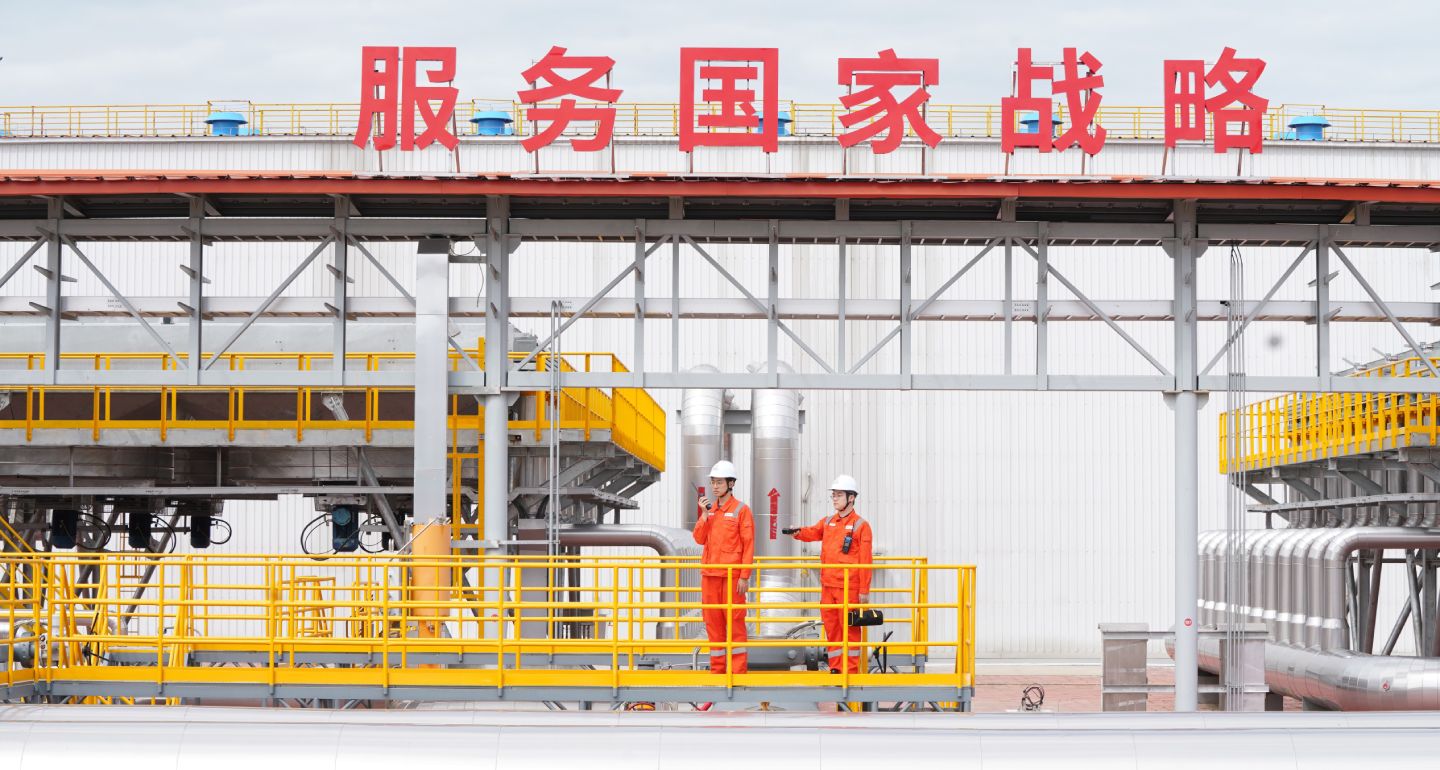
A leak of Russian gas price data helps establish that China is paying Russia far less than Central Asian countries and Gazprom’s former European customers.

Sergey Vakulenko

China’s political future will be shaped between now and next October. As the Communist Party enters its intense “campaign season” to prepare for a major political transition in 2027, reading Beijing's actions and responses may become more difficult as domestic politics weigh on its behavior more than usual.

Damien Ma

Rubio’s recent visit brought welcome attention, but more capital requires governance changes that may be a hard sell for regional governments.

Jennifer B. Murtazashvili

China has showcased its engineering prowess with small modular reactor demonstration projects. But turning these technological achievements into commercial success will be a greater challenge.

Tong Zhao

Despite public disputes over trade and immigration, the strategic partnership’s foundations remain sturdy.

Sameer Lalwani