

Paper
Douglas H. Paal
{
  "authors": [
    "Douglas H. Paal"
  ],
  "type": "legacyinthemedia",
  "centerAffiliationAll": "dc",
  "centers": [
    "Carnegie Endowment for International Peace"
  ],
  "collections": [],
  "englishNewsletterAll": "asia",
  "nonEnglishNewsletterAll": "",
  "primaryCenter": "Carnegie Endowment for International Peace",
  "programAffiliation": "AP",
  "programs": [
    "Asia"
  ],
  "projects": [],
  "regions": [
    "North America",
    "United States",
    "East Asia",
    "China",
    "Taiwan"
  ],
  "topics": [
    "Economy",
    "Trade",
    "Foreign Policy"
  ]
}
Source: Getty
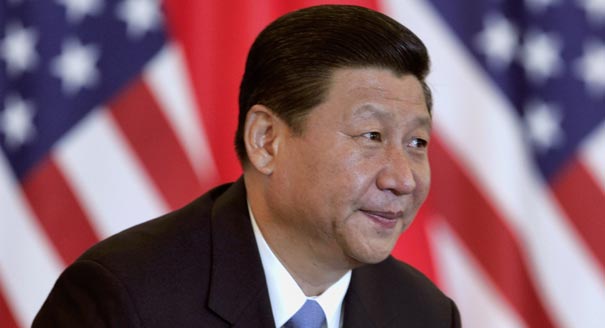
After a period of uncertainty, the Trump administration is now pursuing a more pragmatic policy toward China, at least with regards to the One China policy.
Source: CGTN
Speaking on CGTN, Carnegie’s Douglas H. Paal evaluated the prospects of future U.S.-China cooperation now that President Donald Trump has announced that he will honor the “One China” policy.
Paal welcomed the recent call between Trump and President Xi Jinping as a significant step toward stabilizing the U.S.-China after an initial period of uncertainty. He noted that if the previous Trump administration policy of openly questioning the One China policy were to continue, it would be impossible for Xi to have a constructive relationship with Trump.
The United States has now pursued a more pragmatic approach, said Paal, which matches the Chinese posture of flexibility and adaptability that Xi has adopted in the wake of Trump’s surprise election victory last November.
Paal praised the diplomacy of China’s top two “America watchers”—Yang Jiechi and Cui Tiankai—calling their efforts highly effective.
Moving forward, Paal predicted that future cooperation will depend on Trump’s perception of whether China is willing to significantly adjust trade and investment patterns to create jobs in the United States.

Distinguished Fellow, Asia Program
Paal previously served as vice chairman of JPMorgan Chase International and as unofficial U.S. representative to Taiwan as director of the American Institute in Taiwan.
Recent Work
Douglas H. Paal


Douglas H. Paal, Tong Zhao, Chen Qi, …
Carnegie does not take institutional positions on public policy issues; the views represented herein are those of the author(s) and do not necessarily reflect the views of Carnegie, its staff, or its trustees.
Washington needs to recognize that influence in the Western Hemisphere comes from presence, delivery, and reliability. It also must recognize that while the United States remains the key external actor, it no longer operates in a permissive environment and cannot presume deference from regional players who have other options, namely China.
Juan S. Gonzalez

Minsk clearly expected the dialogue with Washington to yield more results, in particular the lifting of EU sanctions and permission to export potash.

Artyom Shraibman

A summer of escalation in the Black Sea has hurt Ukraine economically and is exacerbating world food security. A truce is needed—as is a broader reframing of Europe’s Ukraine strategy.

Thomas de Waal

As the U.S. stumbles in its war with Iran, we are likely to see an acceleration of its disengagement from the region.

Michael Young
Why governance of rapidly evolving technology will be distributed and complex.

Stewart Patrick, Scott Singer