
• Research
  • About
  • Experts
Carnegie India logoCarnegie lettermark logo
Technology
{
  "authors": [],
  "type": "other",
  "centerAffiliationAll": "",
  "centers": [
    "Carnegie Endowment for International Peace",
    "Carnegie China",
    "Malcolm H. Kerr Carnegie Middle East Center",
    "Carnegie Russia Eurasia Center"
  ],
  "collections": [
    "China’s Foreign Relations",
    "U.S.-China Relations"
  ],
  "englishNewsletterAll": "",
  "nonEnglishNewsletterAll": "",
  "primaryCenter": "Carnegie Endowment for International Peace",
  "programAffiliation": "",
  "programs": [],
  "projects": [
    "Eurasia in Transition"
  ],
  "regions": [
    "North America",
    "United States"
  ],
  "topics": []
}
Other

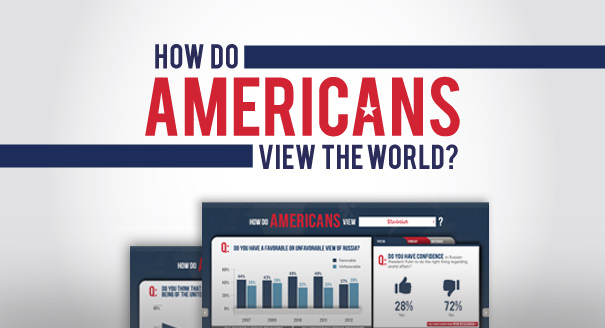
How Do Americans View the World?

Find out what Americans think, and where you fit in, with a new interactive resource from Carnegie and the Pew Research Center.

Link Copied
Published on Sep 18, 2012
Project hero Image

Project

Eurasia in Transition

Learn More

How do Americans View

Did you know?

41% of Americans think China is the world’s leading economic power. 58% think the United States will achieve its goals in Afghanistan. 64% think tough international economic sanctions won’t convince Iran to give up its nuclear program.

Americans’ views of the world have changed dramatically in the last decade—track how U.S. attitudes are evolving and where you fit in with this groundbreaking interactive feature from Carnegie and the Pew Research Center.

How do Americans View

  • 1
    Explore American opinions on foreign affairs, including the global economy and international threats.
  • 2
    See how your opinions compare with the American public.
  • 3
    Access related analysis from Carnegie scholars.
  • 4
    Compare public opinion across different demographics.
How do Americans View

How do Americans View

How do Americans View

Featured Resource

2012 Election Guide

Access the latest analysis on the election and America’s role in the world with viewpoints from Carnegie’s global centers.

North AmericaUnited States

Carnegie India does not take institutional positions on public policy issues; the views represented herein are those of the author(s) and do not necessarily reflect the views of Carnegie, its staff, or its trustees.

More Work from Carnegie India

  • Commentary
    The Impact of U.S. Sanctions and Tariffs on India’s Russian Oil Imports

    This piece examines India’s response to U.S. sanctions and tariffs, specifically assessing the immediate market consequences, such as alterations in import costs, and the broader strategic implications for India’s energy security and foreign policy orientation.

      Vrinda Sahai
  • Commentary
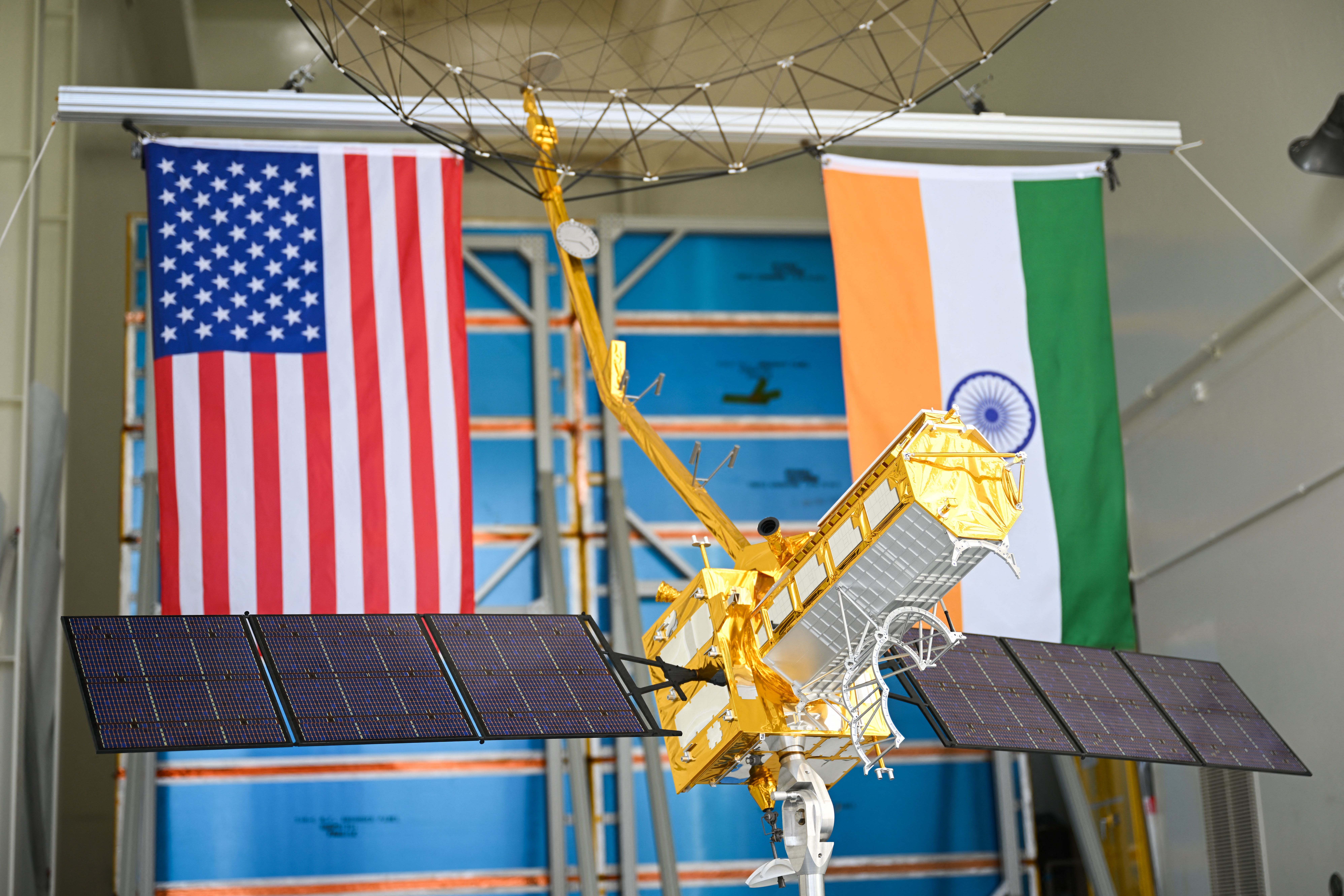
    NISAR Soars While India-U.S. Tariff Tensions Simmer

    On July 30, 2025, the United States announced 25 percent tariffs on Indian goods. While diplomatic tensions simmered on the trade front, a cosmic calm prevailed at the Sriharikota launch range. Officials from NASA and ISRO were preparing to launch an engineering marvel into space—the NASA-ISRO Synthetic Aperture Radar (NISAR), marking a significant milestone in the India-U.S. bilateral partnership.

      Tejas Bharadwaj

  • Commentary
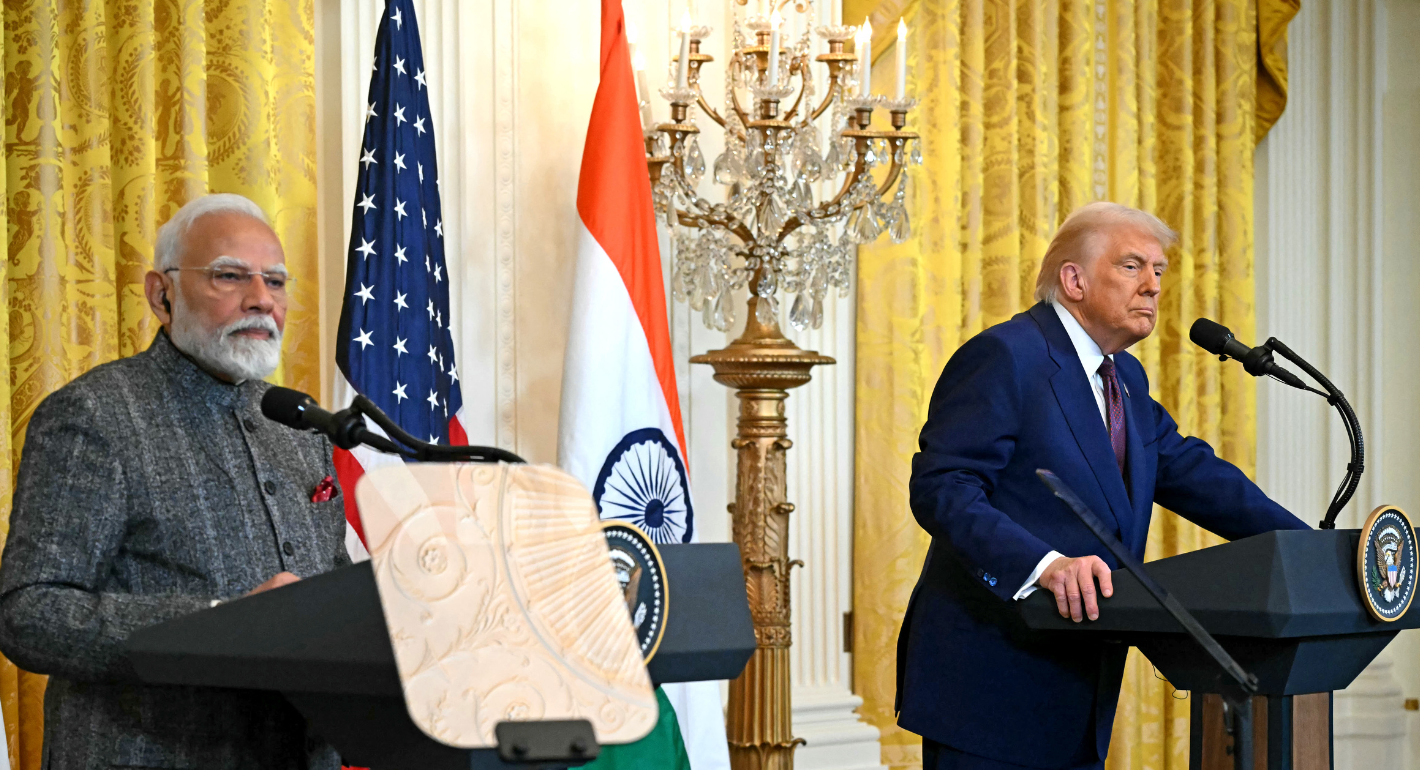
    TRUST and Tariffs

    The India-U.S. relationship currently appears buffeted between three “Ts”—TRUST, Tariffs, and Trump.

      Arun K. Singh

  • Commentary
    The India-U.S. TRUST Initiative: Advancing Semiconductor Supply Chain Cooperation

    As part of the TRUST initiative, leaders of the two countries committed to building trusted and resilient supply chains, including for semiconductors and critical minerals. India and the United States have made steady progress in this area over the years. This essay explores the takeaways from discussions on semiconductor supply chains that took place at Carnegie India’s 9th Global Technology Summit.

      Konark Bhandari

  • Commentary
    The India-U.S. TRUST Initiative: A Resilient Pharma Supply Chain

    This essay takes stock of the early momentum generated by the joint leaders’ commitment to catalyze public and private investments in building Indian manufacturing capacity—both domestically and in the United States—for active pharmaceutical ingredients (APIs) for critical medicines.

      Shruti Sharma

Get more news and analysis from
Carnegie India
Carnegie India logo, white
Unit C-4, 5, 6, EdenparkShaheed Jeet Singh MargNew Delhi – 110016, IndiaPhone: 011-40078687
  • Research
  • About
  • Experts
  • Projects
  • Events
  • Contact
  • Careers
  • Privacy
  • For Media
Get more news and analysis from
Carnegie India
© 2026 Carnegie Endowment for International Peace. All rights reserved.