Source: East Asia Forum
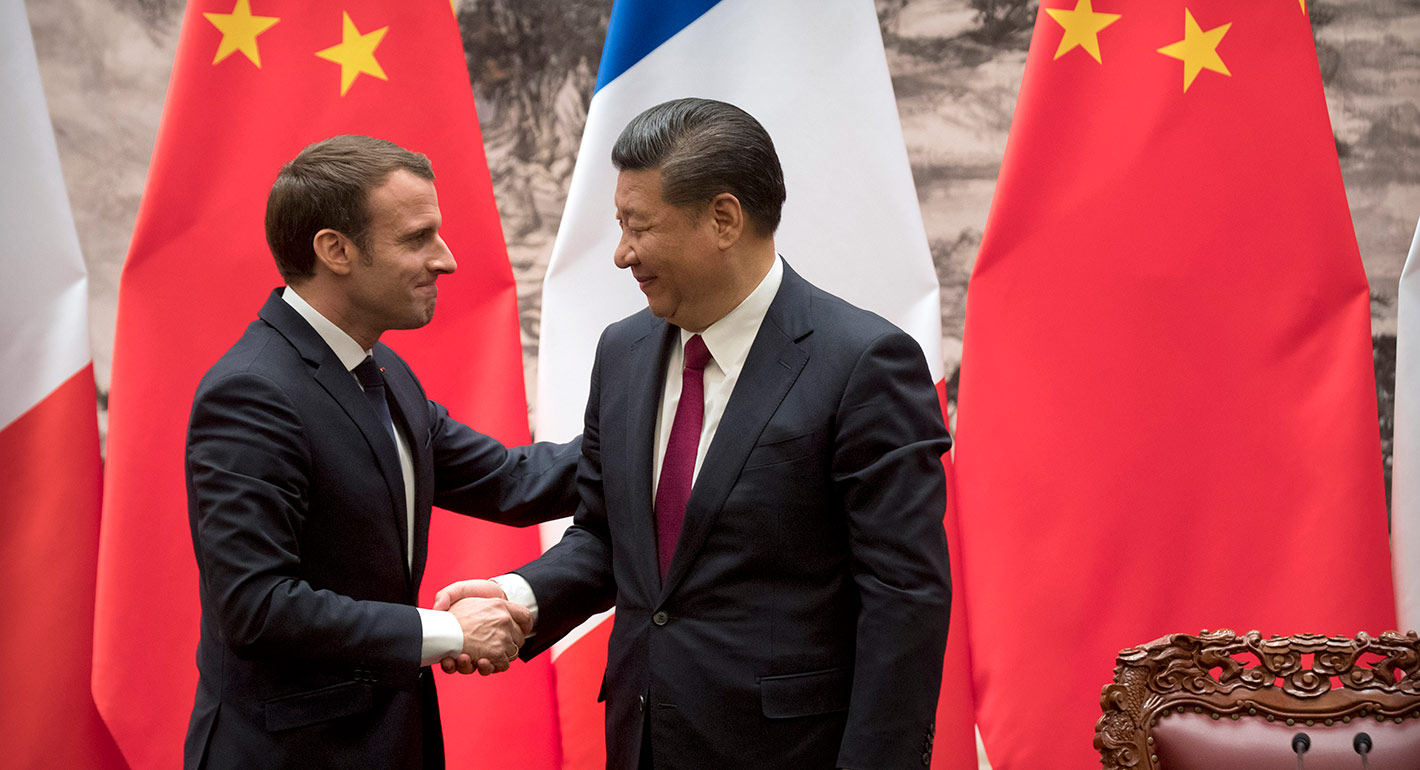
China’s complex relationship with the European Union is symbolised through the events of November 2019. Chinese President Xi Jinping flew to Greece almost as soon as French President Emmanuel Macron concluded his 3-day state visit to China on 6 November. China boasts a successful investment here — the Piraeus harbour of Athens.
Macron tried to make his trip as European as he could, bringing along an Irish European Commissioner and the German Education Minister. Despite these efforts, it is no coincidence that the country that Xi chose to visit next and to display Beijing’s message of ‘deepening cooperation’ has the most ambiguous — and most friendly — China policy of all EU members.
Greece has agreed on a number of important decisions in the European Union regarding China in 2019. These include supporting the new EU–China strategic outlook and the new foreign investment screening mechanism, a non-binding process that will allow Brussels to look into Chinese investment projects in sensitive technologies and infrastructures.
The new Greek government elected in July 2019 has not repealed any decisions regarding China made by its preceding government. Alexis Tsipras, Greece’s former prime minister, also attended the Belt and Road Forum in Beijing in April 2019. China’s investment in the Piraeus harbour in Athens is now considered part of the Belt and Road Initiative (BRI) even though the project was first started in 2009.
State-owned China Ocean Shipping Company (COSCO) owns 51 per cent of Piraeus and intends to use the harbour as a logistical platform for Chinese goods in the region. Xi has visited the harbour and expressed support for more Chinese investment in Greece.
In receiving the French president, Chinese leadership has shown it is willing to develop long-term relations with the most important Western countries, including those in Europe that have been at the core of the EU’s new China strategy. France is a permanent member of the United Nations Security Council. In 2017, France presided over the Paris Climate Accord with China’s support. Macron has also been a strong supporter of multilateralism and global trade — Beijing has been promoting these issues as part of its international approach. Yet, Xi Jinping’s visit to Athens is a sign that China is also willing to continue courting smaller European states that are most in need of financial support.
In 2008, after the global financial crisis, China became a major investor in some of the most indebted EU countries, including Italy, Portugal and Greece. Although it shows signs of improvement, Greece remains in a dire financial situation. The Piraeus harbour investment has become a symbol of a positive Chinese presence in European infrastructure. China insists it will continue to invest in the Greek economy, especially the tourism sector.
To a certain extent, China is also critical to France and Germany in the face of their declining economies. Germany is close to a recession and its corporate sector is split between two factions. Some large companies such as Siemens and Volkswagen believe in China as an export market. The other faction is led by the influential BDI, a confederation of German industries comprised of smaller technology-driven companies. The BDI’s January 2019 report called for a strengthening of the European Union’s commitments to compete with China.
France and Germany have been at the core of a new European China policy that was specified in March 2019 when Brussels published its ‘EU–China Strategic Outlook’. This simultaneously considers China as ‘a negotiating partner with whom the European Union needs to find a balance of interests, an economic competitor in the pursuit of technological leadership and a systemic rival promoting alternative models of governance’.
According to the European Union, such a state of affairs requires a ‘flexible and pragmatic whole-of-EU approach’. It asks for better European access to the Chinese market that remains dominated by Chinese state-owned companies.
The strategy was followed by the confirmation of a new foreign investment screening mechanism by the European Union that targets acquisitions in sensitive technologies and infrastructures.
More has come from Brussels in the past few weeks, including a report on EU coordinated risk assessment of 5G network security and a newly-sealed EU partnership with Japan on connectivity. Such a flurry of announcements are certainly a reaction to China’s global rise, which has included playing on European divisions. Although they did not publicly oppose the European Union’s new strategy, Greece, Portugal, Hungary and Croatia have been quietly advocating for an ‘open door’ policy regarding Chinese investments. Hungary and Greece also refused to approve EU statements criticising China for its human rights record.
The divisions leave France, Germany and the new European Commission in a difficult situation. European leaders have started thinking collectively about ‘the China problem’, at least on the economic and technological fronts. China has clearly become a major issue, illustrated by Macron’s recent state visit. It will not be easy to strike a balance that unites the European Union — China has in the past managed to divide the European Union among regional subgroups.
As China’s cash machine shows signs of slowing down, pragmatic Europeans should regroup and offer China alternatives to US President Donald Trump’s zero-sum approach to economic relations. The European Union is still China’s top trading partner and it is said that the BRI was aimed at the EU consumer market. Instead of playing Beijing’s game, the European Union should take advantage of the situation. It should demand reciprocity with China, stick with European values and the rule of law while leaving an open door for cooperation with China on global issues outside EU borders.
This article was originally published in the East Asia Forum.