• Research
  • About
  • Experts
Carnegie India logoCarnegie lettermark logo
{
  "authors": [
    "Shishir Priyadarshi"
  ],
  "type": "other",
  "centerAffiliationAll": "",
  "centers": [
    "Carnegie Endowment for International Peace"
  ],
  "collections": [],
  "englishNewsletterAll": "",
  "nonEnglishNewsletterAll": "",
  "primaryCenter": "Carnegie Endowment for International Peace",
  "programAffiliation": "",
  "programs": [],
  "projects": [],
  "regions": [],
  "topics": [
    "Economy",
    "Trade"
  ]
}
REQUIRED IMAGE

REQUIRED IMAGE

Other

Reforming Global Trade in Agriculture: A Developing-Country Perspective

More than seven years after the members of the World Trade Organization (WTO) signed the landmark Agreement on Agriculture (AOA), the benefits and drawbacks of that accord are coming into stark relief. A new agreement should give developing countries the flexibility to adopt domestic policies that are geared to enhance domestic production and protect the livelihoods of their rural poor.

Link Copied
By Shishir Priyadarshi
Published on Aug 23, 2002

Source: Carnegie

More than seven years after the members of the World Trade Organization (WTO) signed the landmark Agreement on Agriculture (AOA), the benefits and drawbacks of that accord are coming into stark relief. For developing countries dependent on agriculture exports, the AOA has not succeeded in opening markets in industrial countries. Even more crucially, the low-income and resource-poor farmers in the world’s poor and vulnerable countries continue to suffer from a lack of adequate and secure food sources, while having to contend with import surges and other forces of global competition.

The new round of agriculture negotiations, the mandate of which was further strengthened in the November 2001 Doha Ministerial Declaration, gives the WTO and its members a chance to rectify these imbalances. A new agreement should give developing countries the flexibility to adopt domestic policies that are geared to enhance domestic production and protect the livelihoods of their rural poor.

About the Author
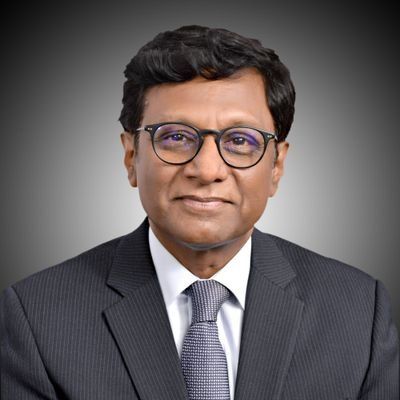
Shishir Priyadarshi
is on the staff of the Development and Economic Research Division of the World Trade Organization in Geneva. He is responsible for the work of the WTO’S Committee on Trade and Development, including the mandated work arising out of the Doha Development Agenda on technology transfer and special and differential treatment. Until recently, he was on the staff of the South Centre, an intergovernmental organization of developing countries based in Geneva, where he was responsible for providing developing countries with analytical and technical assistance on issues being considered by the WTO.

About the Author

Shishir Priyadarshi

Shishir Priyadarshi
EconomyTrade

Carnegie India does not take institutional positions on public policy issues; the views represented herein are those of the author(s) and do not necessarily reflect the views of Carnegie, its staff, or its trustees.

More Work from Carnegie India

  • Commentary
    The Impact of U.S. Sanctions and Tariffs on India’s Russian Oil Imports

    This piece examines India’s response to U.S. sanctions and tariffs, specifically assessing the immediate market consequences, such as alterations in import costs, and the broader strategic implications for India’s energy security and foreign policy orientation.

      Vrinda Sahai

  • Paper
    India-China Economic Ties: Determinants and Possibilities

    This paper examines the evolution of India-China economic ties from 2005 to 2025. It explores the impact of global events, bilateral political ties, and domestic policies on distinct spheres of the economic relationship.

      Santosh Pai

  • Commentary
    TRUST and Tariffs

    The India-U.S. relationship currently appears buffeted between three “Ts”—TRUST, Tariffs, and Trump.

      Arun K. Singh

  • Article
    Can Geopolitical Alignment Seal the India-EU FTA?

    This article argues that the geopolitical circumstances have never been more conducive, not merely for the early conclusion of the free trade agreement (FTA) between India and the EU, but also for crafting a substantive and comprehensive strategic partnership.

      Mohan Kumar

  • Article
    A Path Out of Tunisia’s Economic Crisis

    President Kais Saied has won a second term in office, but his country is facing a host of problems that necessitate urgent reforms, above all preventing the possibility of a financial meltdown. 

      Ishac Diwan, Hachemi Alaya, Hamza Meddeb

Get more news and analysis from
Carnegie India
Carnegie India logo, white
Unit C-4, 5, 6, EdenparkShaheed Jeet Singh MargNew Delhi – 110016, IndiaPhone: 011-40078687
  • Research
  • About
  • Experts
  • Projects
  • Events
  • Contact
  • Careers
  • Privacy
  • For Media
Get more news and analysis from
Carnegie India
© 2026 Carnegie Endowment for International Peace. All rights reserved.