• Research
  • About
  • Experts
Carnegie India logoCarnegie lettermark logo
AI
{
  "authors": [
    "Jan Techau"
  ],
  "type": "other",
  "centerAffiliationAll": "",
  "centers": [
    "Carnegie Endowment for International Peace",
    "Carnegie Europe"
  ],
  "collections": [],
  "englishNewsletterAll": "",
  "nonEnglishNewsletterAll": "",
  "primaryCenter": "Carnegie Europe",
  "programAffiliation": "",
  "programs": [],
  "projects": [],
  "regions": [
    "Europe"
  ],
  "topics": [
    "Foreign Policy"
  ]
}
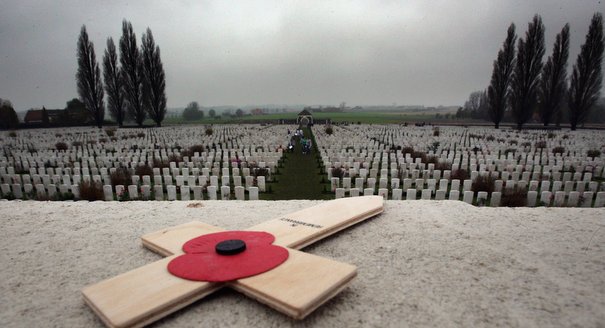
Source: Getty

Other
Carnegie Europe

Remembrance Day Lecture

Peace is achieved through a permanent balancing of diverging interests and an understanding that work toward peace will never end; it must be achieved again and again.

Link Copied
By Jan Techau
Published on Nov 10, 2012

Source: Flemish Parliament

Each year, the Flemish Peace Institute, the Peace Fund of the City of Ypres, and the In Flanders Fields Museum commemorate the end of the First World War with a Remembrance Day Lecture. This year, Carnegie’s Jan Techau was invited to discuss his thoughts on war and peace on the eve of Armistice Day. Techau took this opportunity to discuss the process of peace in Europe and beyond.
Highlights

  • Peace: Techau argued that peace, like health, is not an end state, but a continuous process. It is achieved through a permanent balancing of diverging interests and an understanding that work toward peace will never end; it must be achieved again and again.
     
  • Europe and the Process of Peace: The EU is an ideal example of “peace as a process” rather than a “peace process,” Techau said. The EU created a mechanism to address and resolve past problems by applying commonly accepted rules that remove causes of conflict and in turn produce peace. This contrasts with the currently failing Middle East peace process which lacks machinery and commonly accepted rules, and therefore is unable to solve problems, he added. He argued that Europe has not lost its intrinsic instabilities and is still capable of war, genocide, jealousy, inflated nationalism, disregard for minorities, territorial disputes, racism, a lack of compassion, and other negative qualities, but it has the mechanisms to fight these negative trends.
     
  • Europe and the World: Techau explained that over the last 60 years, Europe has focused on internal peace. It has shown little concern for its external role, as it outsourced its global strategic engagements to the United States in order to focus on pacifying itself. However, as U.S. defense priorities shift and EU integration with the world is becoming more profound, Europe is no longer able to continue to carry on this way, Techau contended. He stressed that Europe’s peace, wealth, freedom, and stability are no longer upheld internally, and Europe must look externally if it wants to maintain internal peace. He argued that Europe must become a more unified, stronger, and more self-confident global player, with a foreign policy and strategy, the means to implement them, and a willingness to tackle the tricky issues. Techau added that in order to maintain peace in a world that is increasingly interconnected, it is imperative that Europe go global with its peace mechanism.
     
  • An Ambitious Europe: The problem, according to Techau, is less a lack of money and attention span than a lack of ambition. He defined this ambition as the will to survive, the aspiration to look at facts and developments in the world, and to do something about the issues coming Europe’s way. Lack of ambition results in a lack of solidarity, Techau said. Europe needs an ambitious foreign policy, not to dominate, but to survive. Techau concluded that Europe needs to be a force for good in the world, because few others want to be that, and few others can.

About the Author

Jan Techau

Director, Europe Team, Eurasia Group

Techau is director with Eurasia Group's Europe team, covering Germany and European security from Berlin. Previously, he was director of Carnegie Europe.

    Recent Work
  • Commentary
    Can Europe Trust the United States Again?

      Nathalie Tocci, Jan Techau

  • Commentary
    Pre-Reformation Europe and the Coming Schism

      Jan Techau

Jan Techau
Director, Europe Team, Eurasia Group
Jan Techau
Foreign PolicyEurope

Carnegie India does not take institutional positions on public policy issues; the views represented herein are those of the author(s) and do not necessarily reflect the views of Carnegie, its staff, or its trustees.

More Work from Carnegie India

  • Commentary
    The Impact of U.S. Sanctions and Tariffs on India’s Russian Oil Imports

    This piece examines India’s response to U.S. sanctions and tariffs, specifically assessing the immediate market consequences, such as alterations in import costs, and the broader strategic implications for India’s energy security and foreign policy orientation.
      Vrinda Sahai
  • Commentary
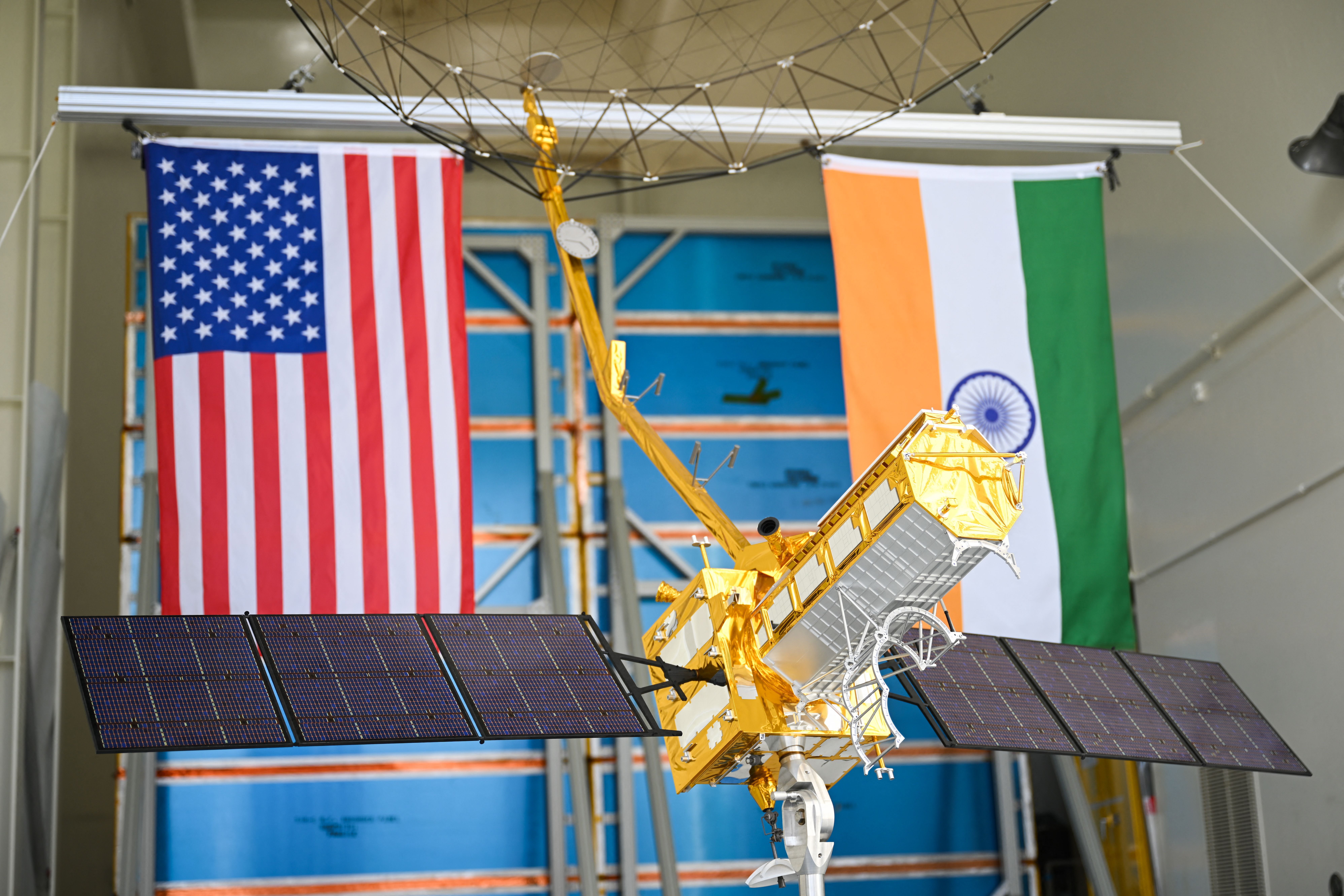
    NISAR Soars While India-U.S. Tariff Tensions Simmer

    On July 30, 2025, the United States announced 25 percent tariffs on Indian goods. While diplomatic tensions simmered on the trade front, a cosmic calm prevailed at the Sriharikota launch range. Officials from NASA and ISRO were preparing to launch an engineering marvel into space—the NASA-ISRO Synthetic Aperture Radar (NISAR), marking a significant milestone in the India-U.S. bilateral partnership.

      Tejas Bharadwaj
  • Commentary
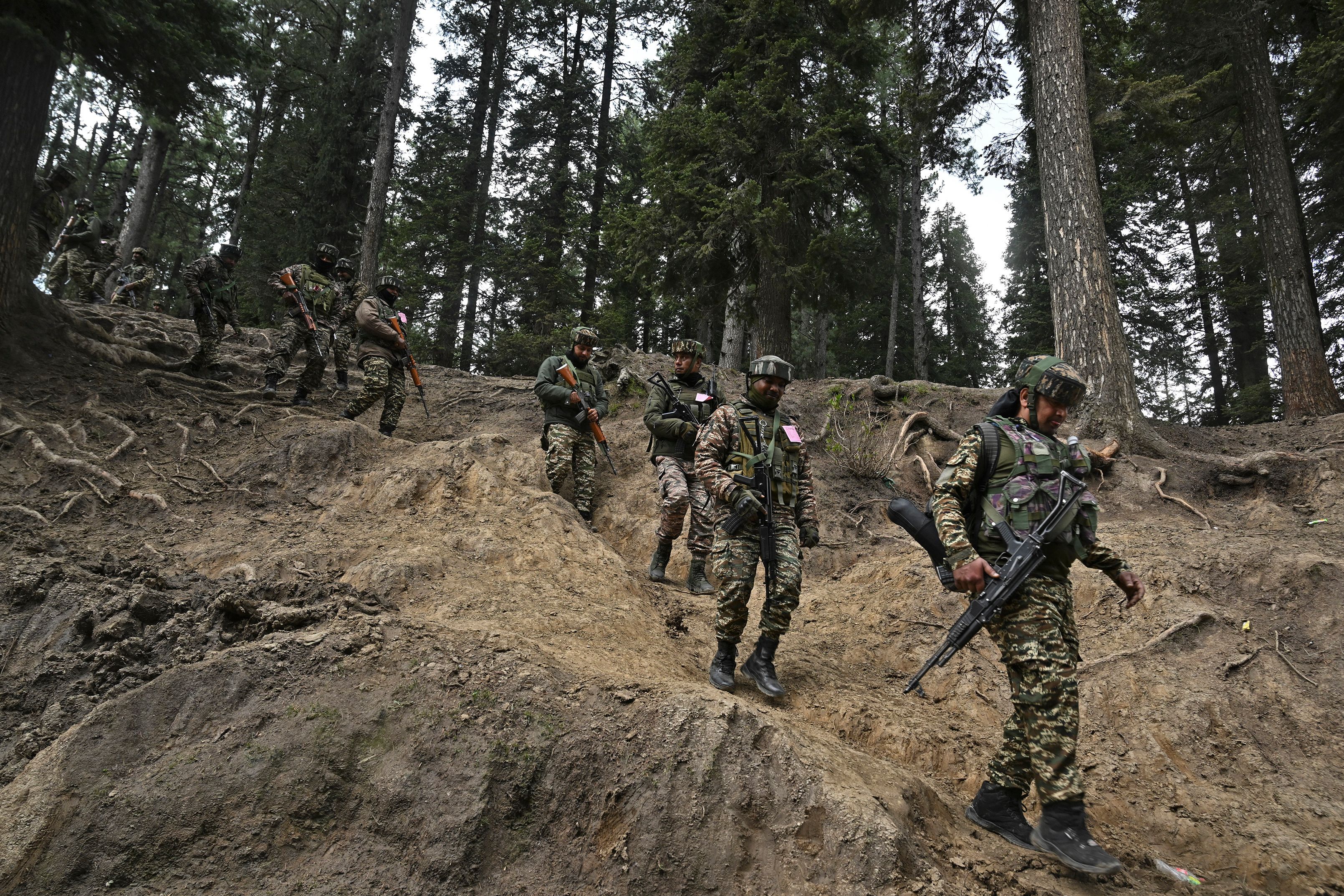
    Indian Airstrikes in Pakistan: May 7, 2025

    On May 7, 2025, between 1:05 and 1:30 a.m. (IST), airstrikes carried out by the Indian Air Force hit nine locations inside Pakistan and Pakistan occupied Kashmir (PoK). It was codenamed Operation Sindoor.

      Rudra Chaudhuri

  • Research
    Views From Taipei: Essays by Young Indian Scholars on China

    This compendium brings together three essays by scholars who participated in Carnegie India's Security Studies Dialogue in 2024, each examining a different aspect of China’s policies. Drawing on their expertise and research, the authors offer fresh perspectives on key geopolitical challenges.
      • +1

      Vijay Gokhale, Suyash Desai, Amit Kumar, …

  • Commentary
    The India-U.S. TRUST Initiative: Advancing Semiconductor Supply Chain Cooperation

    As part of the TRUST initiative, leaders of the two countries committed to building trusted and resilient supply chains, including for semiconductors and critical minerals. India and the United States have made steady progress in this area over the years. This essay explores the takeaways from discussions on semiconductor supply chains that took place at Carnegie India’s 9th Global Technology Summit.

      Konark Bhandari

Get more news and analysis from
Carnegie India
Carnegie India logo, white
Unit C-4, 5, 6, EdenparkShaheed Jeet Singh MargNew Delhi – 110016, IndiaPhone: 011-40078687
  • Research
  • About
  • Experts
  • Projects
  • Events
  • Contact
  • Careers
  • Privacy
  • For Media
Get more news and analysis from
Carnegie India
© 2026 Carnegie Endowment for International Peace. All rights reserved.