

Commentary
Nathalie Tocci, Jan Techau
{
  "authors": [
    "Jan Techau"
  ],
  "type": "commentary",
  "centerAffiliationAll": "",
  "centers": [
    "Carnegie Endowment for International Peace",
    "Carnegie Europe",
    "Carnegie Russia Eurasia Center"
  ],
  "collections": [],
  "englishNewsletterAll": "",
  "nonEnglishNewsletterAll": "",
  "primaryCenter": "Carnegie Europe",
  "programAffiliation": "",
  "programs": [],
  "projects": [],
  "regions": [],
  "topics": []
}
Source: Getty
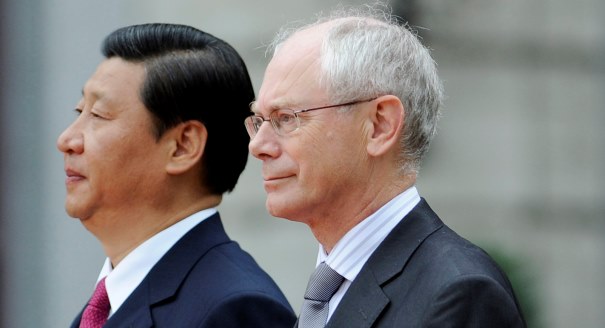
Both Europe and China are overdependent on the United States as a guarantor of the liberal world order. Both need to wake up and accept their global responsibility.
Could any two global players be more different than China and the EU? Probably not. Yet the two are facing the same fundamental dilemma about their place in the world. The closer one looks, the more these two powers look like strategic twins.
Both China and Europe have, for at least a generation, focused on internal affairs and economic development, at the expense of foreign policy. And both are reluctant to assume a more responsible and active role in international affairs.
Europe’s passivity in foreign policy creates a geopolitical vacuum in the European neighborhood and divisions in the relationship with the United States. China’s reluctance, coupled with its neurotic scramble for recognition as a great power, creates suspicion both in its own immediate neighborhood and in the United States.
Most importantly, however, both Europe and China rely for their economic well-being on a reasonably well functioning liberal world order that neither of them has the power to protect. They count on someone else to do that for them: the United States.
The United States, however, has been getting relatively weaker and less willing as a world power. China and Europe must now decide whether to shoulder more of that global burden themselves. European and Chinese leaders find it difficult to make this choice. Yet sustaining the liberal world order is nothing less than a question of survival, and therefore the number one geopolitical issue of our time.
Unsurprisingly, the awareness about how much both players tacitly rely on U.S. leadership is much higher in Beijing than in Brussels.
At some point, the parallels between China and Europe end, not least because one is a unitary actor, while the other is not; and one has an authoritarian, single-party system, while the other constitutes a club of Western liberal democracies. The fact that important similarities can nevertheless be found illustrates the profound weakness built into the current global order: that it disproportionally relies on one player to sustain it, while free-riders continue to enjoy geopolitical subsidies. This imbalance is unsustainable.
What follows from the strategic twins theory? The good news is that there are two major players out there who “only” need to wake up to play their proper role. The international system has a stability reserve. What is lacking is the willingness to use it.
The bad news is that even if Europe and China should decide to assume greater responsibility in the future, the division of labor between the then three pillars of the international system would be extremely tricky.
Among Europe, China, and the United States, interpretations of sovereignty, the legitimate use of force, good governance, and the usefulness of the UN differ greatly. But what other choice is there? To be sure, preserving and strengthening the liberal world order will be a daunting task, whether Europe and China accept their new responsibilities or not. But it will be infinitely easier if they do. It’s time for the strategic twins to wake up.
Director, Europe Team, Eurasia Group
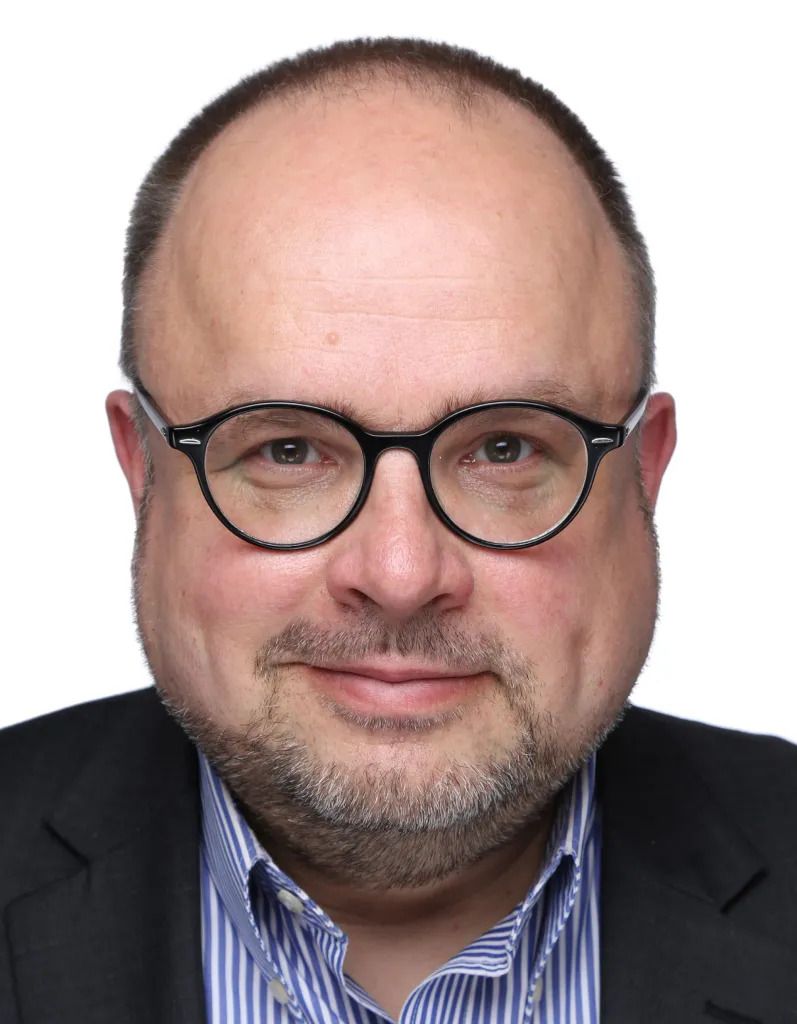
Techau is director with Eurasia Group's Europe team, covering Germany and European security from Berlin. Previously, he was director of Carnegie Europe.
Recent Work

Nathalie Tocci, Jan Techau
Jan Techau
Carnegie India does not take institutional positions on public policy issues; the views represented herein are those of the author(s) and do not necessarily reflect the views of Carnegie, its staff, or its trustees.