

Commentary
Marc Pierini
{
  "authors": [
    "Marc Pierini"
  ],
  "type": "legacyinthemedia",
  "centerAffiliationAll": "dc",
  "centers": [
    "Carnegie Endowment for International Peace",
    "Carnegie Europe",
    "Malcolm H. Kerr Carnegie Middle East Center"
  ],
  "collections": [
    "Turkey’s Transformation"
  ],
  "englishNewsletterAll": "ctw",
  "nonEnglishNewsletterAll": "",
  "primaryCenter": "Carnegie Europe",
  "programAffiliation": "EP",
  "programs": [
    "Europe"
  ],
  "projects": [],
  "regions": [
    "Middle East",
    "Europe",
    "Türkiye",
    "Western Europe",
    "Iran"
  ],
  "topics": [
    "Foreign Policy",
    "EU"
  ]
}
Source: Getty
The bonds between Turkey and the EU are reaching a critical moment. Vision, and not local politics, should guide upcoming talks between Erdogan and his EU counterparts.
Source: Hürriyet Daily News
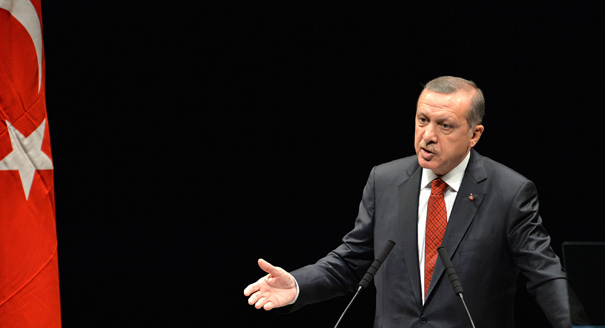
On Monday, Jan. 21th, Prime Minister Recep Tayyip Erdoğan will be in Brussels for talks with José Manuel Barroso, Herman van Rompuy and Martin Schulz. The visit comes at a critical time: both Turkey and the EU have major political deadlines in 2014; several positive developments have occurred between Turkey and the EU during the last quarter of 2013; yet, Turkey’s internal political turmoil raises major questions in European capitals. The recent developments entail a real risk of “political disconnect” between Turkey and the EU, while the country has probably never been so strategically important for Europe.
I, personally, see three major goals in this timely visit. Firstly, it is necessary for both sides to agree on a shared understanding of democracy and rule of law. Irrespective of the roots of the present political turmoil, there is little doubt that rule of law in Turkey has been substantially jeopardized during the past four weeks. Painstaking efforts to establish independent state institutions, undertaken by the AKP government in conformity with EU criteria, are now being rolled back. The Turkish visitors will be surprised to see how much their European hosts are perplexed and disturbed by these developments.
There will be a need for a reaffirmation of the shared values that form the basis of any accession process. Not just words, but a reversal in the dismantling of an independent judiciary apparatus and an end to the ever-increasing limitations to freedom of the press. In a modern democracy, especially a country negotiating accession, adherence to democratic principles cannot go together with the abrupt muzzling of state institutions or the elimination of checks and balances every time political waters get rough.Secondly, the visit should be the occasion to clarify the accession process is definitely “on” for both sides. For the EU, it means proceeding under the strict, mutually agreed conditionality, which includes referendums in some EU member states at the final stage. If so, the EU will have to move without delay toward the opening of Chapter 23 (Judiciary and Fundamental Rights), which implies some serious internal discussions. For Turkey, it means more effort, for example moving forward with opening Chapter 5 (Public Procurement), which would give a reassuring signal to foreign investors interested in Turkey.
Thirdly, it is high time to add an extra dimension to the EU-Turkey relationship without departing from the accession process. While accession negotiations continue, themes of a strategic nature should be entertained in an independent manner. Turkey’s deeper association to some of Europe’s defense industry projects would be a major example (military transport plane A400M; French-Italian bid and industrial offer for Turkey’s missile defense system; France’s or Spain’s strong expertise in “landing platform dock” vessels for the Turkish navy). It would also illustrate Turkey’s commitment to NATO standards and procedures. The same goes for civilian aerospace industries where the solid record of cooperation could be expanded further.
In the education and culture field, there is ground for a spectacular gesture of mutual goodwill: doubling the existing ERASMUS+ and other civil society programs (where Turkey is already a cost-sharing partner) would represent a major signal of trust in Turkey’s future generations and hope for the Turkish youth and cultural circles. The relationship between the EU and Turkey is not meant to be the exclusive preserve of ruling governments; it is a matter for each and every citizen. The strong attachment of Turks of all walks of life to their individual freedoms and to the rule of law cannot be ignored by the EU.
The bonds between Turkey and the EU are reaching a critical moment. On Jan. 21th in Brussels, vision should guide both sides, not local politics.
This article was originally published in the Hürriyet Daily News.

Senior Fellow, Carnegie Europe
Marc Pierini is a senior fellow at Carnegie Europe, where his research focuses on developments in the Middle East and Turkey from a European perspective.
Recent Work
Marc Pierini
Marc Pierini
Carnegie India does not take institutional positions on public policy issues; the views represented herein are those of the author(s) and do not necessarily reflect the views of Carnegie, its staff, or its trustees.

After the chill in ties between 2020 and 2024 that brought India–China relations to their lowest point in several decades, the two countries have engaged each other afresh. This paper argues that there are predominantly four imperatives guiding India’s approach to China, and they exist in an order of priority.

Saheb Singh Chadha

This piece argues that India’s central challenge is not managing a single flashpoint but resolving the underlying tension between expansion and institutional coherency of the BRICS grouping.

Vrinda Sahai
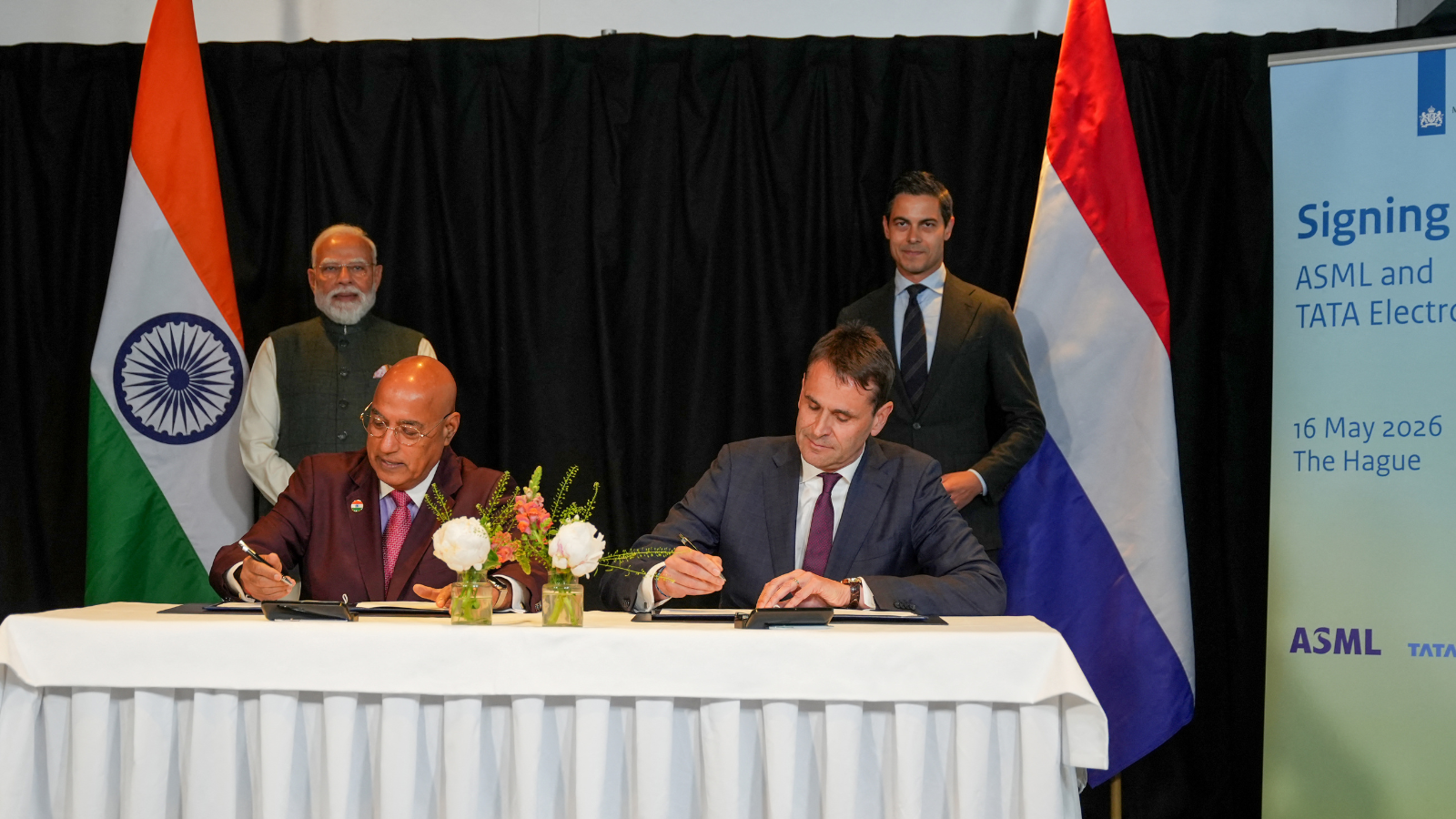
The ASML MoU with Tata Electronics is an indicator of how far the Indian semiconductor ecosystem has come. This ecosystem has been years in the making and represents real commercial logic.

Konark Bhandari

A partnership between India, a country of subcontinental size, and Africa, a continent of fifty-four countries, may seem asymmetric until one notes that both are home to nearly the same number of people—1.4 billion. This essay spells out the existing challenges to the partnership, its optimal potential, and the possible pathways to realize it over the next quarter-century.

Rajiv Bhatia

The India–EU Free Trade Agreement (FTA) is shaping up to be one of the most consequential trade negotiations, both economically and strategically. But, what’s in the agreement, what’s missing, and what will determine its success in the years ahead
Vrinda Sahai, Nicolas Köhler-Suzuki