

Commentary
Yukon Huang, Isaac B. Kardon, Matt Sheehan
{
  "authors": [
    "Yukon Huang"
  ],
  "type": "legacyinthemedia",
  "centerAffiliationAll": "dc",
  "centers": [
    "Carnegie Endowment for International Peace"
  ],
  "collections": [],
  "englishNewsletterAll": "asia",
  "nonEnglishNewsletterAll": "",
  "primaryCenter": "Carnegie Endowment for International Peace",
  "programAffiliation": "AP",
  "programs": [
    "Asia"
  ],
  "projects": [],
  "regions": [
    "East Asia",
    "China"
  ],
  "topics": [
    "Economy"
  ]
}
Source: Getty
China is unique in terms of its economic performance but is not exceptional. People need a different set of assumptions to understand China’s economy even though the economic principles for analysis are the same.
Source: CGTN
Speaking on CGTN, Carnegie’s Yukon Huang argued that while China is unique in terms of its economic performance, it is not exceptional. He explained that a different set of assumptions is needed for understanding China’s economy, even though the economic principles for analysis are the same. He offered as an example the importance of recognizing the unique role of local governments in creating a competitive environment in China. On the topic of globalization, Huang argued that there has been an important change in the perception that emerging economies are putting pressures on employment and wage in advanced economies. While the governance structure of globalization has undergone changes and emerging economies have had more say, a consensus has not been reached on what everyone should work toward, Huang said. Huang also argued that the issues that China faces now—such as environmental issues and innovation—are quite different from what it faced ten years ago.

Senior Fellow, Asia Program
Huang is a senior fellow in the Carnegie Asia Program where his research focuses on China’s economy and its regional and global impact.
Recent Work


Yukon Huang, Isaac B. Kardon, Matt Sheehan
Yukon Huang, Genevieve Slosberg

This piece examines India’s response to U.S. sanctions and tariffs, specifically assessing the immediate market consequences, such as alterations in import costs, and the broader strategic implications for India’s energy security and foreign policy orientation.

Vrinda Sahai

This paper examines the evolution of India-China economic ties from 2005 to 2025. It explores the impact of global events, bilateral political ties, and domestic policies on distinct spheres of the economic relationship.

Santosh Pai

This article examines the scale and impact of Chinese IUU fishing operations globally and identifies the nature of the challenge posed by IUU fishing in the Indian Ocean Region (IOR). It also investigates why existing maritime law and international frameworks have struggled to address this growing threat.


Ajay Kumar, Charukeshi Bhatt
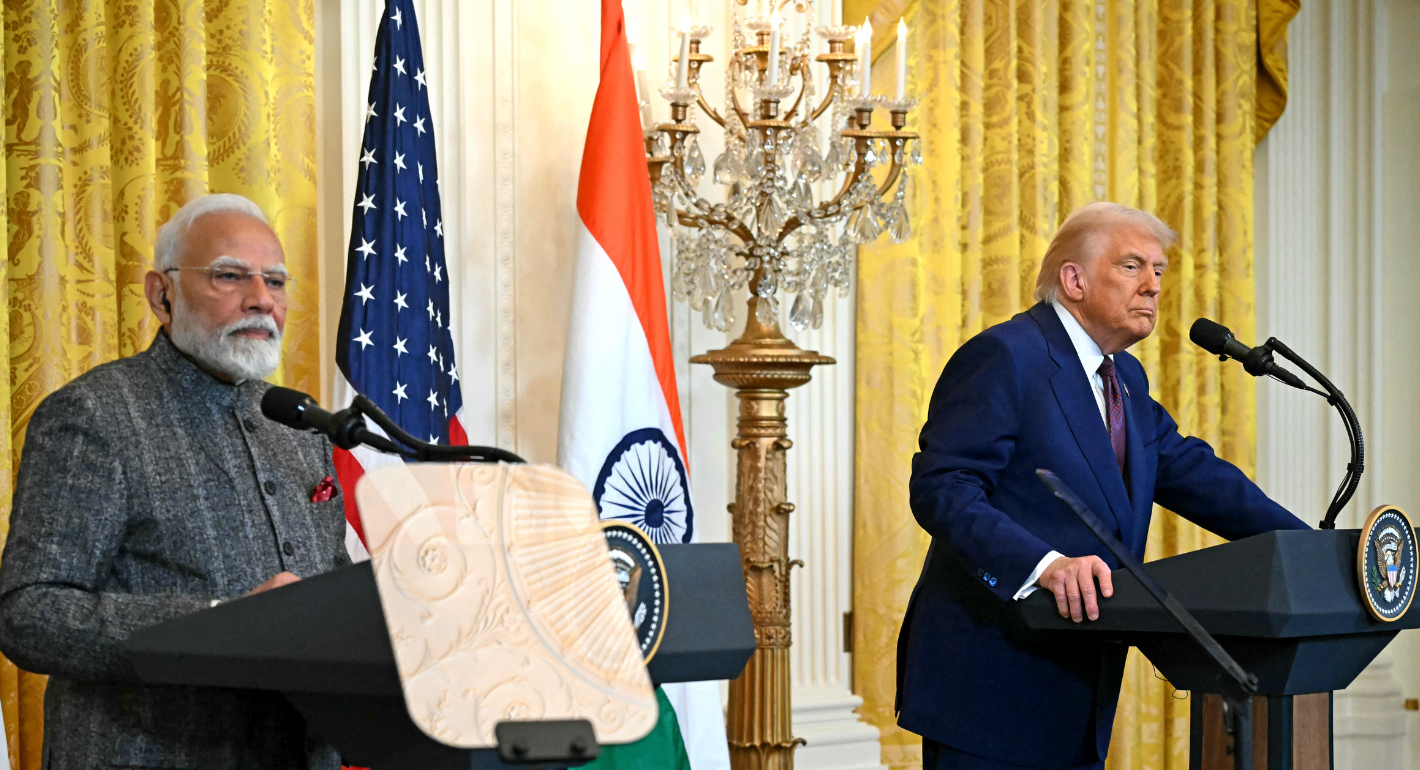
The India-U.S. relationship currently appears buffeted between three “Ts”—TRUST, Tariffs, and Trump.

Arun K. Singh

This compendium brings together three essays by scholars who participated in Carnegie India's Security Studies Dialogue in 2024, each examining a different aspect of China’s policies. Drawing on their expertise and research, the authors offer fresh perspectives on key geopolitical challenges.



Vijay Gokhale, Suyash Desai, Amit Kumar, …