

Other
François Godement, Ashley J. Tellis
{
  "authors": [
    "François Godement"
  ],
  "type": "legacyinthemedia",
  "centerAffiliationAll": "dc",
  "centers": [
    "Carnegie Endowment for International Peace"
  ],
  "collections": [],
  "englishNewsletterAll": "asia",
  "nonEnglishNewsletterAll": "",
  "primaryCenter": "Carnegie Endowment for International Peace",
  "programAffiliation": "AP",
  "programs": [
    "Asia"
  ],
  "projects": [],
  "regions": [],
  "topics": []
}
Source: Getty
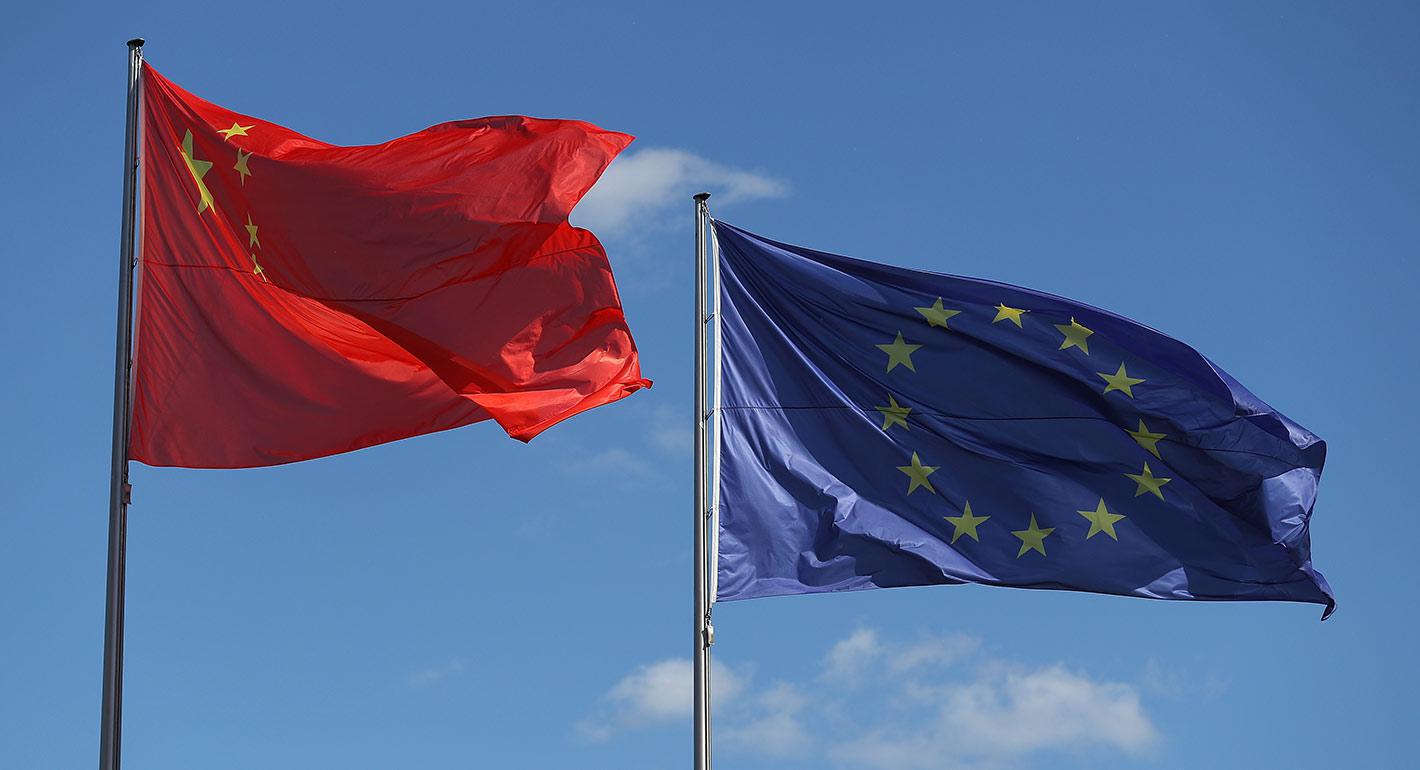
The perception of EU-China relations remains largely positive among Chinese foreign policy elites, for a number of reasons.
Source: Institut Montaigne
One would never guess it from the storms that have brewed publicly in Europe about China - the slide in public opinion mood about China in most (but not all) EU countries; the controversies surrounding the "wolf warrior diplomacy" adopted by several Chinese ambassadors (and renamed "Kung Fu Panda" by China’s envoy to Rome); the popular, if not completely accurate, perception that China is responsible for the Covid-19 epidemic; the mixed results of Beijing’s "mask diplomacy"; the increasing media criticism over Xinjiang, Hong Kong and the renewed interest for Taiwan in several EU Member States, and in the Commission.
But the perception of EU-China relations remains largely positive among Chinese foreign policy elites, for good and (from our perspective) less good reasons.
China Trends is meant to understand and communicate how the other side thinks because ignoring the ideas and feelings of other parties can lead to policy mistakes. In the case of China, this is of course easier to ascertain for official, second track expert and analyst views than for public opinion as a whole. It is what the three articles collected in this issue do, and some of the results are indeed surprising. EU-China relations remain on track because both sides share "pragmatism" and support for multilateralism, while China supports European integration. In what could be a very controversial policy for Beijing, a young expert sees the EU’s coming investment screening regulation as a clarification and homogenization of what was a juxtaposition of national systems, or simply absent.

Former Nonresident Senior Fellow, Asia Program
Godement, an expert on Chinese and East Asian strategic and international affairs, was a nonresident senior fellow in the Asia Program at the Carnegie Endowment for International Peace.
Recent Work
François Godement, Ashley J. Tellis

François Godement, Abigaël Vasselier
Carnegie India does not take institutional positions on public policy issues; the views represented herein are those of the author(s) and do not necessarily reflect the views of Carnegie, its staff, or its trustees.