
This commentary explores the likely actions of the Trump administration and driving forces on issues of deregulation, the United States’ leadership in AI, national security, and global engagements on AI safety.
Shatakratu Sahu, Amlan Mohanty

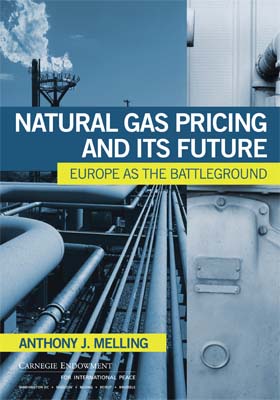
Consumption of natural gas is growing rapidly and now accounts for nearly one-quarter of the world’s energy supply. While natural gas is relatively clean compared to crude oil and coal, its ability to assume a greater role in meeting the world’s growing energy demands will depend largely on price.
In a new report, Anthony J. Melling analyzes the two competing price mechanisms for natural gas: the dominant practice of linking gas prices to oil prices and a second model based on competitive market prices. Although Europe—which uses both mechanisms—is now the battleground in the natural gas pricing war, its effects will likely be felt worldwide.
“The price of gas in Europe—and the mechanism used to determine it—will not only impact European companies and customers, but also have profound implications for energy markets around the world,” writes Carnegie’s Adnan Vatansever in the foreword. “Energy security, geopolitics, and the shift to greener forms of fuel that will be critical for combating climate change will also depend on how gas pricing evolves.”
Carnegie India does not take institutional positions on public policy issues; the views represented herein are those of the author(s) and do not necessarily reflect the views of Carnegie, its staff, or its trustees.
This commentary explores the likely actions of the Trump administration and driving forces on issues of deregulation, the United States’ leadership in AI, national security, and global engagements on AI safety.
Shatakratu Sahu, Amlan Mohanty

Since its launch nearly a year ago, the INDUS-X has marked many milestones in the India-U.S. relationship. Much has been achieved, but there is room to further enhance defense cooperation between the two countries in the coming years.
Ajay Kumar, Tejas Bharadwaj
This article explicates what iCET is and what it should not be mistaken for. The initiative is not designed to deliver a single deal. Instead, it involves multiple streams for cooperation and collaboration between the United States and India on critical and emerging technologies.
Rudra Chaudhuri
Based on preliminary research and stakeholder discussions, this article features four areas of biosafety and biosecurity that could potentially become concrete agenda items for collaboration between the United States and India under the iCET.
Shruti Sharma
The article highlights critical takeaways from the unofficial discussions led by Carnegie India on the iCET with officials from both the countries, industry leaders, technologists, fund managers, entrepreneurs, and academics.
Rudra Chaudhuri, Konark Bhandari, Ashima Singh