

Paper
This paper examines the evolution of India-China economic ties from 2005 to 2025. It explores the impact of global events, bilateral political ties, and domestic policies on distinct spheres of the economic relationship.
Santosh Pai
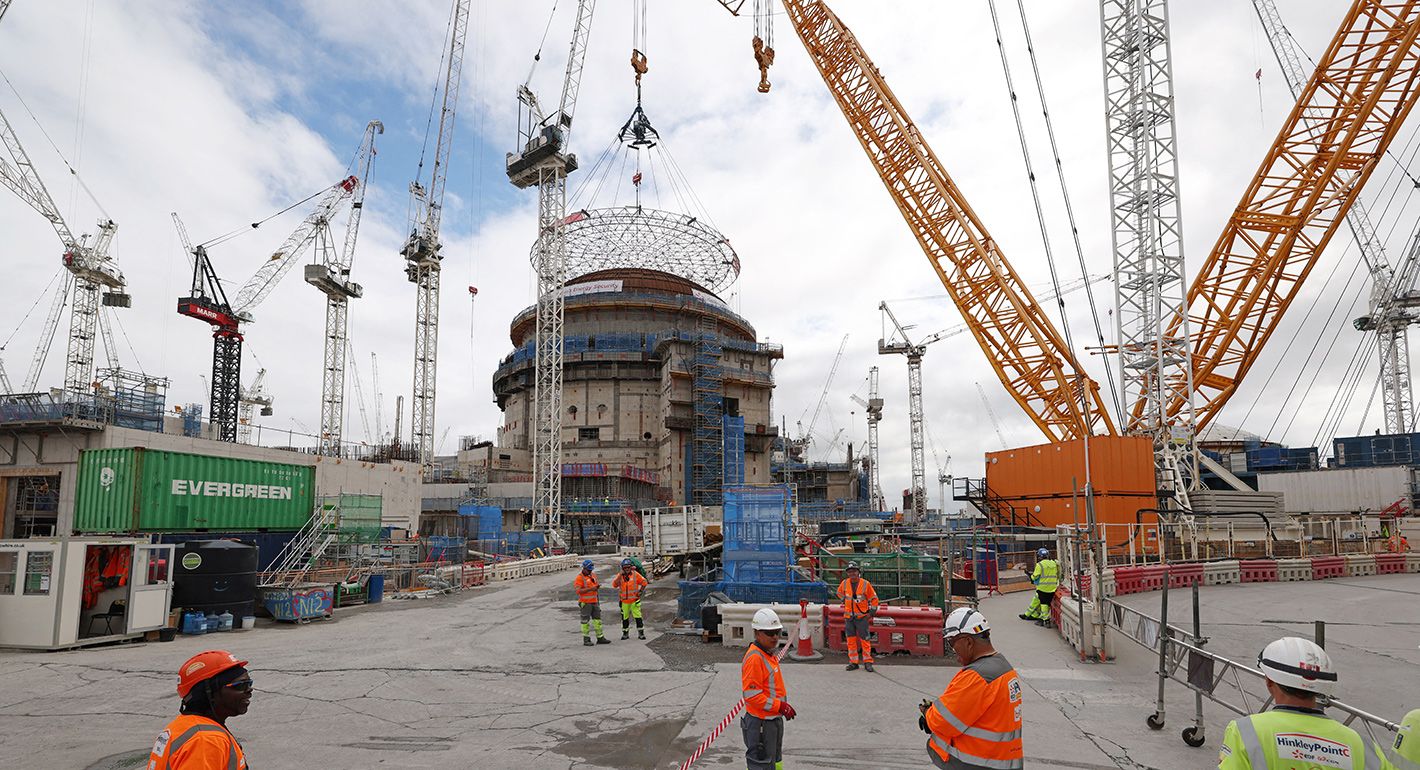
Source: Getty
Focusing exclusively on near-term challenges does not guarantee that a significant expansion of nuclear energy will deliver all the claimed benefits for its users. To ensure those outcomes, governments and industry actors need to address a broader agenda of requirements.
In 2024, the Carnegie Endowment for International Peace (CEIP) and the Pacific Northwest National Laboratory (PNNL) co-hosted a series of meetings focused on the emerging nuclear energy ecosystem, culminating in an in-person conference in Bucharest, Romania, hosted by the Romanian Ministry of Foreign Affairs and in partnership with the Nuclear Energy Agency (NEA) of the Organisation for Economic Co-operation and Development. Participants in these meetings—including experts from government, industry, and academia with backgrounds in nuclear technology, law and policy, waste management, stakeholder engagement, financing, nonproliferation, safety, and security—examined current assumptions about nuclear energy deployment, identified emerging challenges, and considered possible approaches for shaping future governance structures, practices, and behaviors. The meetings were held under the Chatham House rule, thus the thinking presented in this paper reflects the authors’ insights and recommendations from these meetings and ideas spurred by subsequent developments, but not necessarily the views of the participating experts, their governments, their institutions, the Romanian Ministry of Foreign Affairs, or the NEA. Neither Carnegie nor PNNL take institutional positions on public policy issues; the views represented herein are those of the authors and not necessarily reflective of the views of PNNL or Carnegie, including Carnegie staff or its trustees.
Nuclear power is an increasingly sought after option for meeting energy demand at scale and around the clock. Despite significant up-front investment, once built, nuclear plants promise consistent and reliable energy at low operating costs. They are widely perceived as important contributors to energy security, economic development, and carbon emission reduction.1
Reflecting this enthusiasm and faced with managing surging energy needs and decarbonization goals, numerous countries, companies, and financial institutions have pledged to support a major increase in nuclear energy deployment. In May 2025, in directing significant changes in U.S. nuclear energy policy, Donald Trump’s administration set an ambitious goal of increasing U.S. nuclear energy capacity fourfold from roughly 100 gigawatts today to 400 gigawatts by 2050.2 Several major American technology companies such as Amazon, Google, Microsoft, and Meta announced plans to partner directly with nuclear energy suppliers to secure long-term power for their data centers.3 These ambitious goals clearly demonstrate the momentum driving a significant expansion of nuclear energy and indicate not only how quickly the nuclear energy marketplace is changing but also how significantly the future nuclear ecosystem will differ from the past.
To meet global nuclear energy demands, major vendors offer a variety of technologies, ranging from very large systems (gigawatt-scale facilities) to new types of micro reactors (less than 50 megawatts). The advertised, innovative features of small modular reactors (SMRs) and advanced reactors, though still largely untested, are among the catalysts of interest in using nuclear energy for various applications—both traditional and novel, commercial and military. Some reactors of smaller size are adaptable for different-sized electrical grids, deployable closer to population centers, and suitable for alternative applications such as generating industrial heat and powering data centers, remote military bases, commercial ships, and space vehicles or facilities. Moreover, if any one design was deployed widely, standardization of components for the reactors could help achieve significant economies of scale that could lower deployment costs. In addition, smaller-sized reactors have advanced design features including passive safety and security systems, and they reportedly will produce lower total waste volume, all of which are seen as improvements over traditional reactors. As a result of these putative benefits and rising interest, there are more than eighty SMR designs under development around the world.4
Governments, nuclear industry actors, utilities, private sector nuclear energy consumers, and other actors are focused on addressing what they perceive as up-front requirements for deployment to enable a rapid and widespread implementation of nuclear energy.5 These initiatives mostly relate to shortening the time to market for new reactors: streamlining regulations, producing adequate quantities of specialized fuels, securing essential financing, mitigating supply chain constraints and vulnerabilities, and developing the needed workforce. Resolving these issues is integral to achieving the ambitious objectives noted above and forms the primary agenda for nuclear power.
Such actions may be necessary, but they are unlikely to be sufficient. Nuclear energy has previously experienced similar periods of anticipated expansion that were then dashed by loss of public support due to accidents, cost overruns, political changes, or other problems.6 Therefore, focusing exclusively on the near-term challenges that constitute the primary agenda does not guarantee that a significant expansion of nuclear energy will deliver all the claimed benefits for its users. To ensure those outcomes, governments and industry actors need to address a broader agenda of requirements, including building support among the general public and especially intended host communities for nuclear plants.
Focusing exclusively on the near-term challenges that constitute the primary agenda does not guarantee that a significant expansion of nuclear energy will deliver all the claimed benefits for its users. To ensure those outcomes, governments and industry actors need to address a broader agenda of requirements.
The broader agenda comprises medium- or even long-term issues that are tempting to defer because they may not seem to obviously stand in the way of deployment. Yet, these issues (or, in many instances, hasty or delayed decisions) will have significant and long-term implications for sustained public support and commercial interest. The main issues in this broader agenda, many of which are interconnected, include the geostrategic implications of fuel choice, the impact of technology selection on deployment scenarios and waste management, the potential for misuse or diversion of technology and materials to nuclear weapons efforts, the need for comprehensive liability frameworks, and the importance of building robust public support through authentic, consensus-based engagement. The underlying premise of the broader agenda is that nuclear energy is an atypical investment—marked by high capital intensity, technical and regulatory complexity, and intergenerational obligations—and thus requires a more holistic and longer-term focus on the requirements for durable and sustainable deployment. Unless stakeholders also work concurrently on the broader agenda, they will be deploying on a shaky foundation that carries considerable risk for the entire nuclear energy enterprise.
Nuclear energy is an atypical investment—marked by high capital intensity, technical and regulatory complexity, and intergenerational obligations—and thus requires a more holistic and longer-term focus on the requirements for durable and sustainable deployment.
To appreciate the types of approaches that may be needed to sustain nuclear growth, it is important that all stakeholders, regardless of their specific roles and responsibilities, understand how nuclear energy is fundamentally different from other energy sources, what a strong nuclear culture entails, and what these imply for how it should be operationalized.
The success of nuclear energy cannot only be measured by meeting deployment schedules and electricity generation objectives. Rather, it hinges on the adoption of exceptionally long time horizons, far beyond those associated with other energy sources. Notably, nuclear investments effectively constitute multigenerational commitments to pay off high up-front costs, operating times that can stretch eighty to one hundred years, and eventual decommissioning requirements.7 Finally, nuclear waste products require careful management and robust safety measures over millennia to mitigate potential impacts on human health and the environment.
Since a permanent disposal solution has proven elusive, the main challenge associated with nuclear waste is determining where and how to store it. In most countries, interim nuclear waste storage, often at reactor sites, has become effectively indefinite without explicit public buy-in to this approach. A few countries are making progress toward permanent waste repositories, but the process of siting and constructing one is decades long.8 This problem is likely to become more acute with spent fuel accumulation resulting from increased nuclear capacity worldwide, as well as the forthcoming decommissioning of reactors that are aging out of service.
Risk management requirements also differentiate nuclear energy from other energy sources given the multifaceted consequences stemming from a potential incident: geopolitical implications, potential loss of public and especially host community trust, long-term environmental degradation, enduring impacts on public health, and nuclear weapons proliferation. In this regard, the world awoke to a new type of risk—nuclear power plants in conflict zones—when Russia attacked Ukraine’s Zaporizhzhia Nuclear Power Plant (ZNPP) in March 2022. This assault and ensuing occupation were unprecedented in the nuclear age and raised the risk of a nuclear emergency “whose effects would be felt far from the borders of Ukraine.”9
The ZNPP attack also revealed how the globalization of nuclear supply chains, the enduring nature of nuclear cooperation agreements, and the transnational nature of nuclear incidents make the nuclear energy enterprise globally interconnected and interdependent. As nuclear physicist Alvin Weinberg observed shortly after the Chernobyl disaster in 1986, “a nuclear accident anywhere is an accident everywhere.”10 His reflection was acutely felt during the aftermath of the March 2011 disaster at Japan’s Fukushima-Daiichi Nuclear Power Plant, which led many countries to pause their nuclear energy development programs and some, including Germany, Belgium, and Italy, to decide to phase out nuclear energy entirely. For its part, the United States invested millions in safety reviews and upgrades at existing plants to mitigate the risks the Fukushima accident revealed. Some states that opted for nuclear phaseout have since reversed course, but the shadow of a future accident hangs over the aspirations for a massive nuclear expansion.11 What the Fukushima disaster demonstrated in a visceral way is that although nuclear responsibilities may be stovepiped among different stakeholders, the risks and consequences are shared by all.
Although nuclear responsibilities may be stovepiped among different stakeholders, the risks and consequences are shared by all.
Lastly, though there is much to learn from examples like the ones noted briefly above, history only teaches so much. There are a range of factors that could make tomorrow’s nuclear landscape dramatically different in ways that add to the challenge of managing this complex technology.
Enthusiasm for SMRs and advanced reactors amid rising global interest in nuclear energy could potentially reshape tomorrow’s nuclear landscape, driven by the unprecedented pace, scale, and diversity of nuclear development currently underway. In the rush to build as fast and as widely as possible, critical issues could be overlooked or downplayed if they are not addressed as part of a broader agenda. These critical issues tend to fall into three categories: new stakeholders, new uses, and new technologies and approaches.
Any one of these issues would constitute an important evolution from more traditional models of nuclear energy deployment. The combination of issues portends a highly complex and fluid environment that presents great opportunity and significant risk. To mitigate such risks, actions are needed today to ensure the conditions necessary for successful operation in 2050 and beyond.
Numerous guides already exist to help stakeholders navigate the dynamic, intergenerational, and interconnected aspects of nuclear energy deployment in this evolving ecosystem. Some guides comprise current standards and practices that promote commitments to nuclear safety, security, and nonproliferation, as well as transparent and inclusive decisionmaking processes. For instance, the International Atomic Energy Agency publishes guidelines for states preparing to implement nuclear energy programs.14 Similarly, the Nuclear Energy Agency maintains reference documents that represent the cumulative experience and wisdom of leading nuclear countries.15 The World Association of Nuclear Operators likewise provides recommendations and ongoing support for successful nuclear power plant operations.16
However, continued excellence in performing today’s best practices is not sufficient to adequately manage evolving approaches to nuclear energy. Future success requires deliberate and collaborative efforts among stakeholders to strengthen existing guidance as part of the broader agenda, based on an understanding that nuclear power is a fifty-year investment and likely would involve a 100-year relationship with the host community. This includes:
In addition to the augmentation and evolution of well-established practices, the broader agenda also requires stakeholders to consider new issues and approaches to address challenges that are starting to emerge on the horizon.
World events, changing economic conditions, and emerging actors are constantly spurring updates to or the elimination of outdated practices, resulting in new ones that meet the needs of the moment. This process is already playing out in the new nuclear ecosystem. The primary nuclear energy agenda is forcing a reexamination of existing norms, standards, and business models in relation to future energy requirements. The broader agenda emphasizes, however, that in addition to calibrating and adapting the good practices developed over decades, there is need to consider additional approaches to ensure that future deployment is successful across generations. At the same time, it is important to consider how some of these changes and associated lessons learned might facilitate targeted easing of requirements, thereby facilitating broader—but no less safe and secure—expansion of nuclear energy.
How stakeholders engage the broader agenda will have important implications for the stability, durability, and commercial viability of nuclear energy. Traditionally, competitive markets compel organizations to operate independently to advance their own bottom lines. Countries often prioritize sovereign interests when developing resources to meet national needs. To sustainably meet ambitious nuclear expansion goals, however, more cooperative approaches are required among governments, between public and private sector stakeholders, and between national and local officials and commercial entities. Ultimately, the broader agenda requires an elevated notion of self-interest and an expanded understanding of the impacts that decisions and investments will have on the nuclear ecosystem as a whole over the long term.
Ultimately, the broader agenda requires an elevated notion of self-interest and an expanded understanding of the impacts that decisions and investments will have on the nuclear ecosystem as a whole over the long term.
The new nuclear ecosystem will involve more stakeholders than traditionally has been the case, and thus more widely distributed roles and responsibilities. These are also likely to evolve over time as new business models take hold, the nuclear buildup takes off, and the decommissioning of aging nuclear power plants increases. It is likely that divergent perceptions among stakeholders about those roles and responsibilities could result in implementation gaps that accrue with long-term risks. For example, given growing private sector influence, some actors may advocate for significant changes to governmental roles in nuclear energy deployment, envisioning more support yet less intervention and oversight. However, not all governments will be content with investing more while having less influence over implementation. There is also potential for divergent perspectives between national, state, and local governments, some of which might be directly affected by the new nuclear division of labor. It is unclear which stakeholders would assume responsibilities devolved by governmental agencies and ensure that all the relevant standards continue to be met.
While adjusting roles and responsibilities to accommodate changes in the ecosystem, relevant stakeholders should prioritize the following steps.
States should work with the International Atomic Energy Agency (IAEA), the Nuclear Energy Agency (NEA), the World Association for Nuclear Operators (WANO), and other international entities to promulgate high standards and practices for nuclear use while also seeking efficiency and effectiveness.
Neighboring states should look for opportunities to reduce costs and distribute risks through collaborative or harmonized regional activities.
Energy investors should adopt strategies for building long-term trust in nuclear energy through local actions, partnerships, and investments.
Industry should embrace a leadership role in setting a high bar for sustainable operations that protects their nuclear investments while addressing the requirements of the broader public.
It is incumbent on all stakeholders to establish a clear and comprehensive division of labor and responsibility, in shaping the practices and behaviors needed to sustain them and developing the incentive structures that will encourage their adoption. Doing so advances the bottom line as well as the broader agenda.
In the United States, current discussions on nuclear energy incentives focus heavily on subsidizing first-of-a-kind nuclear reactor projects to create economies of scale and drive down costs; easing community outreach and transparency requirements; expediting licensing reviews and processes to facilitate exports; and prioritizing reprocessing of spent fuel and high-level waste disposition. The broader agenda requires the development of additional incentives that encourage early adoption of practices that might otherwise be delayed and that promote long-term sustainability over short-term gains.
The broader agenda requires the development of additional incentives that encourage early adoption of practices that might otherwise be delayed and that promote long-term sustainability over short-term gains.
Such incentives could include political, financial, regulatory, technological, social, and environmental options that take a different approach to traditional practices or manifest the elevated notion of self-interest espoused earlier in this paper. They should be multidimensional and work across global, national, state, and local levels to encourage adoption and sustainability. They should also take into consideration the broader impact that decisions and investments will have on the nuclear ecosystem over the long term. While further research is needed on the precise nature and structure of the incentives themselves, the most effective ones will encourage adoption of sustainability practices that become intrinsic features of near-term nuclear energy projects.
The goal of presenting this broader agenda is to spur critical conversation among policymakers, established nuclear energy companies, new vendors of advanced technologies, traditional utility operators, technology companies, and other industry actors who are newly part of or seeking to join the nuclear community.
The broader agenda for nuclear power discussed in this paper offers a forward-looking, comprehensive approach and specific recommendations for pursuing responsible nuclear deployment globally. The goal of presenting this broader agenda is to spur critical conversation among policymakers, established nuclear energy companies, new vendors of advanced technologies, traditional utility operators, technology companies, and other industry actors who are newly part of or seeking to join the nuclear community. It is incumbent on all these stakeholders, as well as national leaders, state authorities, international organizations, and impacted communities, to define their roles and responsibilities in this system, identify areas of mutual need and benefit, understand their interdependencies, and use that knowledge to craft effective, sustainable, and responsible incentive packages. We hope readers will consider ways to advance the broader agenda both as individual entities and via collaborative partnerships in ways that maintain and advance the high standards necessary for securing long-term nuclear energy security.

Senior Fellow and Co-director, Nuclear Policy Program
Toby Dalton is a senior fellow and co-director of the Nuclear Policy Program at the Carnegie Endowment. An expert on nonproliferation and nuclear energy, his work addresses regional security challenges and the evolution of the global nuclear order.
Sarah Frazar
Sarah Frazar is a senior nonproliferation and national security analyst at the Pacific Northwest National Laboratory focusing on the policy implications of emerging technologies and trends.
Lindsey Gehrig
Lindsey Gehrig is a policy advisor at the Pacific Northwest National Laboratory focusing on a broad range of national security and nonproliferation topics, including ways to enable a secure and peaceful expansion of nuclear energy.

Senior Fellow, Nuclear Policy Program, Technology and International Affairs Program
Levite was the principal deputy director general for policy at the Israeli Atomic Energy Commission from 2002 to 2007.
Mackenzie Schuessler
Former Research Assistant, Nuclear Policy Program
Carnegie India does not take institutional positions on public policy issues; the views represented herein are those of the author(s) and do not necessarily reflect the views of Carnegie, its staff, or its trustees.

This paper examines the evolution of India-China economic ties from 2005 to 2025. It explores the impact of global events, bilateral political ties, and domestic policies on distinct spheres of the economic relationship.

Santosh Pai

This paper explores the question of whether India specifically will be able to compete and lead in AI or whether it will remain relegated to a minor role in this global competition.

Anirudh Suri

Unless Delhi brings greater clarity to the interpretation of the nuclear liability act and the regulations for its implementation, India's hopes of building an advanced nuclear power industry at home and exporting nuclear reactors and services around the world will come to naught.
C. Raja Mohan
The United States will have trouble keeping South Korea from going nuclear if it can't contain the threat from Pyongyang.
C. Raja Mohan

In the face of mounting international skepticism, India must take real steps to pursue strategic partnerships with the United States and other nations.
C. Raja Mohan