• Research
  • About
  • Experts
Carnegie India logoCarnegie lettermark logo
Technology
{
  "authors": [],
  "type": "pressRelease",
  "centerAffiliationAll": "",
  "centers": [
    "Carnegie Endowment for International Peace"
  ],
  "collections": [],
  "englishNewsletterAll": "",
  "nonEnglishNewsletterAll": "",
  "primaryCenter": "Carnegie Endowment for International Peace",
  "programAffiliation": "",
  "programs": [],
  "projects": [],
  "regions": [],
  "topics": []
}
REQUIRED IMAGE

REQUIRED IMAGE

Press Release

Press Release: Chechnya: Massive Roadblock to Russian Progress

Link Copied
Published on Nov 19, 2003

FOR IMMEDIATE RELEASE: Novemeber 19, 2003

With Duma elections in early December and the recent arrest of Mikhail Khodorkovsky, there has been much speculation on the evolving presidency of Vladimir Putin and the future of Russia. In a new policy brief, Dmitri Trenin argues that a full picture of Russia’s future must consider the situation in Chechnya. In The Forgotten War: Chechnya and Russia’s Future he says that the Bush and Putin administrations have misleadingly folded Chechnya into the war on terror, when it’s really a massive roadblock hampering Russian modernization and transformation.

While labeling Chechnya as a terrorism problem is a mistake, critics have done little better by defining Chechnya as a human rights challenge. The perennial conflict in the Caucasus affects Russian policy, Russian society, and Russia’s quality as an U.S. ally. The conflict is hampering the formation of a civic Russian nation, gives undue influence to the military and security services, and blocks meaningful military reform. The policy brief outlines potential solutions for Russian leaders and urges both the U.S. and Russian administration to understand that the Chechen war is denying Russia international prestige and power.

Prior to September 11th, George W. Bush depicted Russia’s war with Chechnya as “gruesome,” an “atrocious violations of human rights,” and a “brutal military operation.”  In 2002, he softened his position, saying Putin “handled it as best he could. He did what he had to do to save life.”  How did such an abrupt turnabout take place? Where on the spectrum of expressing outrage to lending support should US policy lay?  And what does the Chechnya conflict mean for Russia now and in the future? In this paper, Dmitri Trenin outlines the history of this complicated struggle, with proposed actions by Russian and American leaders.

Read the full brief online at www.carnegieendowent.org/pubs.

Dmitri Trenin is senior associate and deputy director of the Carnegie Moscow Center.  He specializes in Russian foreign and security policy. He retired from the Russian Army in 1993, after a military career that included participation in the strategic arms control negotiations in Geneva.

Carnegie India does not take institutional positions on public policy issues; the views represented herein are those of the author(s) and do not necessarily reflect the views of Carnegie, its staff, or its trustees.

More Work from Carnegie India

  • Commentary
    AI Adoption Journey for Population Scale

    Connecting real-world AI use cases across sectors such as health, education, agriculture, and livelihoods can help policymakers, innovators, and institutions align around a shared goal. This article looks at a framework ensuring that AI works for everyone.

      Shalini Kapoor, Tanvi Lall
  • Commentary
    The Impact of U.S. Sanctions and Tariffs on India’s Russian Oil Imports

    This piece examines India’s response to U.S. sanctions and tariffs, specifically assessing the immediate market consequences, such as alterations in import costs, and the broader strategic implications for India’s energy security and foreign policy orientation.

      Vrinda Sahai

  • Article
    The State of Digital Transformation in Pacific Island Countries

    Pacific Island Countries are at a pivotal moment in their digital journeys. Across the region, there is growing recognition of digital transformation as a key driver of economic growth, resilience, and global connectivity.

      Shruti Mittal, Adarsh Ranjan

  • Article
    Revisiting the Usage of Refurbished Equipment in India’s Semiconductor Ecosystem

    This article looks at the progress of the Semiconductor Laboratory fab modernization plan based on publicly available documents, and potential learnings for future upgrades to government-owned fabs and India’s larger semiconductor ecosystem, especially regarding the use of refurbished equipment.

      Shruti Mittal, Konark Bhandari

  • Article
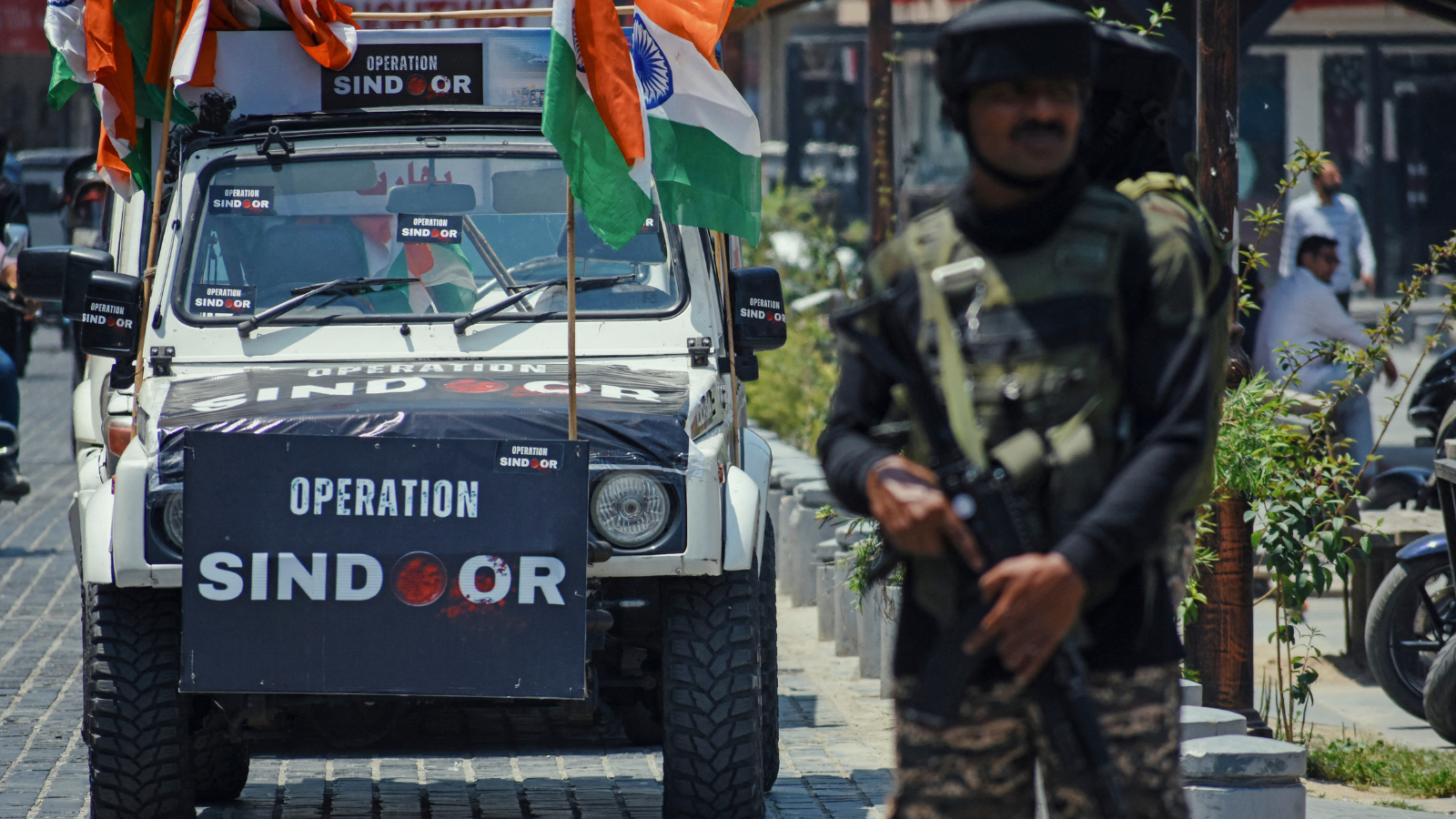
    Military Lessons from Operation Sindoor

    The India-Pakistan conflict that played out between May 6 and May 10, 2025, offers several military lessons. This article presents key takeaways from Operation Sindoor and breaks down how India’s preparations shaped the outcome and what more is needed to strengthen future readiness.

      Dinakar Peri

Get more news and analysis from
Carnegie India
Carnegie India logo, white
Unit C-4, 5, 6, EdenparkShaheed Jeet Singh MargNew Delhi – 110016, IndiaPhone: 011-40078687
  • Research
  • About
  • Experts
  • Projects
  • Events
  • Contact
  • Careers
  • Privacy
  • For Media
Get more news and analysis from
Carnegie India
© 2026 Carnegie Endowment for International Peace. All rights reserved.