• Research
  • About
  • Experts
Carnegie India logoCarnegie lettermark logo
{
  "authors": [],
  "type": "pressRelease",
  "centerAffiliationAll": "dc",
  "centers": [
    "Carnegie Endowment for International Peace"
  ],
  "collections": [],
  "englishNewsletterAll": "ctw",
  "nonEnglishNewsletterAll": "",
  "primaryCenter": "Carnegie Endowment for International Peace",
  "programAffiliation": "SCP",
  "programs": [
    "Sustainability, Climate, and Geopolitics"
  ],
  "projects": [],
  "regions": [
    "North America",
    "United States"
  ],
  "topics": []
}
REQUIRED IMAGE

REQUIRED IMAGE

Press Release

ExxonMobil Gives $500,000 to the Carnegie Endowment’s New Vision—Pioneering the First Global Think Tank

ExxonMobil announced that it will contribute $500,000 to support the Carnegie Endowment for International Peace’s New Vision of pioneering the first global think tank.

Link Copied
Published on Jun 5, 2008

WASHINGTON, June 5—ExxonMobil today announced that it will contribute $500,000 to support the Carnegie Endowment for International Peace’s New Vision of pioneering the first global think tank.

“We are immensely grateful to ExxonMobil for its generous support of and investment in the Endowment’s New Vision. With offices now up and running in China, Russia, the Middle East, Europe and the United States, this financial support is a further endorsement of the mission we are pursuing,” said Jessica T. Mathews, President of the Carnegie Endowment.

“ExxonMobil is proud to support the Carnegie Endowment for International Peace with a major contribution to its New Vision initiative. For years the Endowment has sought greater understanding and cooperation around the world. We hope that our contribution will enable Carnegie to continue and enhance this important work,” said Rex W. Tillerson, Chairman and Chief Executive Officer, Exxon Mobil Corporation. 

Through its New Vision, Carnegie aims to promote sustained, international collaboration by developing improved understanding in the United States of thinking in other countries and regions; developing deeper understanding abroad of U.S. thinking; and developing, on both sides, a critical mass of research-based insights on vital issues.

Carnegie’s leading experts on international affairs, from nonproliferation to democracy promotion, produce first-rate, independent research to help policy makers formulate better courses of action.

Carnegie is the only think tank with a commitment to fluency in relevant languages and to publishing in hard copy and on the web in Russian, Chinese and Arabic, as well as other languages where appropriate.

###


NOTES

  • For more information on the Carnegie endowment’s NEW VISION, please visit www.carnegieendowment.org/NewVision or watch the video.
  • For more information about the Carnegie Endowment, please visit www.carnegieendowment.org
  • Press Contact: Trent Perrotto, 202/939-2372, tperrotto@ceip.org

North AmericaUnited States

Carnegie India does not take institutional positions on public policy issues; the views represented herein are those of the author(s) and do not necessarily reflect the views of Carnegie, its staff, or its trustees.

More Work from Carnegie India

  • Commentary
    India Signs the Pax Silica—A Counter to Pax Sinica?

    On the last day of the India AI Impact Summit, India signed Pax Silica, a U.S.-led declaration seemingly focused on semiconductors. While India’s accession to the same was not entirely unforeseen, becoming a signatory nation this quickly was not on the cards either.

      Konark Bhandari

  • Commentary
    The Impact of U.S. Sanctions and Tariffs on India’s Russian Oil Imports

    This piece examines India’s response to U.S. sanctions and tariffs, specifically assessing the immediate market consequences, such as alterations in import costs, and the broader strategic implications for India’s energy security and foreign policy orientation.

      Vrinda Sahai

  • Commentary
    NISAR Soars While India-U.S. Tariff Tensions Simmer

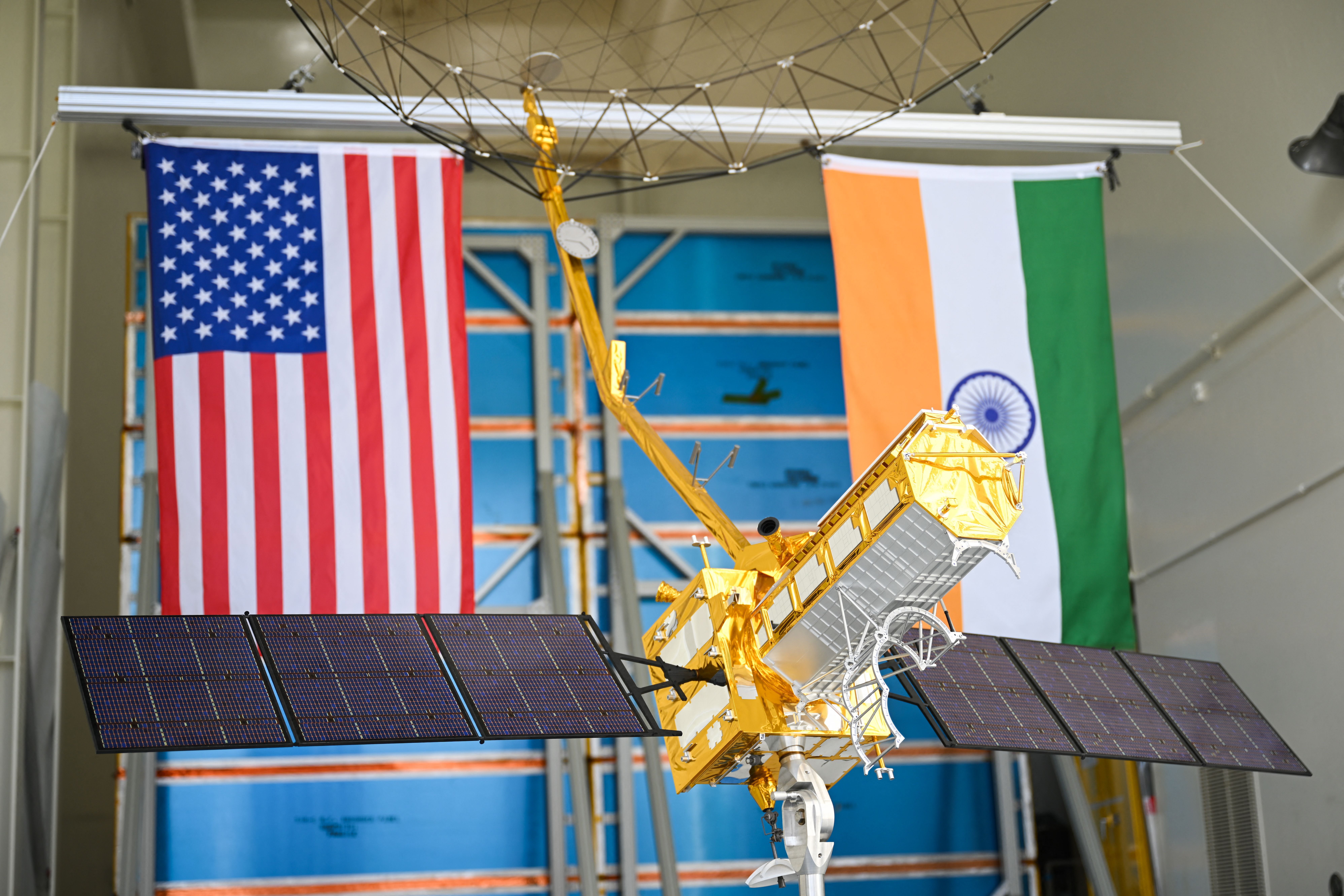
    On July 30, 2025, the United States announced 25 percent tariffs on Indian goods. While diplomatic tensions simmered on the trade front, a cosmic calm prevailed at the Sriharikota launch range. Officials from NASA and ISRO were preparing to launch an engineering marvel into space—the NASA-ISRO Synthetic Aperture Radar (NISAR), marking a significant milestone in the India-U.S. bilateral partnership.

      Tejas Bharadwaj

  • Commentary
    TRUST and Tariffs

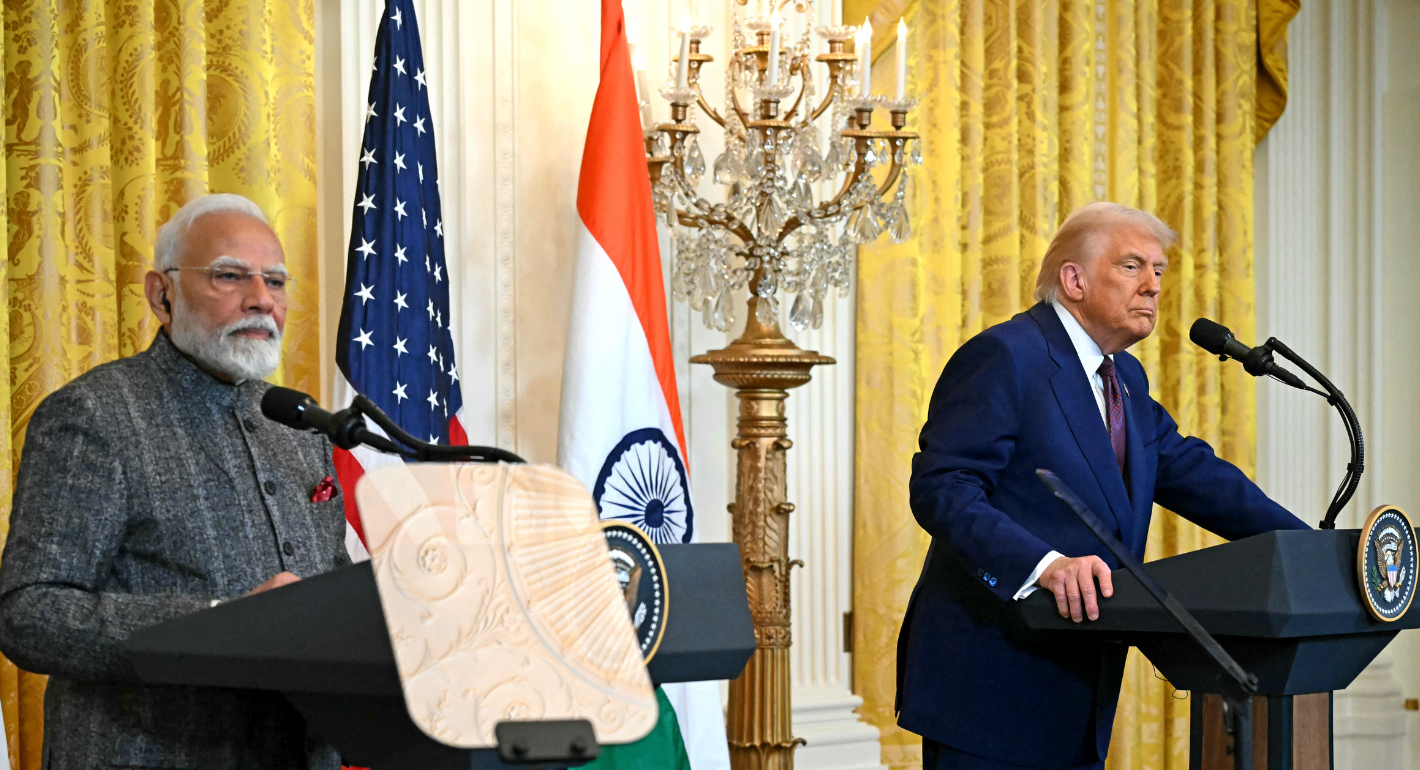
    The India-U.S. relationship currently appears buffeted between three “Ts”—TRUST, Tariffs, and Trump.

      Arun K. Singh

  • Commentary
    The India-U.S. TRUST Initiative: Advancing Semiconductor Supply Chain Cooperation

    As part of the TRUST initiative, leaders of the two countries committed to building trusted and resilient supply chains, including for semiconductors and critical minerals. India and the United States have made steady progress in this area over the years. This essay explores the takeaways from discussions on semiconductor supply chains that took place at Carnegie India’s 9th Global Technology Summit.

      Konark Bhandari

Get more news and analysis from
Carnegie India
Carnegie India logo, white
Unit C-4, 5, 6, EdenparkShaheed Jeet Singh MargNew Delhi – 110016, IndiaPhone: 011-40078687
  • Research
  • About
  • Experts
  • Projects
  • Events
  • Contact
  • Careers
  • Privacy
  • For Media
Get more news and analysis from
Carnegie India
© 2026 Carnegie Endowment for International Peace. All rights reserved.