• Research
  • About
  • Experts
Carnegie India logoCarnegie lettermark logo
{
  "authors": [],
  "type": "pressRelease",
  "centerAffiliationAll": "dc",
  "centers": [
    "Carnegie Endowment for International Peace"
  ],
  "collections": [],
  "englishNewsletterAll": "asia",
  "nonEnglishNewsletterAll": "",
  "primaryCenter": "Carnegie Endowment for International Peace",
  "programAffiliation": "AP",
  "programs": [
    "Asia"
  ],
  "projects": [],
  "regions": [
    "North America",
    "United States",
    "China"
  ],
  "topics": [
    "Economy",
    "Foreign Policy"
  ]
}
REQUIRED IMAGE

REQUIRED IMAGE

Press Release

China Will Surpass U.S. Economically by 2035, Double by Midcentury

China’s economy will surpass that of the United States by 2035 and be twice its size by midcentury, a new report by Albert Keidel concludes. China’s rapid growth is driven by domestic demand—not exports—and will sustain high single-digit growth rates well into this century.

Link Copied
Published on Jul 8, 2008

WASHINGTON, July 8—China’s economy will surpass that of the United States by 2035 and be twice its size by midcentury, a new report by Albert Keidel concludes. China’s rapid growth is driven by domestic demand—not exports—and will sustain high single-digit growth rates well into this century.

In China’s Economic Rise—Fact and Fiction, Keidel examines China’s likely economic trajectory and its implications for global commercial, institutional, and military leadership.

Key Conclusions:

  • Potential stumbling blocks to sustained Chinese growth—export concerns, domestic economic instability, inequality and poverty, pollution, social unrest, or even corruption and slow political reform—are unlikely to undermine China’s long-term success.
  • China’s financial system, rather than a shortcoming that compromises growth potential, is one of the strengths of what the report calls “China’s money-making machine,” in part because of its ability to support the financing of infrastructure and other public investments necessary for sustained rapid growth.
  • A Chinese economy that eclipses the U.S. by midcentury has both commercial and potential military implications. China will be the preeminent world commercial influence. China’s military capabilities are a small fraction of the United States’ today, so there is time to prepare for a very different world in fifty years, says the report.  
  • American policy makers should take this opportunity to enact wide-ranging domestic reforms and rethink their concepts of global order.  

"China’s economic performance clearly is no flash in the pan. Its growth this decade has averaged more than 10 percent a year and is still going strong in the first half of 2008. Because its success in recent decades has not been export-led but driven by domestic demand, its rapid growth can continue well into the twenty-first century, unfettered by world market limitation. China’s likely continued success will eventually bring an end to America’s global economic preeminence, requiring strategic reassessment by all major economies—especially the United States, the European Union, Japan, and even China itself."

###


bullet
NOTES
  • Direct link to the PDF: www.carnegieendowment.org/files/pb61_keidel_final.pdf

     
  • Albert Keidel is a senior associate at the Carnegie Endowment, where he specializes in Chinese economic issues and related U.S. policy. He formerly served as deputy director and acting director at the Office of East Asian Nations in the U.S. Treasury Department. Before that, he was senior economist at the World Bank office in Beijing.

     
  • The Carnegie China Program in Beijing and Washington provides policy makers in both countries with a better understanding of the dynamics within China and between the United States and China. In addition to books, policy briefs, papers, and other publications, the Program produces Carnegie China Insight Monthly, a Chinese-language e-newsletter, and hosts the Hong Kong Journal, an online quarterly covering political, economic, and social issues on Hong Kong and its relations with mainland China, the United States, and other governments and international organizations.

     
  • Press Contact: Trent Perrotto, 202/939-2372, tperrotto@ceip.org
EconomyForeign PolicyNorth AmericaUnited StatesChina

Carnegie India does not take institutional positions on public policy issues; the views represented herein are those of the author(s) and do not necessarily reflect the views of Carnegie, its staff, or its trustees.

More Work from Carnegie India

  • Commentary
    India Signs the Pax Silica—A Counter to Pax Sinica?

    On the last day of the India AI Impact Summit, India signed Pax Silica, a U.S.-led declaration seemingly focused on semiconductors. While India’s accession to the same was not entirely unforeseen, becoming a signatory nation this quickly was not on the cards either.

      Konark Bhandari

  • Commentary
    The Impact of U.S. Sanctions and Tariffs on India’s Russian Oil Imports

    This piece examines India’s response to U.S. sanctions and tariffs, specifically assessing the immediate market consequences, such as alterations in import costs, and the broader strategic implications for India’s energy security and foreign policy orientation.

      Vrinda Sahai

  • Paper
    India-China Economic Ties: Determinants and Possibilities

    This paper examines the evolution of India-China economic ties from 2005 to 2025. It explores the impact of global events, bilateral political ties, and domestic policies on distinct spheres of the economic relationship.

      Santosh Pai

  • Commentary
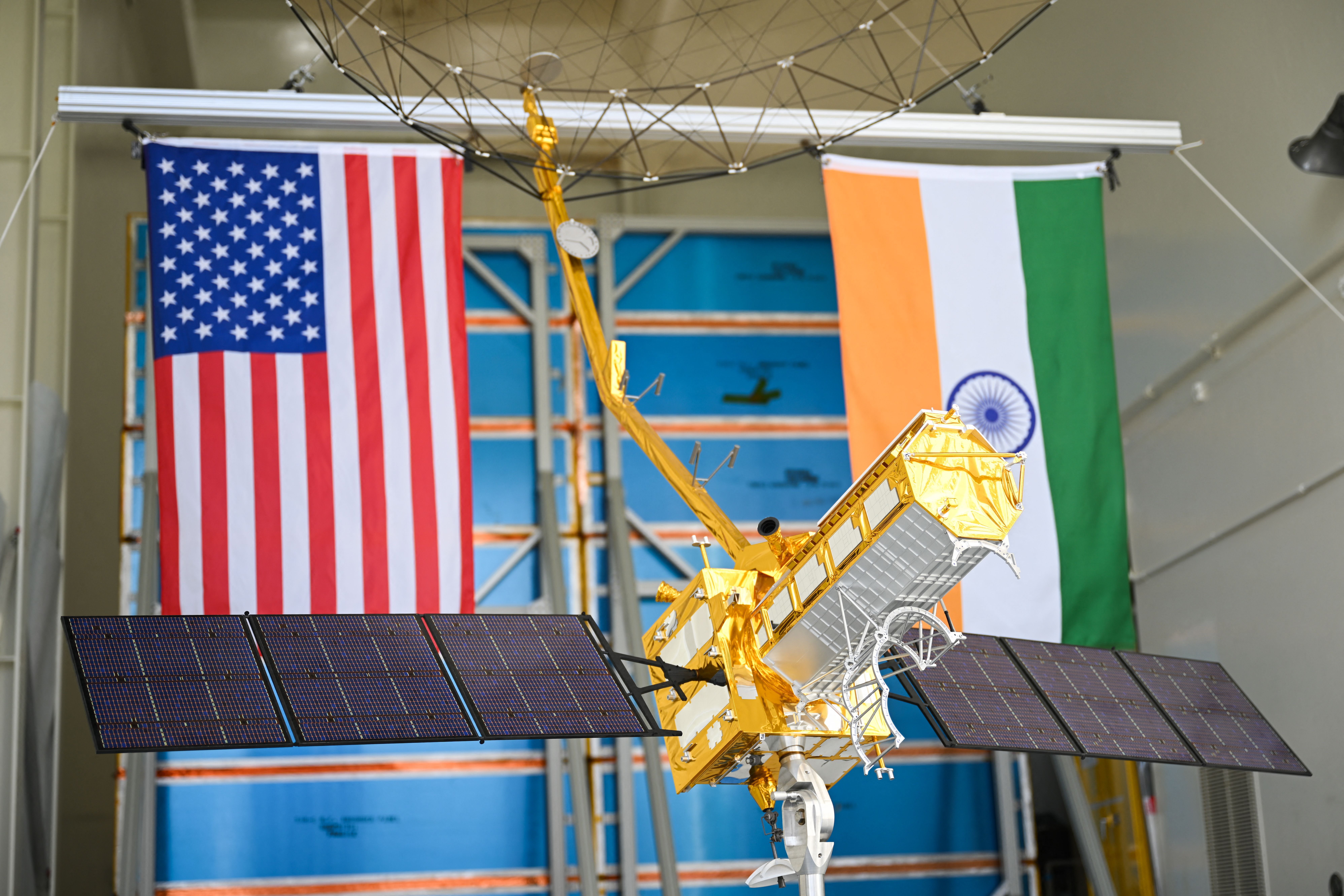
    NISAR Soars While India-U.S. Tariff Tensions Simmer

    On July 30, 2025, the United States announced 25 percent tariffs on Indian goods. While diplomatic tensions simmered on the trade front, a cosmic calm prevailed at the Sriharikota launch range. Officials from NASA and ISRO were preparing to launch an engineering marvel into space—the NASA-ISRO Synthetic Aperture Radar (NISAR), marking a significant milestone in the India-U.S. bilateral partnership.

      Tejas Bharadwaj

  • Article
    Hidden Tides: IUU Fishing and Regional Security Dynamics for India

    This article examines the scale and impact of Chinese IUU fishing operations globally and identifies the nature of the challenge posed by IUU fishing in the Indian Ocean Region (IOR). It also investigates why existing maritime law and international frameworks have struggled to address this growing threat.

      Ajay Kumar, Charukeshi Bhatt

Get more news and analysis from
Carnegie India
Carnegie India logo, white
Unit C-4, 5, 6, EdenparkShaheed Jeet Singh MargNew Delhi – 110016, IndiaPhone: 011-40078687
  • Research
  • About
  • Experts
  • Projects
  • Events
  • Contact
  • Careers
  • Privacy
  • For Media
Get more news and analysis from
Carnegie India
© 2026 Carnegie Endowment for International Peace. All rights reserved.