

In The Media
David Rothkopf
{
  "authors": [
    "David Rothkopf"
  ],
  "type": "legacyinthemedia",
  "centerAffiliationAll": "",
  "centers": [
    "Carnegie Endowment for International Peace"
  ],
  "collections": [],
  "englishNewsletterAll": "",
  "nonEnglishNewsletterAll": "",
  "primaryCenter": "Carnegie Endowment for International Peace",
  "programAffiliation": "",
  "programs": [],
  "projects": [],
  "regions": [
    "North America",
    "United States"
  ],
  "topics": [
    "Economy",
    "Trade"
  ]
}
Source: Getty
As the economic crisis unfolds, the drama of impending calamity has spurred politicians to take action without fully understanding the crisis. Nobody knows if the bailout will work, and moreover, it fails to address any of the underlying economic problems that we face. Moving forward, our leaders must exercise much more thought and caution in addressing this wide array of economic challenges.
Source: The Daily Beast

The drama of impending calamity transforms a ridiculous display into something vaguely momentous. And fortunately, no one knows any better. So if the eclipse passes, post hoc ergo propter hoc works just fine, thanks. And if it really is the end of the world, well, at least you don’t have to worry about being beaten up by the pundits.
The problem is, of course, eclipses don’t really pose much of a threat, and the current financial crisis not only threatens to send the world into a recession and upend any ability the next US president might have to advance any new initiatives, it also is symptomatic of much deeper and more disturbing problems in the global financial system.
Furthermore, it doesn’t convey fully the fact that Washington’s panic came in response to another panic, that of the financial community, which similarly was trying frantically to grapple with a crisis it understood little better than our political leaders—this despite the fact that both groups had co-authored the flawed system that was now coming undone.
Wall Street was selling off financial stocks because it feared the losses that might come if it did not act. Washington was bailing out Wall Street because it feared the losses that might come if it did not act. But no one knew for sure just what would happen whether they acted or not. No one actually knew fully what the real problem was or is.
Nothing illustrates this point quite so well as asking the core questions posed by the crisis. Go ahead. Make a list of the key questions that really ought to have been answered before the government took any action or devised any strategy.
Here are a few: What would happen if there were no bailout? What does systemic risk really mean? Would a bailout actually ensure that the crisis did not get worse anyway? Who actually holds the worst of the debt and would they sell it? Are we in a recession right now? How long will the downturn last?
Why did the crisis happen when it did? How many players were really involved in driving the market down? What is the total amount of derivatives on the market today? How many of them are at risk? Who are the counterparties? Are some countries more at risk than others? Which financial players have the most exposure?
The questions all have one thing in common besides their critical implications for our future: No one knows the answer to any of them.
You may think that this is an exaggeration (in fact, you are sure to unless you actually work on Wall Street and have been tracking these issues…in which case you know it’s true), but consider a few other bits of corroborative evidence.
First, you couldn’t pick better guys than Treasury Secretary Hank Paulson or Federal Reserve chief Ben Bernanke to be at the helm. Paulson has run the alpha firm of the financial world, Goldman Sachs. Bernanke is brilliant, a leading expert on financial crises.
And yet they have been wrong at virtually every turn…late to recognize the crisis, late to act, vacillating, failing to communicate the seriousness of the issue effectively to Congress, and, in the eyes of some critics, triggering a further meltdown by letting Lehman Brothers fail.
Alternatively, consider that had the bill passed, as it was thought it might, week before last, Washington Mutual still would have failed two days later and the headline across America would have been “Bailout Fails to Stop Biggest Bank Bust in US History.”
Or consider that a group of institutional investors with whom I work, some of the biggest in the US, regularly indicate when polled that their boards literally do not understand the risks that new securities and investment strategies pose to their organizations.
Or that Alan Greenspan, über-guru of the financial universe for two decades, claimed the new system of complex financial instruments distributed risk more effectively than before.
Or that the masters of the universe that ran the hottest investment shops in the world got it wrong to the extent that today more than 20 have bitten the dust, institutions that once controlled more than $11 trillion in assets.
It is not surprising that the bailout is rife with problems, given that it was created without a single deliberative hearing by a Congress that had failed grotesquely to meet its most fundamental market oversight responsibilities, that was in turn being led by an administration that had itself been wrong throughout the evolution of this debacle.
But of all these problems the biggest is that we might now relax and think that our crazy collective dance may actually work. This despite the fact that it does not even begin to address any of the associated and underlying problems we face: recession in the US, recession overseas, a huge national debt, uneasy overseas creditors upon whom we depend (and who also happen in some cases to be our rivals), and a global financial system that is opaque, impossibly complex, and unregulated because so much of it exists above and beyond the reach of national regulatory agencies.
What we witnessed in Washington last week will not make it into any future editions of Profiles in Courage. And, although it is ridiculous enough, it is way too dark for America’s Funniest Home Videos. It was a collective act not of leadership but of desperation, not of strategy but of superstition.
We can only hope it will work. But sadly, it is far less likely to be seen as a success than the frantic dances of scared villagers were in the Middle Ages. Because eclipses pass even if we don’t understand them.
This will require something more of our leaders…or leaders who know something more of the real nature of the challenges we face.
Click here to see this article as it originally appeared in The Daily Beast.

Former Visiting Scholar
David Rothkopf was a visiting scholar at the Carnegie Endowment as well as the former CEO and editor in chief of the FP Group.
Recent Work
David Rothkopf
David Rothkopf
Carnegie India does not take institutional positions on public policy issues; the views represented herein are those of the author(s) and do not necessarily reflect the views of Carnegie, its staff, or its trustees.

On the last day of the India AI Impact Summit, India signed Pax Silica, a U.S.-led declaration seemingly focused on semiconductors. While India’s accession to the same was not entirely unforeseen, becoming a signatory nation this quickly was not on the cards either.

Konark Bhandari

This piece examines India’s response to U.S. sanctions and tariffs, specifically assessing the immediate market consequences, such as alterations in import costs, and the broader strategic implications for India’s energy security and foreign policy orientation.

Vrinda Sahai

This paper examines the evolution of India-China economic ties from 2005 to 2025. It explores the impact of global events, bilateral political ties, and domestic policies on distinct spheres of the economic relationship.

Santosh Pai
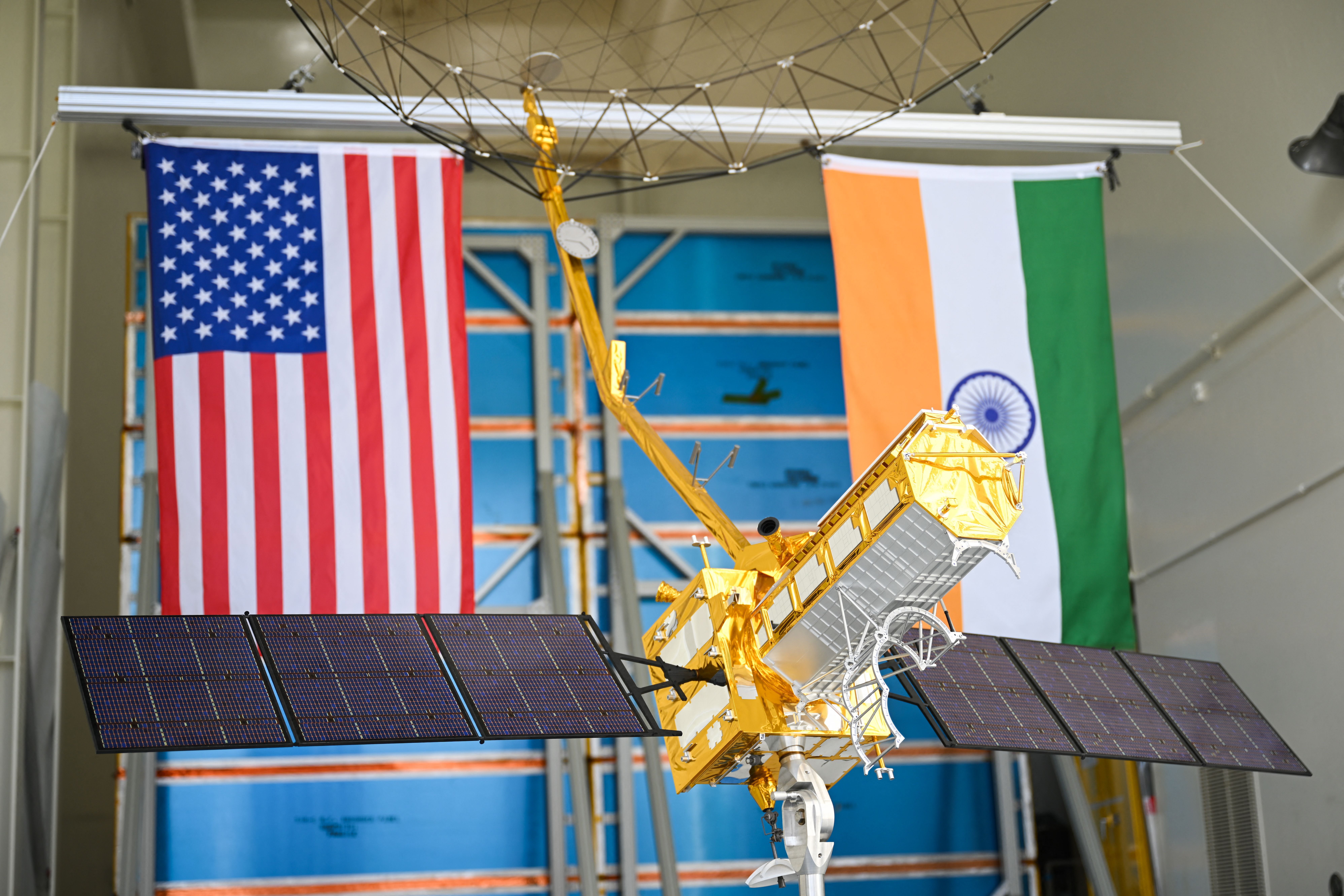
On July 30, 2025, the United States announced 25 percent tariffs on Indian goods. While diplomatic tensions simmered on the trade front, a cosmic calm prevailed at the Sriharikota launch range. Officials from NASA and ISRO were preparing to launch an engineering marvel into space—the NASA-ISRO Synthetic Aperture Radar (NISAR), marking a significant milestone in the India-U.S. bilateral partnership.

Tejas Bharadwaj
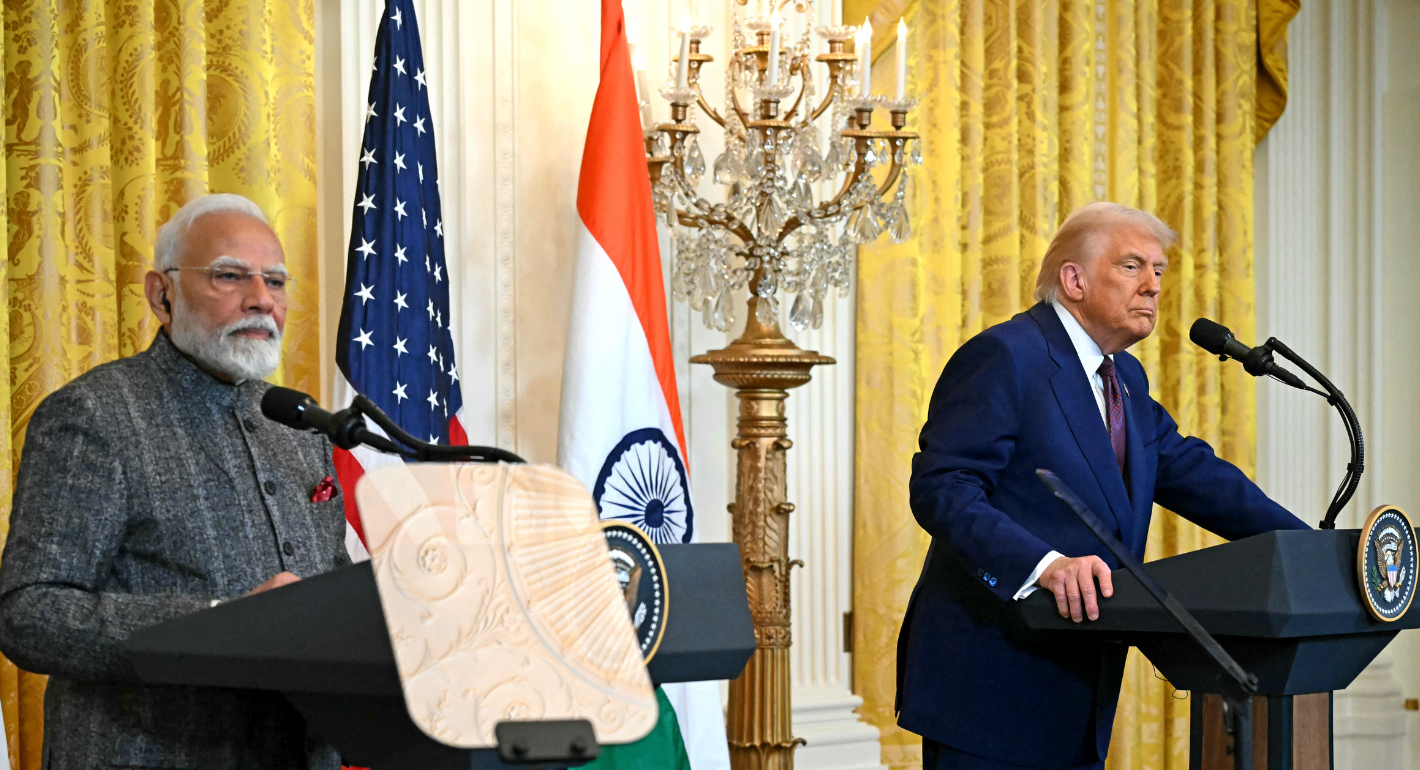
The India-U.S. relationship currently appears buffeted between three “Ts”—TRUST, Tariffs, and Trump.
Arun K. Singh