Cities—with a little help from their friends—are taking over the diplomatic calendar.
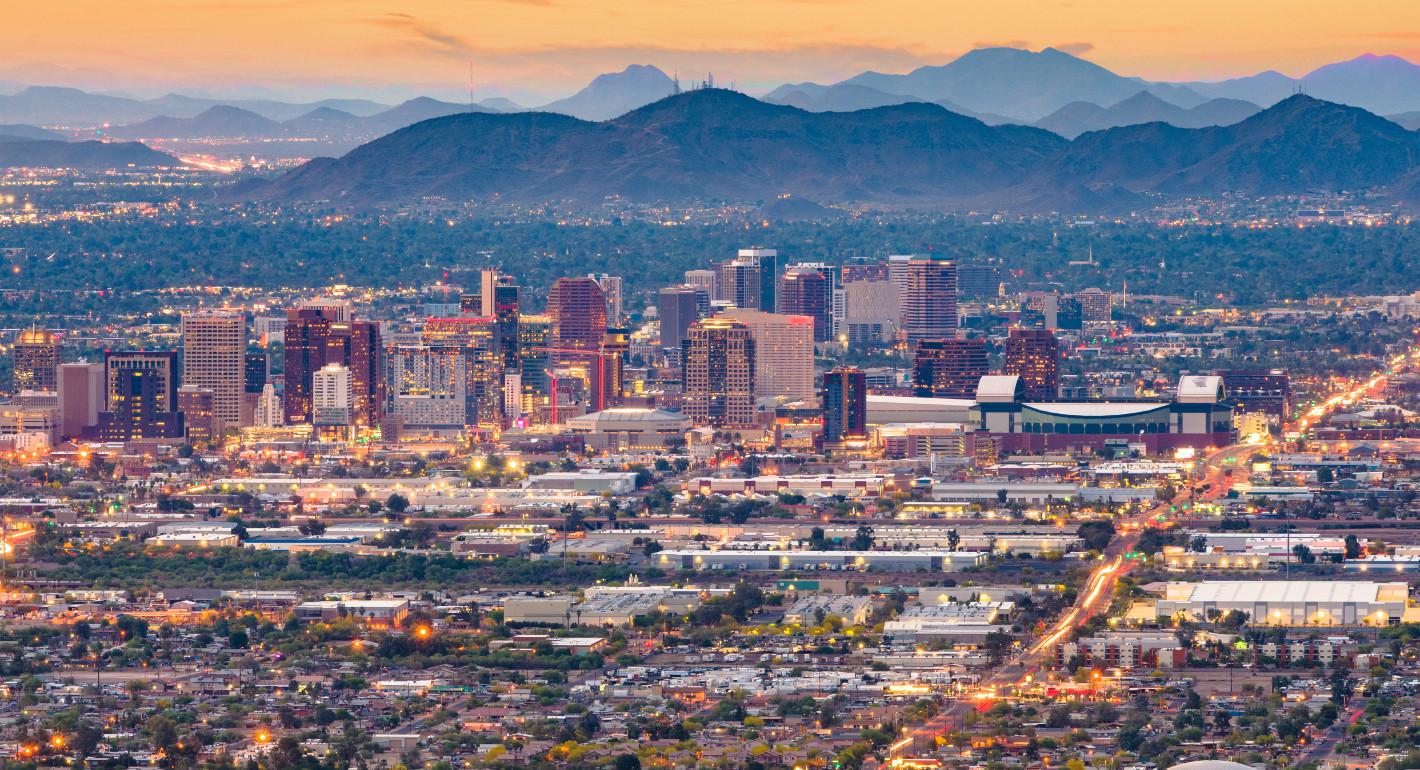
Next week, the U.S. State Department and partners will convene approximately 250 mayors and city leaders from almost every country in the hemisphere for the first Cities Summit of the Americas in Denver. By their very nature, cities concentrate global and regional challenges and opportunities—especially in the Americas, where 80 percent of the population resides in urban areas and more than sixty cities are home to more than a million residents. The summit’s themes will touch on several pressing issues, including housing, climate adaptation and mitigation, governance, and digital inclusion, and the policy priorities reflect challenges that, while often revealing themselves at the local level, require solutions delivered at all levels of governance.
The summit is noteworthy in and of itself, but captured within it are three trends and developments that have been years in the making and that, in advance of the talking points and platitudes, are worth laying out.
First, while city and subnational diplomacy are by no means new, they have evolved dramatically in the past decade. Sure, sister cities remain a common and ongoing practice: for example, between 2000 and 2018, China grew its sister-city relationships in the East Asia and Pacific region from 440 to 950. But true to the historical moment, relationships and knowledge exchange that once moved bilaterally between cities have become networked.
Today there are somewhere between 250 and 300 organized associations of cities globally, nearly half of which operate transnationally. Some of the biggest and best funded of these organizations capture huge swaths of global urbanity and big cities in particular. C40 Cities, a climate-focused network born out of London, represents more than ninety cities, 25 percent of global GDP, and around 13 percent of the global population.
How do these transnational networks—a number of which helped in the development of the Denver summit—do their work? Many of the larger networks facilitate policy exchange around best practices. They are also increasingly focused on influencing global agendas. For example, city networks advocated for, staffed, and ultimately created the U20 and U7, the urban-focused engagement groups of the G20 and G7, respectively. Meanwhile, New York, Los Angeles, and Helsinki have created new frameworks for cities to monitor progress on sustainable development goals within their borders and to report on them to the United Nations, with so-called voluntary local reviews. These efforts capture the twin goals of city diplomacy: to improve cities locally while influencing the global agenda.
This ongoing policy and diplomatic spadework by city networks has led to a second notable development: national governments have come to recognize the scale of influence and impact enabled by these new approaches to subnational diplomacy. China, while expanding sister-city relationships, has also sought to showcase its urban development models and to build influence within the networks themselves. C40 has developed a green building standards program in Beijing, Fuzhou, Qingdao, and Shanghai, but as the program overview makes clear, the exchange is bidirectional, with the explicit goal of showcasing China’s urban practices. The United Kingdom is funding policy development and projects in major African cities, while the German government, long a leader in urban-focused investment, is rolling out a new 22-million-euro program focused on the transport and building sectors in cities in China, Indonesia, the Philippines, India, and Thailand.
The U.S foreign policy community has undergone its own intellectual and bureaucratic evolution in this space. An analysis of the touchstone State Department policy documents of the past two decades shows a clear shift in attention to, and framework for, cities and urban areas. In urban-speak, cities have gone from containers—unstable geographies containing large populations, economies, and risks—to global actors in their own right. Nowhere was this analytical evolution more apparent than in the recent global trends report from the National Intelligence Council (NIC). Whereas in the 2012 assessment, urbanization was treated as a megatrend, in the 2021 report, cities were identified as agents: “Local and city governments—increasingly organized into networks—will take action on international issues such as climate change and migration, getting ahead of national governments in some cases.”
But the NIC’s conclusion regarding city government innovation came in the context of increased competition between nation-states. That brings us to the third emerging development informing subnational diplomacy: the geopolitical context in which the past four decades of urbanization have occurred, and within which these networks have risen, is rapidly evolving. In 2022 and 2023, diverging national perspectives on international events, including the Russian invasion of Ukraine, have quietly been injected into—and undermined, some would argue—the supposedly city-led negotiations on leading network platforms and communiques.
This may mean that we see a reduced focus on joint statements, communiques, and declarations—a staple of the new subnational diplomacy over the last decade. It may also mean we see a return to policy-focused collaborations between cities across geopolitical camps, such as between Chinese and Australian cities, reminiscent of Cold War bridge building. And it most certainly means that the national representatives in Denver should take seriously the requests from local leaders regarding the so-called enabling conditions cities need to act on their priorities. The scalability and efficacy of local responses is determined in part by local policy but also by a wider set of conditions, including around governance, technology and innovation, and, often most importantly, finance.
The municipal policy toolkit is diverse, and cities will bring policy commitments to Denver. But they are also bringing “asks” of their national and international counterparts—the vast majority of whom represent liberal democratic states. Those diplomats would do well to listen to the calls for support and multilevel governance. If they don’t help fulfill these conditions, other powers are demonstrating no lack of interest in shaping the urban future.