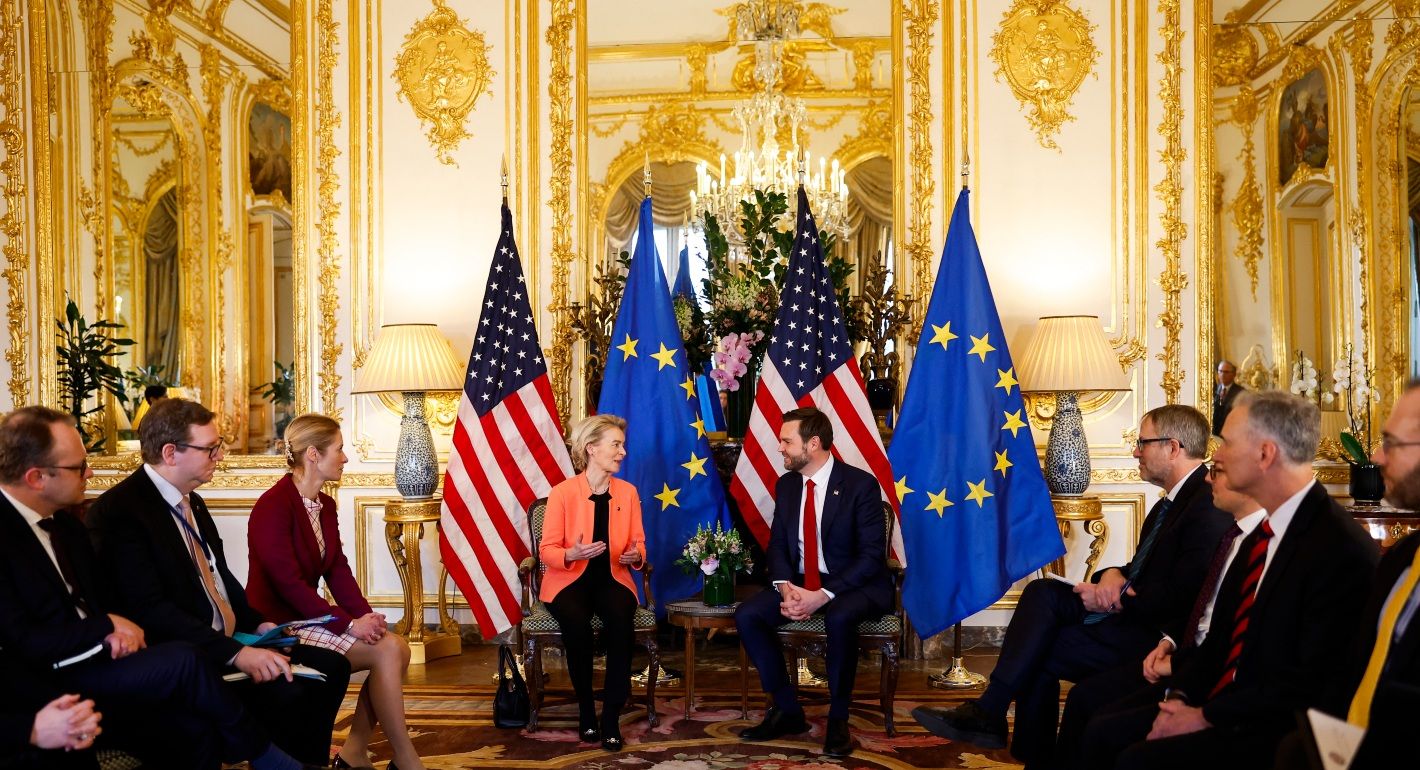
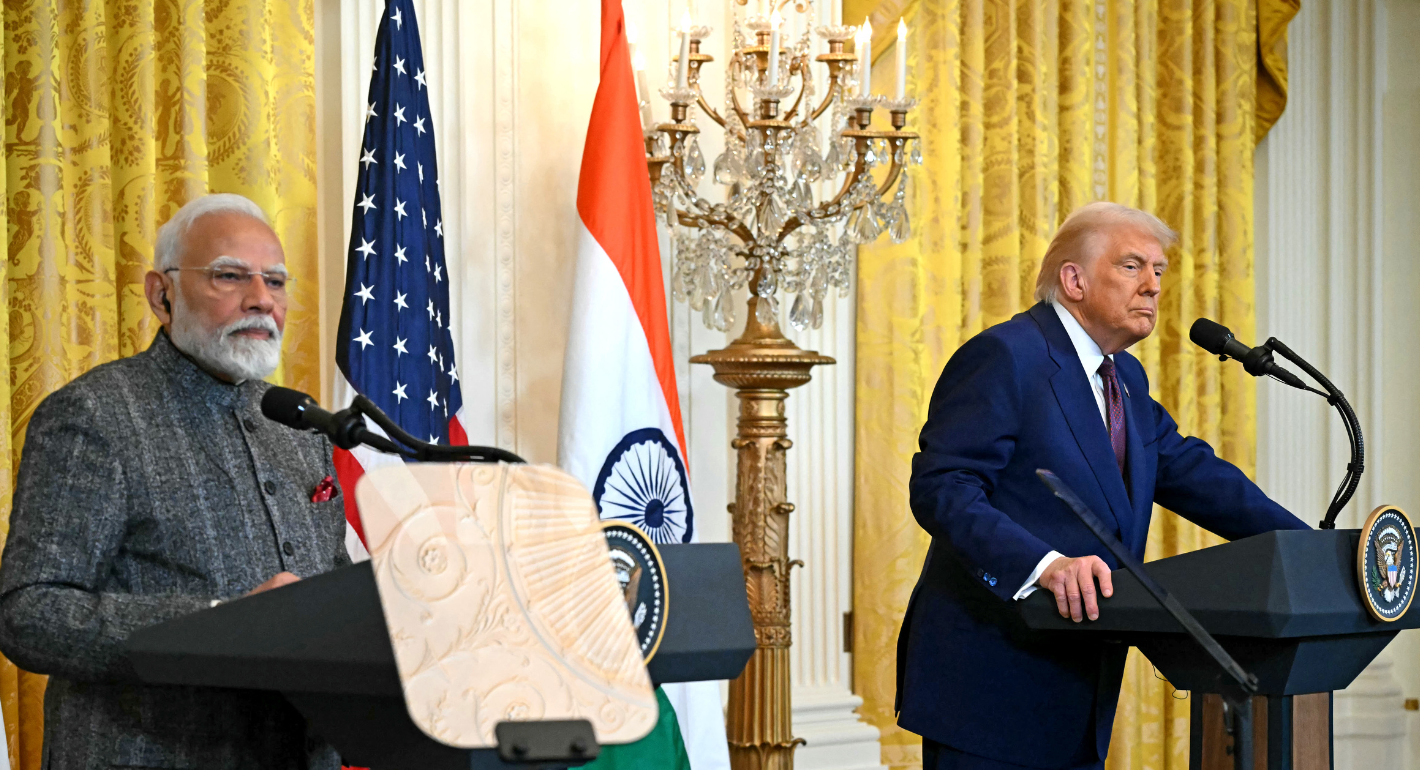
The early weeks of Donald Trump’s second presidency have sent shock waves through the democracy-support community. With the United States sliding toward semi-authoritarianism, Trump and his team eulogizing illiberal leaders, the administration’s leading figures attacking European democracies, and most U.S. external democracy funding having been frozen, the whole international democracy agenda is being shaken to its core. While the situation is still highly fluid and U.S. policies are likely to fluctuate uncertainly over time, it is clear that the ill winds of this new era present unenviably thorny challenges for the EU and European governments.
Three levels of concern are emerging. First, and of most immediate importance, is the issue of international democracy funding. With nearly all U.S. democracy aid dramatically frozen, European donors are already receiving hundreds of requests to provide emergency support to the affected civil society recipients.
EU policymakers, European governments, and democracy foundations say they are sympathetic to the plight of these suddenly stricken activists and are reorienting some funds. But they are also keen to downplay expectations of how far European aid can cover the loss of U.S. money. European funding for democratic governance is around €4 billion ($4.2 billion) a year, compared with U.S. funding of around $3 billion, meaning European donors would need to increase funding levels by around 75 percent to cover the shortfall entirely.
This is unlikely to happen, especially when most EU member states are cutting overall development aid. Of course, set alongside the €100 billion ($104 billion) the EU is committed to raise for additional defense expenditure or the €300 billion ($313 billion) to be raised for the Global Gateway infrastructure program, the extra amount for democracy would be relatively minor. And yet, the EU has stated clearly it has other priorities. For its own strategic reasons, separate from Trump, the EU is on a path toward thinned-down democracy support.
Indeed, the U.S. moves could have exactly the opposite effect. Rather than prompting a compensatory increase in EU democracy funds, the Trump administration’s cuts are emboldening European hard-right parties to push for similar steps and question even more fervently the value of EU external aid. For their part, leftist parties bristle at any notion of the EU devoting resources to rescue what they often dismiss as an illegitimate U.S. agenda.
A second concern is more self-protective. While the funding cuts are understandably the major concern for U.S. democracy actors, many in the EU and European governments fear they face a more crucial task of defending European democracy itself from brazen and truculent U.S. assaults. Far from filling the gap left by suspended U.S. funding, the EU seems to be on a trend toward diverting more resources internally—that is, into protecting European democracy from harmful U.S. interventions.
The Trump administration has supported the far-right figures who are unsettling European democracy, while U.S. big tech is now seen as a major threat to political pluralism in Europe. The eye-watering ferocity of the illiberalism now emanating from the U.S. administration reinforces the EU’s commitment to a so-called Democracy Shield. This flagship democracy initiative of the European Commission focuses on boosting EU defenses against external illiberalism. The Democracy Shield is now vital to cushion European democracy against not only Russia and China but also the United States—an arresting illustration of how Trump has turned the precepts of liberal order upside down.
As an aside, it might be noted that in the few cases where the Trump administration’s hard-rightism intensifies U.S. pressure on autocratic regimes, the EU may recoil from a left-right politicization of the democracy agenda. The United States and the EU may both criticize the regime of Venezuela’s socialist President Nicolás Maduro, but the logics behind their policies toward the country are diverging. In early February, Venezuela’s opposition leader, María Corina Machado, participated by video in a gathering of European far-right parties, including some toward the most authoritarian end of the rightist spectrum. Venezuela is a case where shifts may run in the opposite direction, with many in the EU cooling toward a democratic opposition likely to move close to the Trump administration.
A third level of putative adjustment relates to the broader shape of global democratic alliances. Beyond the EU’s own funding choices, the question arises of how far international cooperation on democracy can now be built without the United States. A democratic response of modest funding increases from just a few European donors will hardly be commensurate with the shock or depth of U.S.-turbocharged illiberal reordering.
European governments are keen to explore possibilities for reshaping global democracy cooperation, although far-reaching, systemic change is unlikely—at least in the short term. Non-Western democracies have often complained about heavy-handed U.S. leadership of the democracy agenda, which cooled their enthusiasm for the ill-fated Summit for Democracy process led by former president Joe Biden. In principle, international cooperation on democracy that is less associated with U.S. interests and more multilateral and egalitarian could be attractive to non-Western democracies.
A key question is whether these democracies will want to invest large amounts of resources in a post-U.S. democracy agenda. They will now face a crucial test of whether they are willing to adopt such proactive agency—whether they can move from long years of rhetorical criticism of U.S.-led liberalism to practical liberal action in the shadow of U.S. illiberalism. Ideas for pooled international democracy funds have been around for a long time and will now regain prominence; but they presuppose that a wide range of democracies is willing to contribute funds in the first place.
Anyway, it is not clear how much the EU or European governments can do on this score: Non-Western democracies are likely to resist European efforts to cajole them to step up just as much as they disliked U.S. strictures—perhaps even more so, given colonial legacies. If future international democracy support needs to rest on leadership from the Global South, then by definition it would be almost self-defeating for the EU or individual European governments to lead the charge for this.
All this paints a sobering picture of how far the EU can offset the damaging turn in U.S. policies. European funding is, for now, relatively significant in scale, and the loss of U.S. aid does not signal the end of democracy support; and the United States may still correct course after Trump departs office. Yet, the chilling jolt of what has happened in the last few weeks enjoins the EU and European governments to begin work on fashioning a different kind of democracy agenda. The correction required is not a matter simply of a few European emergency grants stepping in to cover the loss of U.S. funding. Rather, the Trump cold shower crystallizes a deeper need for change that has been accumulating over many years.
This change is likely to involve adjustments at many levels. The future democracy agenda may be led by civil society alliances more than by government actors. European organizations need to prioritize helping democracy activists build their own local resource bases and move beyond the existing funding model. EU democracy aid itself will need to blend public and private finance under heavily funded initiatives like the Global Gateway. Support will need to be political and diplomatic more than rooted in long-standing project financing. Small clusters of middle-power democracies across multiple regions might play a more useful role, while reflection is needed on the future role of the so far small-scale UN democracy fund.
Perhaps most crucially, future policies are unlikely to be neatly divided along the lines of U.S. versus European approaches, or indeed between Western and non-Western democracies. Today’s divide is between what might be termed the Liberal International and the Illiberal International—with all countries housing actors from both camps. The Illiberal International is now in power in the United States and is gaining ground in parts of Europe, while pro-democracy networks flourish far outside the West. This impending shift lies beyond the scope of immediate EU policy choices but invites a reframing of the whole way in which the international democracy agenda is structured and conceptualized.
This publication is part of the European Democracy Hubinitiative run by Carnegie Europe and the European Partnership for Democracy.