The India-U.S. relationship currently appears buffeted between three “Ts”—TRUST, Tariffs, and Trump.
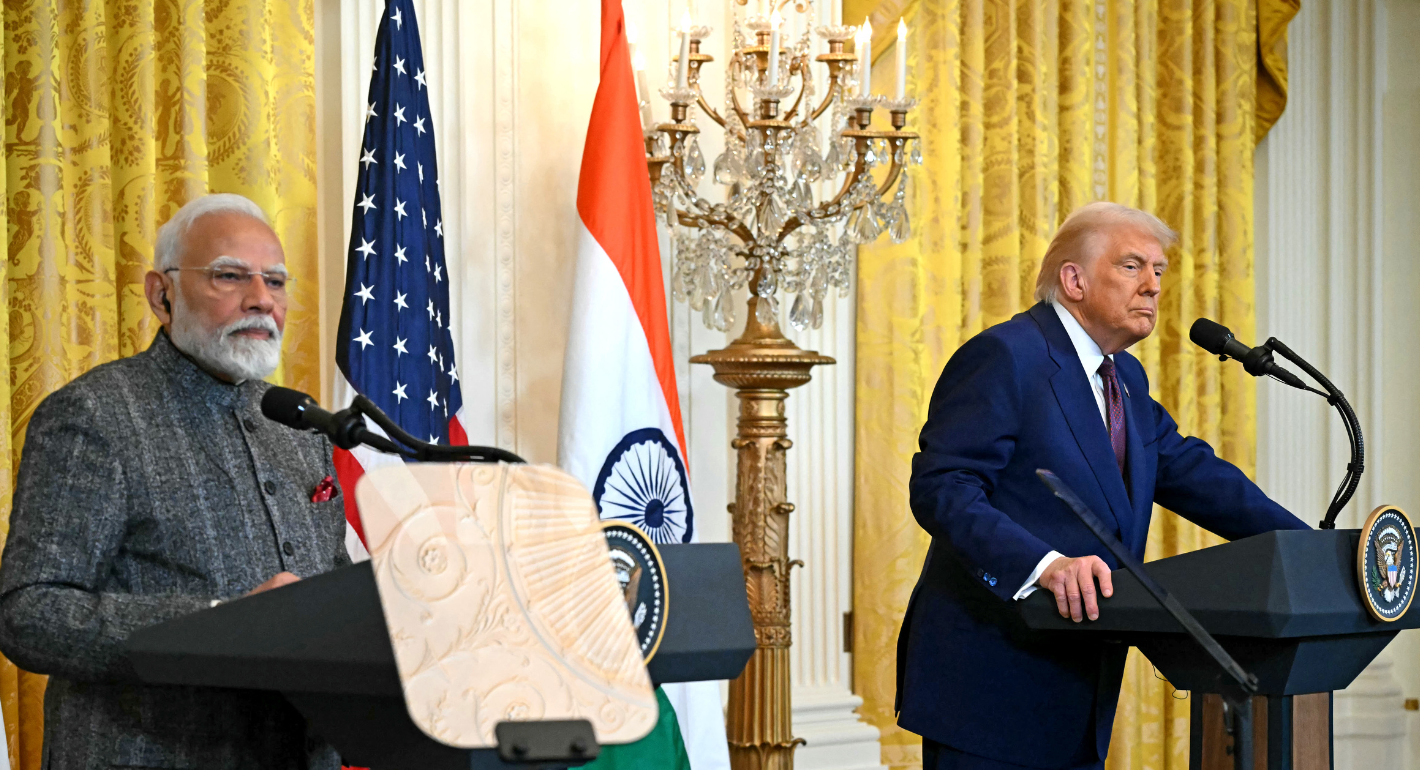
The TRUST (Transforming the Relationship Utilizing Strategic Technology) initiative symbolizes a continued bipartisan ambition. The nomenclature was introduced in an India-U.S. joint statement issued on February 13, 2025, following the first meeting between the newly elected U.S. president Donald Trump and visiting Indian prime minister Narendra Modi. TRUST was essentially a rebranded iCET (the initiative on Critical and Emerging Technologies) launched during the Biden administration in January 2023, led by the national security advisers of the two countries.
Aside from the political and strategic signaling, the iCET in 2023 catalyzed specific progress in several sectors. Several U.S. companies announced investments in India in semiconductors. The U.S. authorized 80 per cent technology transfers to India for the GE F414 engines, higher than it had hitherto done for any of its other partners. The India-U.S. Defense Acceleration Ecosystem, or INDUS-X, was launched to bring together defense startups from both countries to co-develop technology. Additional programs for cooperation in space were identified, including the launch of an Indian astronaut to the International Space Station in partnership with NASA.
TRUST, in 2025, looked at additional steps, including a “Roadmap on Accelerating AI Infrastructure in India,” to enable industry partnerships and investments in next-generation data centers, and to foster co-development and access to compute. It committed to building a new innovation bridge, INDUS innovation, modelled after the INDUS-X, and to exploring similar cooperation in space, energy, and other emerging technologies. TRUST also spoke of building trusted and resilient supply chains, including for semiconductors, critical minerals, advanced materials, and pharmaceuticals.
TRUST was seen as iCET reincarnated or even iCET plus: a positive message for bipartisan continuity, sustained since the Clinton visit to India in 2000, and through Democratic and Republican administrations.
Tariffs, on the other hand, are a political impediment to overcome in Trump 2.0. President Trump has been critical of India on trade, even in his first term, describing India as “tariff king.” A two-year-long effort to work out a mini trade deal during his first term eventually did not succeed. Anticipating U.S. action, India moved quickly this time to preemptively introduce some tariff concessions in its budget proposals in early February. The Joint Statement spoke of requiring new “fair-trade” terms and committed to negotiating the first tranche of a multi-sectoral bilateral trade agreement (BTA) by the fall of 2025 and aiming at doubling bilateral trade to $500 billion by 2030. Since then, there have been sustained negotiations: the Indian commerce minister has visited the U.S. twice, the assistant U.S. trade representative visited India, the chief Indian negotiator took a multi-sectoral team to the U.S., virtual sessions have been held, and terms of reference have been announced. Recent reports indicate attempts to finalize the first part of tranche 1 before the end of July 2025 to preempt the return of the 26 percent “reciprocal tariffs” on Indian products that President Trump announced on April 2. It remains to be seen if the time objectives are met. According to reports, discussions so far have focused on trade in goods, market access, and non-tariff barriers, with services, totalization, and mobility issues to be taken up in subsequent phases. While the U.S. may gain through a reduction in tariffs, India would need enhanced market access and the removal of U.S. non-tariff barriers.
The optics of the negotiations have been occasionally awkward for India, with Trump repeatedly claiming that India had offered to reduce tariffs to zero under his demands, and without any indication of Indian gains. Even as the negotiations play out, steel, aluminum, and auto product imports from India have been subjected to 25–50 percent tariffs, as on other U.S. partners.
Tariffs, therefore, have been a display of U.S. market power to extract concessions, even from allies and politically supportive partners, not just adversaries. Clearly, the attempt from India is to preserve its current export market in the U.S. and enhance opportunity by being among the first movers of new BTAs with the U.S. Here, the United States’ focus is on concessions, before moving to any ambition, unlike the TRUST framework.
All these calculations, nevertheless, can potentially be upended by President Trump, often perceived as transactional and unpredictable in his decisions or pronouncements.
Another challenge that remains to be addressed is the reported depletion of the U.S. National Security Council (NSC), which is leading the implementation of the TRUST initiative. Key changes have been made to the NSC’s staff, including the national security advisor. Intense focus at that level would be necessary to cut through bureaucratic logjams to catalyze new cooperation in frontier technologies. Other relevant departments are also yet to be fully staffed.
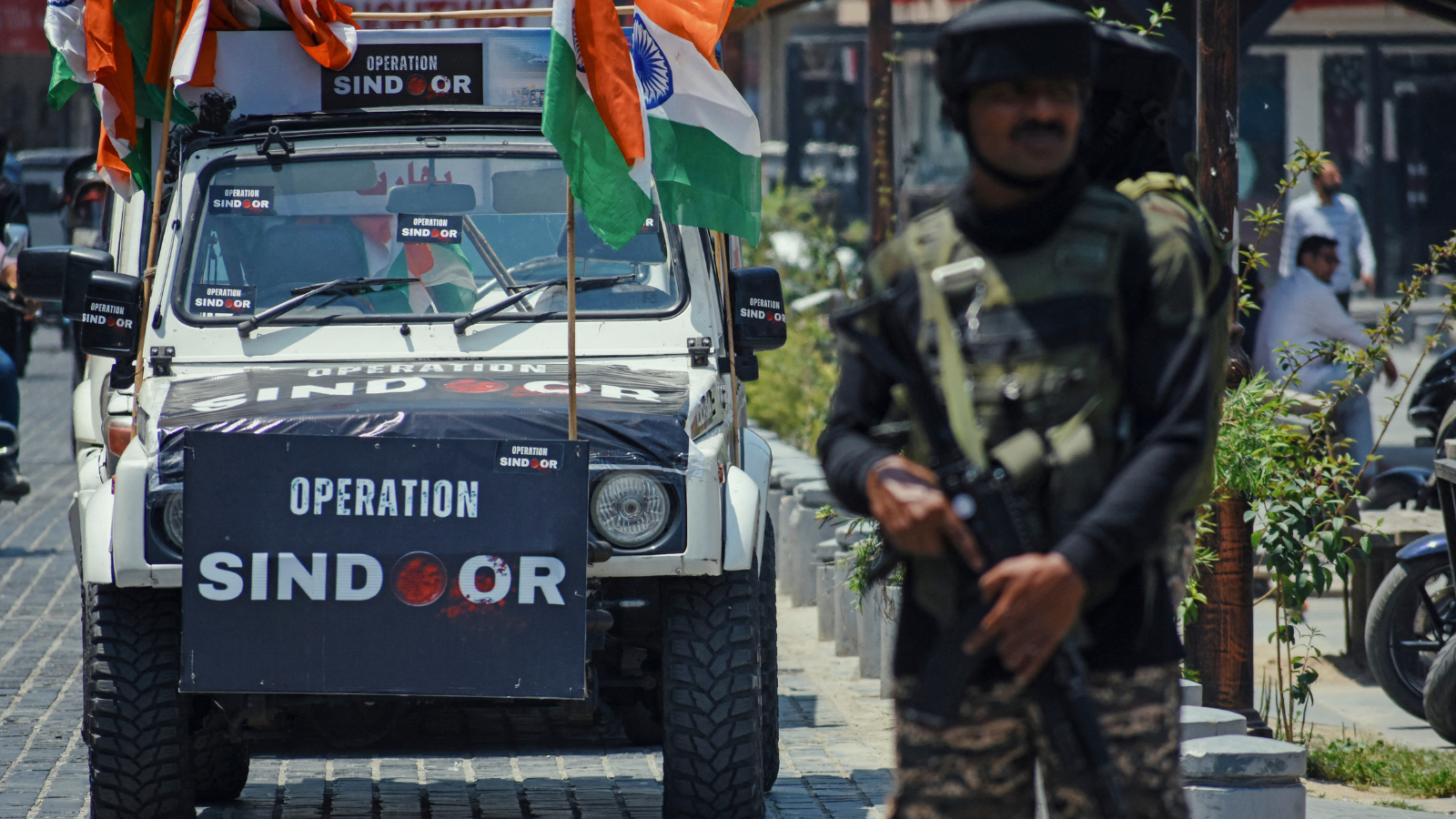
Additionally, the U.S.’ position on the May 7 conflict between India and Pakistan revived assessments in India that the U.S. was not fully behind India on cross-border terrorism and on the need to bring Pakistan to book. While expressing concern and solidarity with India for the Pahalgam terrorist attack on April 22, 2025, U.S. leaders focused on de-escalation after India’s May 7 airstrikes. This was perceived in India as the U.S. not making the necessary distinction between the perpetrators and victims of terrorism. President Trump’s repeated claims of having mediated a ceasefire also riled India, followed by denials from Indian officials, who reemphasized the principle of bilateralism in India–Pakistan issues.
These three Ts of the India–U.S. tripod thus currently need some tending. The TRUST initiative could be taken forward in the interim through functional-level interactions. In trade, the effort to complete part 1 by July, tranche 1 between September to November, and then subsequent tranches to deal with services and mobility, will provide reassuring political signals and enhanced market opportunity. During Trump’s first term, India successfully navigated presidential policy swings, including when Trump met with Pakistani Prime Minister Imran Khan in July 2019 and offered to mediate on Kashmir, despite previously calling for an end to U.S. assistance to Pakistan. He later had a successful visit to India in February 2020. For India, the U.S. will be an important partner as it pursues its objectives of prosperity for its people and the strengthening of national security. For the U.S., India will be an important partner as it seeks to maintain its technological edge in its competition with China for global leadership.