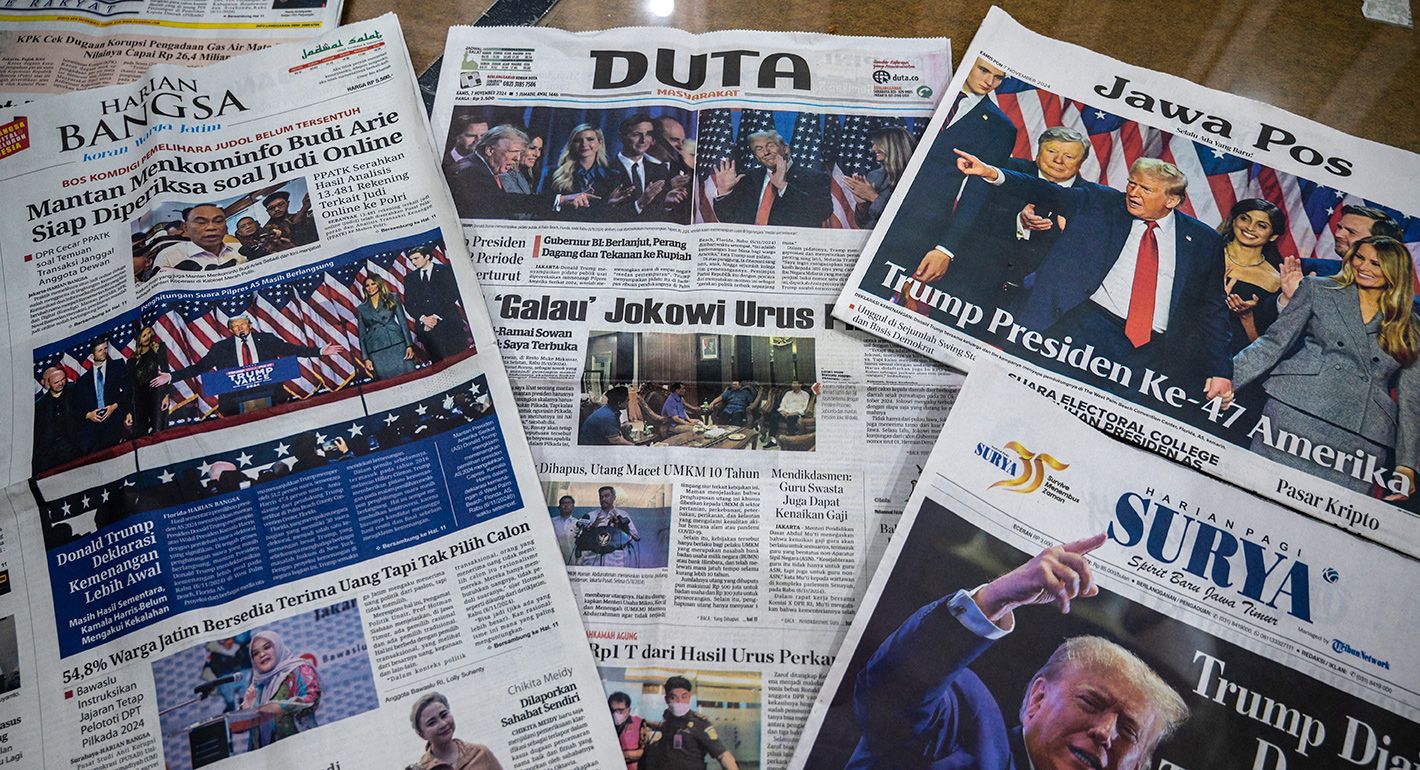
As one of Vietnam’s most important and consequential strategic partners, the United States draws significant attention in Vietnam, especially during presidential election cycles. Regardless of the election outcome, Vietnam has specific expectations of the next U.S. administration to continue and strengthen this partnership.
Maintaining Momentum in Bilateral Relations
The Vietnam-U.S. relationship has undergone dramatic developments in recent years, highlighted by numerous high-level visits and the double upgrade to a Comprehensive Strategic Partnership during President Biden's visit to Vietnam in September 2023. A year later, there has been substantial progress, Vietnam hopes a new administration will continue to build on this momentum, invest in trust-building, and deepen bilateral ties.
Every U.S. president has visited Vietnam since diplomatic relations resumed in 1995. Vietnam will look forward to hosting a new U.S. president since such visits help build confidence in the relationship. The year 2025 marks the thirtieth anniversary of restored diplomatic ties and the fiftieth anniversary of the end of the “American War” (or the “Vietnam War” as it is called in America). Vietnam hopes these milestones will provide an opportunity to further strengthen relations, fostering reconciliation and cooperation in addressing the lingering impacts of the war.
Vietnam also expects the United States to continue viewing it as a viable economic partner, with investments in trade, technology, education, and human resource development. These areas are not only shared priorities but are also strategic sectors that enhance the U.S. footprint in the region while supporting Vietnam’s sustainable development and resilience.
Among Vietnam’s top priorities are partnerships in digitalization, the semiconductor industry, and emerging fields like artificial intelligence, renewable energy, critical infrastructure, and critical minerals. These sectors are the backbone of the future regional and global economy, and Vietnam hopes the new administration will not overlook its growing relevance in these areas.
In terms of security, Vietnam hopes to cooperate with the new administration on nontraditional security challenges, such as transnational crime and cybersecurity. Maritime security remains a critical concern for both Vietnam and the region. Vietnam expects the new administration to continue supporting regional capacity-building in areas like law enforcement, maritime domain awareness, search and rescue, and humanitarian relief.
Supporting ASEAN Centrality and a Comprehensive Regional Approach
Vietnam hopes that the United States will maintain a coherent regional strategy that supports ASEAN centrality within the regional architecture. It is essential for a new U.S. administration not only to participate in key ASEAN meetings, such as the East Asia Summit, but also to avoid turning these platforms into a stage for major power competition. The U.S. endorsement of ASEAN's centrality will also be crucial for the organization in regional issues like the South China Sea, as well as sub-regional cooperation in the Greater Mekong Subregion and Myanmar.
In a broader sense, Vietnam expects the United States to engage the region with long-term strategic foresight, rather than being driven solely by short-term transactional interests. Vietnam also hopes the new administration will adopt a balanced approach to the region, that is, a strategy not only founded on security interests but also sound and sustainable economic engagement plans.
Above all, Vietnam wants the United States to serve as a force for peace and stability in the region by championing the rule of law, upholding the principles of the UN Charter, and pursuing consistent policies and actions.
Demonstrating Responsible Global Leadership
Vietnam views the United States as a major power with significant global responsibilities. It hopes the new administration will exercise this role responsibly by working with the international community to prevent further global divisions and fragmentation. Vietnam also hopes the United States will actively contribute to the peaceful resolution of global conflicts based on the principles of the UN Charter and established international norms.
As the world reaches a profound inflection point, the international community—including Vietnam—is watching the U.S. transition closely. A successful U.S. election and smooth transition matters not only to American citizens but also has global implications. Vietnam hopes that the next U.S. administration will bring stability, foster international cooperation, and engage with Vietnam and the region in a mutually beneficial way.