

{
  "authors": [
    "Sandra Polaski",
    "Paul Brenton",
    "Judith Dean",
    "Bernard Hoekman",
    "H.E. Kailash Ruhee",
    "Erika Dueñas"
  ],
  "type": "event",
  "centerAffiliationAll": "",
  "centers": [
    "Carnegie Endowment for International Peace"
  ],
  "collections": [],
  "englishNewsletterAll": "",
  "nonEnglishNewsletterAll": "",
  "primaryCenter": "Carnegie Endowment for International Peace",
  "programAffiliation": "",
  "programs": [],
  "projects": [],
  "regions": [],
  "topics": [
    "Economy",
    "Trade"
  ]
}
Unilateral Trade Preference Programs: Good for Development?
Fri, May 11th, 2007
Washington, D.C.
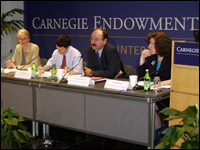
IMGXYZ698IMGZYXThis event featured an in-depth discussion of the impact on developing countries of unilateral trade preferences programs. These programs, designed to spur economic growth in developing countries by expanding their exports, have sparked controversy since their inception in the 1960s. Many developing countries argue that the programs are necessary, but that restrictive product eligibility rules limit their effectiveness. Some trade advocates worry that preferences create a disincentive for multilateral trade liberalization. Unanswered in this debate is whether or not unilateral trade preferences can achieve the goal of promoting economic development through increased trade. Two panels explored this question. In the first panel, leading researchers discussed these programs from an empirical perspective. The second panel offered views from beneficiaries in developing countries.
This program is the first in a new series, Development Policy: What Do We Really Know?, sponsored by Carnegie's Trade, Equity and Development Project. The series will examine existing knowledge about the impact of trade, migration and inequality on growth and poverty reduction. It will highlight cutting edge research and analysis while identifying information gaps and the limits of our current understanding of causal relationships, with the goal of supporting better future policy making.
Carnegie India does not take institutional positions on public policy issues; the views represented herein are those of the author(s) and do not necessarily reflect the views of Carnegie, its staff, or its trustees.
Event Speakers
Former Senior Associate, Director, Trade, Equity and Development Program
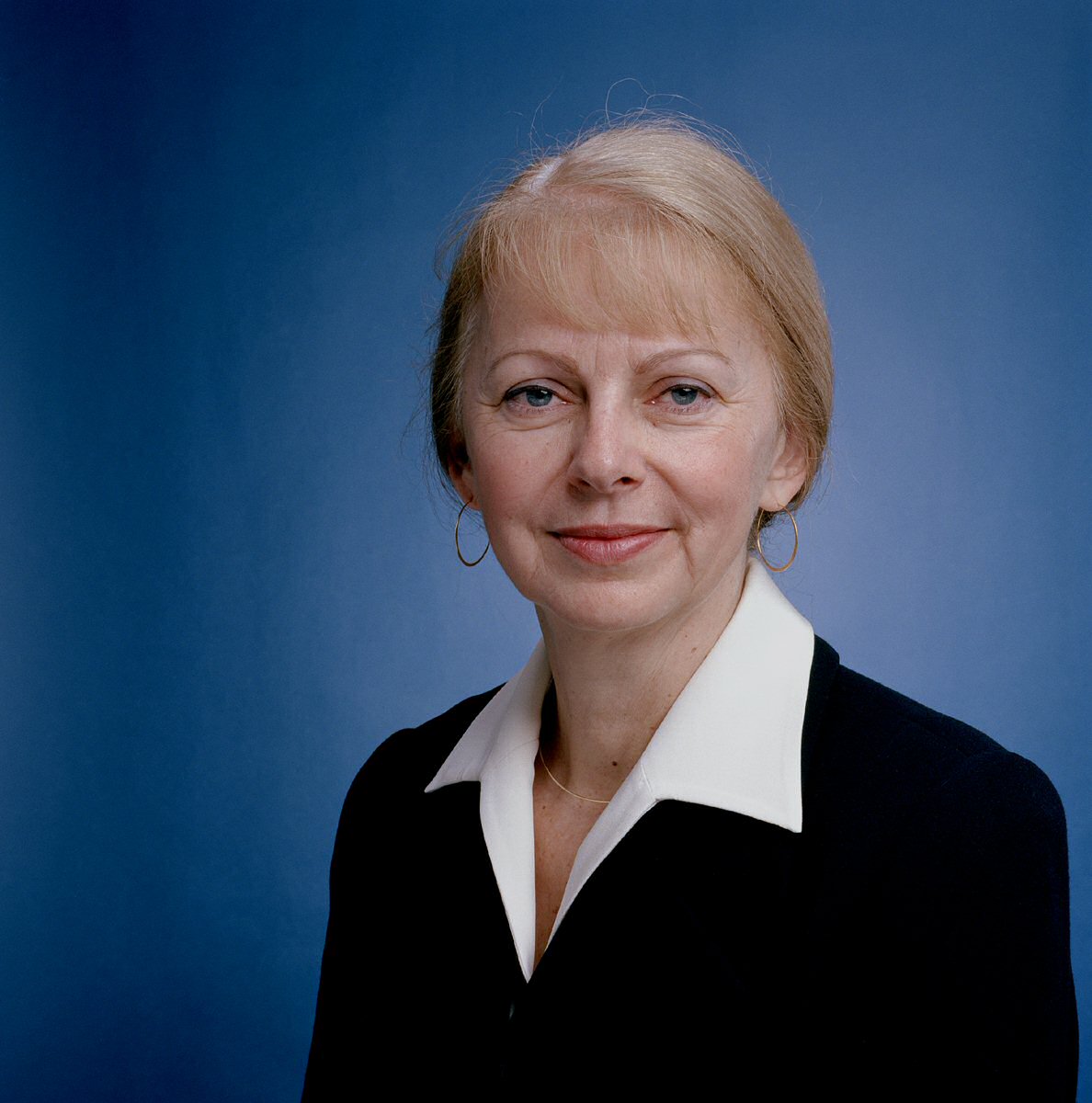
Until April 2002, Polaski served as the U.S. Secretary of State’s Special Representative for International Labor Affairs, the senior State Department official dealing with such matters.
Paul Brenton
Judith Dean
Bernard Hoekman
H.E. Kailash Ruhee
Erika Dueñas