

{
  "authors": [
    "Jessica Tuchman Mathews",
    "Henry Paulson"
  ],
  "type": "event",
  "centerAffiliationAll": "dc",
  "centers": [
    "Carnegie Endowment for International Peace"
  ],
  "collections": [],
  "englishNewsletterAll": "asia",
  "nonEnglishNewsletterAll": "",
  "primaryCenter": "Carnegie Endowment for International Peace",
  "programAffiliation": "AP",
  "programs": [
    "Asia",
    "Sustainability, Climate, and Geopolitics"
  ],
  "projects": [],
  "regions": [
    "China",
    "North America"
  ],
  "topics": [
    "Economy",
    "Trade",
    "Climate Change"
  ]
}
U.S.-China Strategic Economic Dialogue
Tue, June 10th, 2008
Washington, D.C.
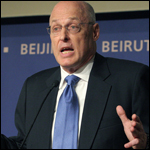
U.S. Treasury Secretary Henry M. Paulson, Jr. reviewed progress made under the U.S.–China Strategic Economic Dialogue and outlined his agenda—emphasizing energy and the environment—for the fourth round of semiannual cabinet-level talks next week at the U.S. Naval Academy in Annapolis, Maryland.
On June 10 at the Carnegie Endowment, Secretary Paulson discussed the U.S.–China economic relationship and the upcoming meeting of the Strategic Economic Dialogue (SED). The dialogue, established by Presidents Bush and Hu, is a framework for managing the bilateral economic relationship on a long-term strategic basis.
Secretary Paulson emphasized that the cabinet-level meeting on June 17–18, 2008, will focus on five areas: managing financial and economic cycles, developing human capital, the benefits of trade and open markets, enhancing investment, and advancing joint opportunities for cooperation in energy and the environment. Priority topics of discussion include the appreciation of the renminbi, the pace of financial sector reform in China, protection of intellectual property rights, food and product quality and safety, and furthering transparency and the rule of law.
Secretary Paulson highlighted the dialogue’s initiatives in the areas of energy security and environmental sustainability. During the December 2007 meeting of the SED, the United States and China agreed to develop a ten-year framework for cooperation on energy and the environment. The framework will challenge all levels of government, industry, academia, and NGOs to find answers to pressing questions on how both nations can increase energy security and meet energy goals. This framework builds upon previous U.S.–China environmental cooperation aimed to combat illegal logging, promote sustainable forest management, and develop a nationwide sulfur dioxide emissions trading system in China.
In the subsequent question and answer session, Secretary Paulson discussed the Treasury’s position on renminbi appreciation, the impact of the recent earthquake on SED momentum, the future of the SED in the next administration, and the rising price of food and oil.
Carnegie India does not take institutional positions on public policy issues; the views represented herein are those of the author(s) and do not necessarily reflect the views of Carnegie, its staff, or its trustees.
Event Speakers
Distinguished Fellow

Mathews is a distinguished fellow at the Carnegie Endowment for International Peace. She served as Carnegie’s president for 18 years.
Henry Paulson