

{
  "authors": [],
  "type": "event",
  "centerAffiliationAll": "",
  "centers": [
    "Carnegie Endowment for International Peace",
    "Carnegie China"
  ],
  "collections": [
    "China’s Foreign Relations"
  ],
  "englishNewsletterAll": "",
  "nonEnglishNewsletterAll": "",
  "primaryCenter": "Carnegie Endowment for International Peace",
  "programAffiliation": "",
  "programs": [],
  "projects": [],
  "regions": [
    "East Asia",
    "China"
  ],
  "topics": []
}
Transformation of China’s Diplomacy: New Disciplines, New Paradigm, and New Strategy
Fri, December 16th, 2011
Beijing
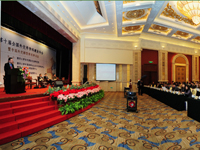
IMGXYZ3394IMGZYXChina’s traditional diplomacy is at a crossroads as it adjusts to the new global order. The financial crises, climate change, and regional instability have propelled China into a new global role and in turn, a new era of diplomacy. The Chinese academic community must find ways to address these new and pressing challenges as it works to reform the study of Foreign Affairs in its top universities.
The Carnegie-Tsinghua Global Policy Center and Tsinghua University’s International Relations Department co-hosted a day-long conference entitled Transformation of China’s Diplomacy: New Disciplines, New Paradigm, and New Strategy in Beijing. Chinese and international scholars met to discuss the many dimensions of China’s diplomatic transformation and to open up dialogue on the challenges facing Chinese diplomacy and how top universities in China were using the study of Foreign Affairs to help address those challenges.
This was the first year that the Foreign Affairs Study conference has been open to international participants. The 2011 Conference brought together a diverse mix of business leaders, media elites, community leaders, academics, and researchers to discuss how, in theory and in practice, China’s Foreign Affairs study will and should continue to reform.
Carnegie India does not take institutional positions on public policy issues; the views represented herein are those of the author(s) and do not necessarily reflect the views of Carnegie, its staff, or its trustees.