

{
  "authors": [
    "David E. Hoffman",
    "Eugene Rumer",
    "Michael Kofman",
    "Dara Massicot",
    "Alexandra Prokopenko"
  ],
  "type": "event",
  "centerAffiliationAll": "dc",
  "centers": [
    "Carnegie Endowment for International Peace"
  ],
  "englishNewsletterAll": "ctw",
  "nonEnglishNewsletterAll": "",
  "primaryCenter": "Carnegie Endowment for International Peace",
  "programAffiliation": "russia",
  "programs": [
    "Russia and Eurasia"
  ],
  "projects": [
    "The Future of Russian Power"
  ],
  "regions": [
    "Russia",
    "Ukraine",
    "Europe",
    "United States"
  ],
  "topics": [
    "Foreign Policy",
    "Security"
  ]
}
The Future of Russian Power: Threat Perceptions, Military Reconstitution, and Economic Constraints
Wed, April 15th, 2026
Live Online
Invalid video URL
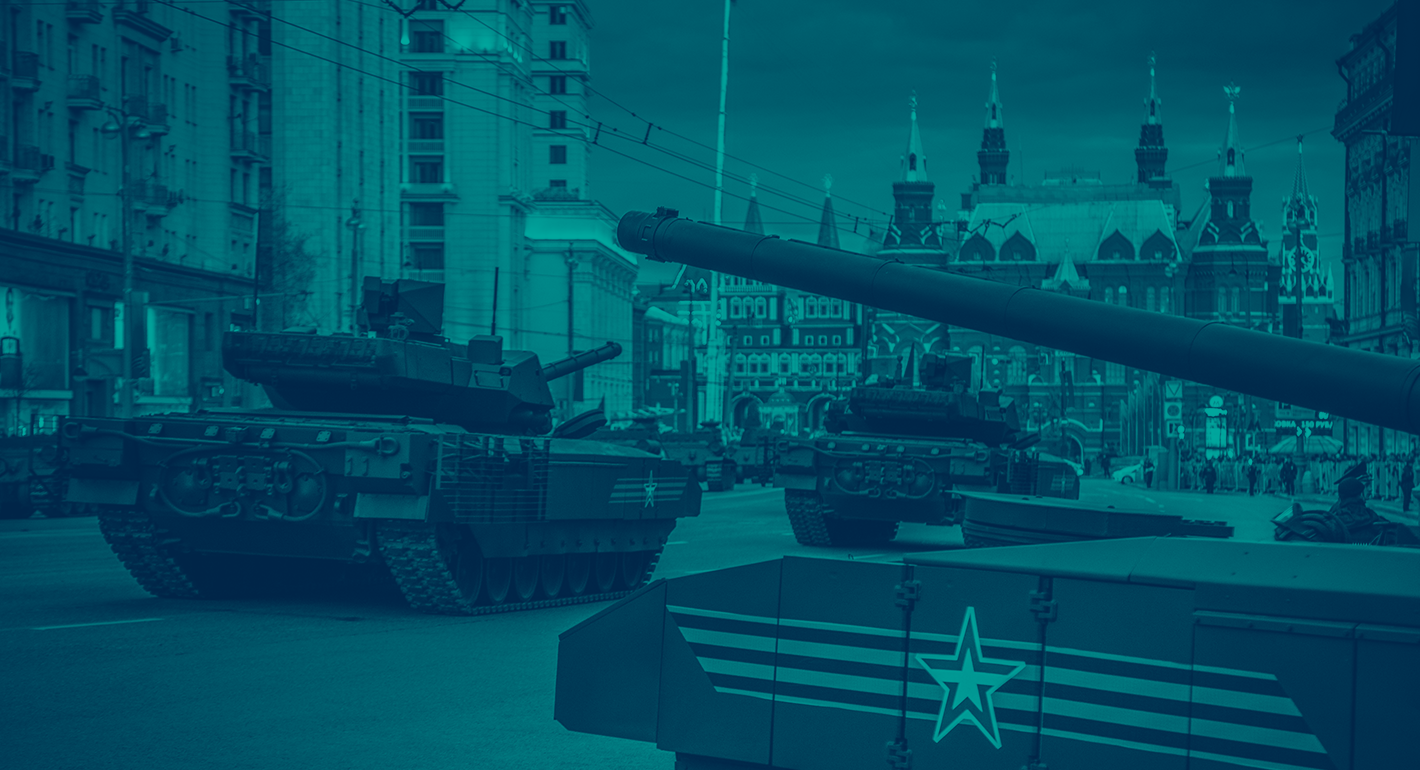
It is tempting to imagine that whenever the war in Ukraine ends, Russia will be permanently weakened and more inward-looking. That would be a mistake. To energize a rigorous, policy-relevant transatlantic conversation about the Russian challenge—and how to meet it—the Carnegie Endowment’s Russia and Eurasia Program recently launched The Future of Russian Power, a major new interdisciplinary research initiative.
The Future of Russian Power aims to explain why an unrepentant Kremlin will emerge from the war determined to seek revenge against Ukraine and its Western partners, to reconstitute the country’s military power, and to impose its vision of security on the European continent. A sampling of research tied to the initiative, including Eugene Rumer’s recent paper, “Belligerent and Beleaguered: Russia After the War with Ukraine,” is available here.
To mark the launch of this project, Carnegie’s Michael Kofman, Dara Massicot, Alexandra Prokopenko, and Eugene Rumer will join moderator David E. Hoffman, former Washington Post editor and foreign correspondent, for a wide-ranging conversation on where Russia stands and what comes next.
Transcript
Note: this is a rush transcript and may contain errors.TranscriptNote: this is a rush transcript and may contain errors.
Introduction
Andrew Weiss: Hi, everybody. I’m Andrew Weiss, vice president for studies here at the Carnegie Endowment for International Peace. Today is a really exciting day for our team. This is the launch of our major project on The Future of Russian Power. We’ll be hearing momentarily from a stellar collection of Carnegie scholars.
Specifically, we’re trying to think through what it means for the United States and our European allies and partners that Russia will almost certainly emerge from the current war aggrieved, unrepentant, insecure, and all the more determined to bend the security environment in Europe to its will.
To grapple with that kind of challenge effectively, American and European leaders are going to need to better understand several things. Here’s a quick telegraphic list.
One, the changes in Russian threat perceptions and the drivers—both enduring and new—of Russian foreign policy and national security policy. Those are shaped, first and foremost, by the emergence of a permanently hostile and well-armed Ukraine right on Russia’s doorstep, as well as Europe’s unshakable belief that Russia, once again, poses the most important and urgent threat to security on the continent.
Two, the changes and lessons that the Russian military has implemented both on the basis of its battlefield learnings, as well as the changing nature of warfare globally.
Three, the far-reaching implications of geopolitical turbulence emanating from a broken Middle East, a rising China, which obviously has a very capable junior partner in Russia, the emergence of an aggressive and belligerent and beleaguered Russia, and lastly, the disruptive effects of an America First foreign policy.
Four, disruptive new technologies, particularly in the defense sector, as well as the growing importance of nuclear weapons.
Five, a reconfiguration of Russian elites, from supporters of the regime to, in the terminology of my colleague Alexandra Prokopenko, accomplices in a genocidal war.
And then lastly, big question marks about Russia’s ability to sustain its new security needs on the basis of a largely one-dimensional, state-dominated economy.
So as part of The Future of Russian Power initiative, people based here at Carnegie’s headquarters in Washington, D.C., colleagues at the Carnegie Russia Eurasia Center in Berlin, members of the Ukraine Initiative, who are based in Kyiv and Washington, as well as other parts of our global network, are all going to be contributing various types of research on a variety of topics, including the ones I just mentioned.
There are already important elements of this research available on our website. I’m sure folks just need to type in “Future of Russian Power Carnegie,” and you’ll pull it up. But anyway, it’s a really exciting moment for all of us.
So, with that, let me turn things over to my friend David E. Hoffman, longtime correspondent and editor at The Washington Post, as well as the author of several classic books on Russia: The Oligarchs, The Dead Hand, and The Billion Dollar Spy.
So welcome, everyone, and thank you, David, so much.
Panel 1: Eugene Rumer and Michael Kofman
David E. Hoffman: Thank you, Andrew, and thanks to everybody for tuning in. This is a very, very tough subject, looking into the future of Russia, but we’re going to give it a good try, because there’s a lot to talk about.
I’ll start with you, Gene. Today, in the report that’s just out and is on the website of this project, you talk about Russia’s threat perceptions and the function of geography. How is it that this huge country somehow feels insecure, and how does geography leave Russia feeling insecure?
And especially to help us understand, when we get to the end of this war with Ukraine—is Russia going to feel more secure having gone through this, or less? And what does that mean for NATO and for Europe?
Eugene Rumer: Thank you, David. I think it’s all about Russia’s enduring, long-standing threat perceptions that the current war really has deepened and aggravated in just about every respect.
If you look at the map of Europe, if you look at where Russia is, and at the location of other major European powers, you see that there are no natural barriers either to contain Russia’s expansion or to protect it from other powers to the west of it. I would argue that it is this combination of geography and history that, taken together, has shaped Russian perceptions of threat from the west.
Let us not forget that Russia experienced two major invasions from the west: in 1941, the invasion by Hitler’s Germany, and in 1812, Napoleon’s invasion. In 1812, the French occupied Moscow in four months; and in 1941 the Germans were at the gates of Moscow in just six months.
And it was the strategic depth that really played a critical role. Had it not been for that buffer between hostile, aggressive Western powers and the Russian heartland, Russia probably would not have survived.
And the rationale for the war against Ukraine, the full-scale war that started in 2022, was not dissimilar, in the sense that Ukraine, by virtue of its geography is a bridge or barrier between Russia and the rest of Europe. It really makes for a critical piece of this geopolitical puzzle that Russian leaders, over the course of decades and centuries, have tried to solve by creating a security buffer between them and the next major European power.
So now, as a result, you have a situation in which Russia is facing major threats along the line of contact with NATO, from the Kola Peninsula all the way to the Black Sea, with Ukrainian drones and missiles raining on Russian airports, Russian refineries, and Russian cities literally on a daily basis.
Hoffman: But, Gene, what you’re saying is that, feeling insecure, Russia invaded Ukraine. But then that war has left Russia feeling insecure, and therefore it is again going to have an enhanced sense of threat.
Rumer: It’s a vicious circle. They turned Ukraine, which was never an enemy of Russia, into one that is going to be on Russia’s doorstep with a battle-tested military, advanced technological capabilities, and the need for revenge against this brutal, genocidal war that Putin unleashed on Ukraine.
So yes, it has become a self-fulfilling prophecy of Putin. Those of us who remember his article about the unity of Russia and Ukraine, published in the summer of 2021, in which he argued that Ukraine was basically a puppet in the hands of the West and was being turned into a weapon against Russia, can see that he succeeded. He turned Ukraine into an adversary, an enemy of Russia, for as far as the eye can see.
Hoffman: Okay, has he also turned Russia into an aggressor against NATO and Europe? I mean, this wounded, insecure Russia you’re describing after the war, is it really a threat to the Baltics, to Poland, and to NATO? Can it be, after all of this?
Rumer: I would argue that Russian leaders, in their current geographic position, looking at the history of Russia and the way in which history feeds their threat perceptions and their strategic culture, will not feel secure.
Because now, if you look at the capabilities that the Finnish Army has, these are not even theater-range or intermediate-range missiles that the Soviets worried about when NATO deployed Pershing IIs and GLCMs, that could reach inside Russia, inside the Soviet Union. These are tactical systems—HIMARS—that can strike at strategic targets on the Russian Kola Peninsula, where Russia’s second-strike capability, the Northern Fleet, is located.
Hoffman: Michael, tell us, if Russia has these kinds of insecurities and ambitions, what military is going to be inherited after the war in Ukraine when this war ends? And give us a picture of the Russian military after Ukraine. Where do you think it is going to go? How is its composition going to be changed by the war? How has Russia adapted? You said that we are going to have a different Russian military after the war than before. Tell us how.
Michael Kofman: Sure, David. Well, look, military analysis is not fortune-telling, so it is very difficult to say what the Russian military is going to look like after the largest conventional war that Europe has seen since World War II. But we have some outlines we can speak to.
First, I’ll just give you my general view. Russia is fundamentally a revisionist state. It is an aggressive state. And what we can say, I think with confidence, is that there has been a structural shift in Russian defense spending from what it was before the war to what it is during the war and what it is likely to be after this war, because Russia is going to be spending far more on the Russian military and on the Russian defense industrial complex, not just as a function of rearmament, not just trying to build out the Russian armed forces after the war, but also as a function of defense industrial policy.
The Russian army, even though it is taking significant casualties, hundreds of thousands killed in action, probably 400,000 or more at this point, is still, if you look at the battlefield right now, quite a bit larger than what it was before the war. So the Russian military right now exists in a state where it is both degraded, it has lost the junior leadership and the people that it needs in order to effectively conduct large-scale combat operations with combined arms and what have you, and is mostly conducting small-scale combat operations, employing infantry in small-unit attacks and infiltration by individual soldiers.
But it has, on the other hand, gotten a lot better at employing precision strike capabilities, expanding the drone component of the force, effectively using recon-fire and recon-strike on the battlefield, and translating theory into practice. A lot of things it could not do early in the war, where it really struggled, where it lacked the experience, it lacked organizational capacity, and it really lacked the software in the military as well.
And third, there is another factor. The Russian military still struggles with a lot of problems within Russian military culture, lack of professionalism, corruption, what have you. And those will always be an impediment to its efficiency, to its military learning, and to the improvements that it might make.
Looking at the broad outlines of the direction of the Russian military, the big question is: how does this war end? Is the Russian military forced to deploy hundreds of thousands of personnel on a 1,200-kilometer front because the Ukrainian military is still deployed, it is capable, and it is supported by the West? Or is the Russian military free to redeploy those forces somewhere else, whether it is Belarus, whether it is on the Baltic border, or somewhere in another potential contingency?
And it is difficult to predict the amount of resources, but it is clear that the Russian military, from a force structure perspective, is going to be larger. It is going to have a much larger component of the force that employs drones and various strike capabilities. And it is not just about these technologies at the tactical level. Russia has substantially improved its ability to produce long-range precision strike weapons such as cruise missiles, one-way attack drones, and ballistic missiles of various types.
If you follow the U.S. war with Iran, you have seen that even a more simplistic, more primitive approach to employing one-way attack drones can be challenging, especially to forces who are not used to operating against those capabilities. Russia today is employing one-way attack drones at a rate of about 6,500 per month, in combination with cruise missiles and with increased use of ballistic missiles.
If you look at that problem set in terms of their ability to conduct long-range precision strike campaigns, that is a growing challenge and will be an enduring challenge to NATO. So yes, I do think that Russia is certainly a problem for the Baltic states, and we can debate how many years it will take Russia to reconstitute its ability to conduct large-scale combat operations such that it can pose a threat to NATO, to the alliance writ large, but that debate has increasingly become a narcissism of small differences.
If you say four years, five years, six years, in defense planning terms, anything less than 10 years is a very short planning timeline. Okay, you are now having an almost nerdy debate on how many years it might be. From the standpoint of defense planning, if you understand the contingencies, you are playing against the threat and the fact that you have to hedge against Russian intentions, then you know that this is something you have to be planning around.
Hoffman: So, let me ask you a question about this. I remember that after World War II, one of the key indicators we watched for was whether Stalin would demobilize his troops. And of course, the alarming thing was that much of the Red Army did not demobilize as quickly as we thought it would, and staying in those Eastern European countries was a real danger and made us wonder what would come next, and whether there would be a Red Army march to the English Channel.
I just wonder, is Russia under any kind of pressure to demobilize? Or if it is not, if this new large force just remains, will it be a threat? Will it be aimed at Ukraine? Will it be aimed at the Baltics? Is it possible that Russia can sustain this force in a mobilized state even after the fighting stops?
Kofman: David, the Russian military is not principally mobilized. It is contracted. Okay, now, on the one hand, there will be substantial pressures, because the Russian economy has a severe lack of skilled labor. There is functionally no unemployment in Russia, and the state is spending a lot of money in order to contract these personnel.
On the other hand, they may not at all change the current policy in wartime conditions and simply allow them to return to regular economic life. The initial challenge for the Russian military will be a retention challenge. The military has expanded to over 1.3 million in size. Their goal has actually been 1.5 million. I do not know if they can reach it, but more than likely the state will spend what resources it has to try to retain a fairly sizable amount of personnel in order to fill out the much larger force structure that the Russian armed forces would like to have and would like to lock in.
The next question is, if they do redeploy—let us say some number of personnel are left in Ukraine after a ceasefire or settlement. But if they do redeploy, where are they likely to redeploy? Well, Nordic countries for sure know that if some substantial percentage of forces is going to redeploy back to the recreated Moscow and Leningrad Military Districts, Russia will have infrastructure issues because, again, it will need to create infrastructure for these expanded personnel formations.
But more than likely, there will be a larger Russian military presence north of St. Petersburg. There will likely be more Russian forces around the Moscow Military District, and so you are going to have some percentage of these forces return to these areas, whereas previously, prior to the war, you had seen a fairly low-level ground force presence.
Hoffman: Gene, in your report, which, as I mentioned, is on the website for this project and was the first gun, so to speak, in this project, you talk about technology as another factor after geography. Can you tell us a little bit about your conclusion on the challenges that Russia faces?
And especially, we have just seen President Zelensky talk about robots taking territory in the current war without humans on the battlefield. If Russia does aspire to this power and is feeling insecure, does it have the wherewithal to fight in this sort of revolution in military affairs that is taking place?
Rumer: Well, it is a difficult question to answer, because it will depend on a lot of other variables. And Mike can probably speak to it as well, especially the use of robots on the battlefield. And our colleague Dara Massicot can also speak to it as well.
The race to secure Russia through technology goes back to, I would say, the post-World War II era, when it seemed for a brief period of time that the United States had this unilateral advantage in nuclear weapons and the ability to strike at the Russian heartland without Russia being able to reciprocate. Of course, the Russians exploded their own nuclear device in 1949. It became the Cold War.
Hoffman: They closed the gap.
Rumer: They closed the gap eventually. And the Cuban Missile Crisis had a lot to do with it, with both the gap in capabilities as well as in geography, because Russia, without deploying intermediate-range weapons in Cuba, could not really reach the United States without triggering Armageddon. And that is something that weighed on their thinking.
Once they reached strategic parity with the United States, the United States deployed intermediate-range nuclear missiles in Europe in the 1980s that again put the Russian heartland at risk.
And now you have a new generation of advanced conventional weapons threatening Russia.
So, it is the curse of geography as well as geopolitics and technology. Thanks to Russia’s own policies, it is facing in Europe a ring of countries that see it as an adversary, as an existential threat to them, and they are now capable of acquiring and deploying advanced weapons against which Russia will have a hard time finding countermeasures.
So this kind of offense-defense race will continue, but it does leave Russia in a very vulnerable position at a time when Europe is reawakening from its own holiday from history, and beginning to acquire its own capabilities to deter and defend against Russia.
So it is not just the United States. It is Europe that Russia has to worry about, and countries that previously did not previously pose a threat to Russia, such as Poland, Finland, Germany, are all thinking about how to deter and defend against Russia with capabilities that the Russians will find inherently threatening and destabilizing.
So it is a recurring theme, in post-World War II Soviet and Russian experience.
Hoffman: Michael, Gene gave a kind of high-level overview, but I wonder what you think about this contest of technology that has unfolded in this war and where that will take us. Is there something we can learn from this? Has Russia adapted, as Gene said? Has it caught up also?
How does a place like Russia—a state now basically a dictatorship—innovate? How does it compete, say, with Ukraine, which has Western backing? Is it possible?
Kofman: Sure. So, look, Ukraine, and we writ large in the West, certainly benefit from the fact that we are not only much more technologically advanced, but we have a strong commercial technology base, and we have the capital and the entire ecosystem right there.
There is not a Russian SpaceX. There are not these commercial technologies that work closely either with Ukraine or with our Department of Defense, enabling this aspect of the fight. That said, the Russian military, despite often lagging in innovation, has been fairly good at working with the defense industrial complex, looking at what works, whether it is on the Ukrainian side or other capabilities deployed, and looking, as best as they can, to copy it. And they are fairly good at scaling deployment.
And so, we have often seen a three- to four-month adaptation-counteradaptation cycle. If the Ukrainian military deploys something, it is proven effective, and it spreads on the battlefield, then the Russian military, within a number of months, will begin experimenting with it as well and will start scaling deployment of those capabilities. And in some areas, they have led, whether it is the use of fiber-optic cable drones or certain other technologies as well.
So, we do see the Russian military being able to adapt. And the Russian defense industrial complex, again, a bit slower, has a very different approach than Ukraine does. Ukraine is much more like thousands of startup projects closely tied to units, and so it is able to disperse production. It is able to innovate much faster, and the entire iteration cycle is very closely tied to the battlefield.
Russia tends to be a lot slower in this regard but nonetheless can ramp up production of whether it is drones, whether it is ballistic missiles, or whether it is other types of capabilities at a substantial rate, and start scaling that deployment across the battlefield.
Now, if we kind of step back and say, well, what does it mean for us? It is clear that traditional advantages the United States and NATO countries still hold, right, from technology to air power to the way we are able to employ the force as a joint force and the synergies of integration.
On the other hand, we can see from exercises with Ukrainian partners and allies, albeit at the tactical level, that our forces would take significant casualties dealing with the kind of drone capabilities and drone units that they have, and this has been consistently demonstrated to us already over the past year.
Russia has thousands upon thousands of personnel dedicated to drone employment and has adjusted how they fight. Granted, it is for this war in this specific context, but we can already see the challenges it would pose for the way our military would fight in some future hypothetical contingency, and we need to take account of them, not hype them, but also not brush them aside and not be overly dismissive with that traditional mindset of, we’re better, and so there is nothing here to see.
Rumer: If I may, on this, Dave, I think there is another issue, perhaps, that we will see in the years to come, and that there is already beginning a discussion in Russian military circles about the future nature of war, the extent to which these new technologies will impact the traditional big-war Russian way of doing business with large armored formations and large concentrations of infantry.
Hoffman: Are they saying that it will change it?
Rumer: There are some people who are saying yes. We see it in Russian military literature that “yes, we have to rethink some of the fundamental concepts by which large-scale conventional operations are conducted.”
And while the Russian defense budget will remain large and probably growing, the amount of money that is available for anything is not infinite. It is a finite amount of money.
And I can imagine that there is going to be a fight, both conceptually, between old-school and new-school people within the Russian military and subordinate institutions and within the defense industrial establishment. Call it a fight between “dinosaurs,” who will want to build more and more tanks, more and more armored personnel carriers, old-style hardware, and to put it in Silicon Valley terms “unicorns”—people who think that “there is a revolution underway and we need to catch up. We do not want to be slow and fall behind.”
Hoffman: I mean, I take your word for it that there is this division, but I still see, for example, what happened with Skolkovo. I just do not see Russia leading at the cutting edge of technology.
And Michael, I wonder what you think about what Gene said here. Is there really already kind of a conflict over whether this future exists?
Kofman: So, if we are talking about leading at the cutting edge of technology, yes, David, I agree with you, and that is unlikely. And the question is, what is the challenge posed by Russian “good enough”?
And the other problem is, as we see in this war, Russia is fighting terribly inefficiently, and the military culture and structure continues to value capabilities, equipment, and technology over people. But Russia is willing to take very high casualties. It is willing to use large numbers of equipment and personnel and still continue to fight into the fifth year of this war. And that is something that needs to be taken into account. It is a country with considerable resources and nonetheless is willing to suffer high rates of attrition, even though it is not fighting very efficiently.
If we look at cutting-edge technology, yes, obviously Russia is not going to be leading anything in things like artificial intelligence, or even necessarily autonomy development. That is true, but these capabilities, as deployed on the battlefield, still pose a major challenge to our traditional forces.
And we also have to ask, compared to what? NATO militaries still have a long way to go to, first, rearm; second, expand force structure and acquire capabilities that they might need in a hypothetical future conventional war; third, adapt to the battlefield that we have seen in the Russia-Ukraine war, understanding that if this is how the Russian military fights, then they must also be prepared to deal with these sorts of tactics and technologies; and increasingly also consider what those contingencies look like in the event that they might have to put together a coalition in their own right. That is also an ongoing challenge and discussion within European circles.
I think that, to me, there is a right way to think about the future Russian military problem set, and it is not necessarily as a technology leader, but it is also not as a threat that can be easily dismissed based on poor performance in this war, particularly in the latter phases of this war as well.
Hoffman: Yeah, the resilience has been quite something, as you mentioned here. This is a related question to the technology question, which is this concept that we have loosely called hybrid, or, I know, that is not a great term, but this collection of power projection that we have seen: Russia’s attempts to influence Western audiences, its attempts to use sabotage and to undermine European systems and open societies, and obviously the old tricks of disinformation and propaganda.
Gene, in your report, you said that it is possible that the West is going to need to bring the hybrid war to Russia. And you also caution that that could escalate. And I just wonder, is part of the future of Russian power this hybrid war, or what some have called the “cognitive war” against the West? And how do we respond to that?
It is very difficult, it seems to me, for the West to respond with the same methods. How do we deal with it: containment, offensive, defensive?
Rumer: All of the above. But I think that, luckily, we have not had the kind of catastrophic breakdown that could have happened as a result of some fairly recent Russian activities in Europe. We have not had a major aircraft crash...
Hoffman: Yeah, but they put a bomb on one. Cyberattacks, blackouts...
Rumer: Yeah, so I think we need to demonstrate a capability that positions us, in the event of continuing certain types of Russian irresponsible behavior, to inflict the kind of damage that will be very painful for the regime, that the regime will not want to sustain.
That is a whole separate field of study, to understand what those capabilities should be and where they should be targeted. But I do think that without a capable, demonstrable deterrent capability, we are going to be confined merely to playing this sort of whack-a-mole game, trying to catch the Russians putting a package in a DHL plane, or talking about greater resilience in our hospital systems and so on.
I do not know what it will take. Again, it is something that I think really should be seriously studied, whether it will take shutting down the lights in Moscow and St. Petersburg or bringing some critical part of Russian infrastructure to a standstill. But I think that without the capability, without showing that we can deter and retaliate, I do not think we can really manage this game.
Hoffman: This is very worrisome to me. I find it very, very difficult to envision escalation. Michael, what do you think about this sort of asymmetric conflict that we face? I mean, Russia is showing that it is willing to do some of these things that certainly are not in our values toolkit. And I just wonder, do we need to be more like them as we face off, especially when we think about Russian power in the next decade or two decades: cyber, disinformation, propaganda, sabotage? How do we respond?
Kofman: Yeah, you’re describing a host of activities broadly in the unconventional warfare toolkit, and we have seen an expansive campaign being prosecuted by Russia across Europe already, and over the past several years they have shown a willingness to take on greater and greater risk in terms of the activities that they are conducting, both the damage that they might inflict and the lives that might be lost, which could constitute real acts of aggression.
We have seen targeted assassination, sabotage, military-industrial sabotage, and everything from classic forms of political nonconventional warfare, meddling in politics, paying parties, and whatnot, to more sophisticated forms, such as using cryptocurrencies to hire people increasingly to do things on behalf of the Russian state that may not be directly tied to them, but indirectly it is increasingly clear who is paying for and funding these activities across Europe. So, the forms and methods have continued to evolve as technology has evolved.
On top of that, I think what concerned me the most looking at last year was the increasing willingness by Russia to violate the airspace of NATO members, in some cases fairly brazenly, such as the drone strike in Poland.
And the reason for that is that from the very beginning of the war, NATO had focused first and foremost on containing horizontal escalation, on making sure that the war, at the very least, whether you agree or not, is largely isolated to Russia and Ukraine rather than expanding and involving NATO members themselves. And they have done a very good job of that. We have been able to effectively contain or deter direct Russian aggression against NATO members.
But probably over the last year, you have seen steady spillover and Russia testing the waters of what reactions look like, what capabilities look like. And in some cases, they do not look great. For the folks who think that dealing with one-way attack drones is easy, it is not. If your air force and air defense systems are not optimized for that problem set, you might end up actually looking relatively unprepared, even though for four years we have watched these capabilities being employed against Ukraine and Ukraine having fairly successfully adapted to them.
So I am much more concerned about the fact that there is a steady horizontal escalation taking place. Ukraine has been going after the Russian shadow fleet, both in the Black Sea and outside of it, in the Mediterranean as well, hitting tankers, even liquefied natural gas tankers, and we are steadily seeing a slow expansion of this war to include other adjacent regions and countries.
Lastly, regarding striking back, the country that has frankly done the most, and I think this is a fairly straightforward point, to bring the war to Russia has been Ukraine, in both direct ways but also in asymmetric ways over the last four years. And it is the country that spends the most time trying to, if not retaliate, at the very least bring these costs both to Russian elites and to the Russian public, and has increasingly done a better job of doing that over the past couple of years.
Hoffman: Listen, I would be remiss if I did not raise the nuclear, strategic nuclear questions. We have spent so many decades talking about arms control. I seem to have been writing about it for 40 or 50 years. And I just wondered what both of you think about strategic nuclear competition.
Has the strategic nuclear situation basically become a static kind of immovable and stable competition now that the arms control regime has basically fallen apart? Should we worry that part of the future of Russian power will be nuclear weapons development? Should we be concerned about some of the asymmetric projects, the Burevestnik nuclear-powered cruise missile and so forth? Or do you think this is essentially in hand, and our real problem is going to be conventional?
Kofman: So maybe very briefly, look, strategic nuclear weapons and non-strategic nuclear weapons have always been a very, very important dimension of both the military balance and how we look at Russia, whether it was during much of the Cold War, whether it was post-Cold War through the 1990s and 2000s, or even today. And they played a role in this conflict as well.
They certainly shaped our thinking. It certainly shaped the thinking of the Biden administration, being concerned about some aspects of escalation early on, and in some cases it delayed what capabilities you might have deployed, or under what conditions and with what constraints we provided them to Ukraine.
And still, there is a great deal left to learn about the nuclear crisis of 2022, and I think that there is a good deal of historical writing that can be done on that subject.
Now, looking today, we are in a post-traditional arms control world with the recent passing of the New START treaty, although Russian participation had already been suspended for some years. And the challenge is, most professionals have grown up in this world, so now that it is gone, at first it feels like nothing has changed, but actually quite a bit has changed. It has opened up United States force structure and nuclear capabilities, along with Russia’s.
Now, do I think we are going to enter a new arms race? No, not necessarily. I actually think that if you look at the way the Russian strategic community looks at strategic nuclear weapons, they are first and foremost concerned with parity for status purposes, having roughly the same number of strategic warheads deployed as us, and they can achieve that easily through upload capacity.
If we are primarily reacting to the growth of China’s strategic nuclear forces, Russia has options by which to upload and maintain a larger number of warheads, so they do not feel like they have substantially fallen behind the U.S. in numbers.
Hoffman: But isn’t that arms racing?
Kofman: No, David, not necessarily. It is not. And what concerns the U.S. community primarily is that we are much more of a counterforce community that is focused on damage limitation, so we tend to look much more at the means of delivery, the number of missiles, and it is not clear that Russia is going to expand the number of deployed missiles they have, or even really has the defense industrial capacity, given the current state of the arsenal, to do that. So, it does not actually pose significant challenges for us in terms of, for example, if they upload some additional warheads.
And secondarily, they are very focused on the survivability of their nuclear arsenal. That is where the novel nuclear weapons come in. But these do not change the strategic military balance whatsoever. And actually, the amount of money they spend on that takes away from their ability to further expand their strategic nuclear force.
I think they are interesting. Some aspects of them are concerning, but ultimately they do not change that much for the United States in terms of U.S. nuclear planning. This is my personal point of view as an analyst.
And lastly, where I think there is a great area of concern is what might happen with the theater nuclear arsenal and non-strategic nuclear weapons that Russia has...
Hoffman: So-called “tactical” nuclear weapons.
Kofman: Yeah, what people do refer to as tactical nuclear weapons, that is also a very substantial part of the overall Russian nuclear force. And I think that might be more subject to change, although there has not been that dramatic a growth in that arsenal recently either.
So, bottom line, the future is very uncertain, but it is not clear that the way the U.S. is going to react to the Chinese nuclear buildup will necessarily spark an arms race with Russia. They do not necessarily have the resources for it, the industrial capacity is very constrained, and what we are likely to do may not lead them to try to pursue us and tail-chase us in those specific capabilities.
Rumer: Just one last word. Mike has an excellent article on the subject in War on the Rocks. I highly recommend it to everyone. That is one point on which I very much agree with him.
I would return to the point that I think I made before, and if not, I would be remiss not to mention it, and that is that the European theater is the primary theater that occupies Russian strategic thinking. And that is where the tactical, or non-strategic, nuclear weapons really come into play.
And what I would expect is that, just as in the 1990s, when we observed that Russia was relying more on its tactical nuclear weapons than strategic nuclear weapons to ensure deterrence in the European theater against what they perceived to be NATO’s superior conventional capabilities, I expect this to be kind of a replay, as they see themselves in greater danger from both, possibly us, but certainly Europeans...
Hoffman: So, a return of Flexible Response, basically, right? They will turn to nuclear weapons as a way to make sure that they are not conventionally outclassed.
Rumer: Well, I don’t think they ever left that.
Hoffman: I mean, it’s a flipping of it, but that was the trade off, right?
Rumer: Yeah. I mean, Michael will probably kick me when we’re done for mentioning “escalate to de-escalate.” Dara, too. But I think these are all part of the same kind of way of thinking about the conventional-nuclear balance and the way to manage it in the European theater.
Hoffman: Well, thanks to both of you. We still have a lot of questions to answer in this project, and more will be answered.
Panel 2: Dara Massicot and Alexandra Prokopenko
David E. Hoffman: So, we’re going to jump right in with Dara Massicot and Sasha Prokopenko. Thank you very much. We’re going to continue this discussion a little bit about the future of Russian power, hard power, and also, I hope both of you can help us understand a little bit more of the soft power and human capital questions that are involved in this. Because, of course, that is what matters a lot. These are societies. It is not all guns, right? It is also people.
But Dara, let me start with you, because you argued in an essay in Foreign Affairs that the Russian military is showing signs of being able to learn and to think about the future and to take those lessons and prepare for that. And I just wondered, are these changes across the board? Is this really a process that is different from the sort of battlefield picture that is caricatured of a Russian army that is a complete mess, and it is just a meat grinder, throwing people into it willy-nilly? Your piece seems to suggest there is a more systematic recapitalization of the Russian military. Tell us what you found.
Dara Massicot: Okay, thanks, David. Yes, there are two different processes that go on. One is this battlefield adaptation that Mike talked about before, and that is very temporal, very current, for survival and lethality. And there is a longer, deep learning process that goes on. And when an organization becomes a learning organization, specifically a military learning organization, it is able to take its combat experience, bring it back home and analyze it, come up with recommendations, and then implement that throughout the force. That is a long-term process. It is a permanent process, and it is pretty formulaic in how it happens. And the story in the article, and some upcoming research that we are doing, is that the Russian military has actually installed this pretty complicated architecture of learning from the war.
Hoffman: Can you just give us an example? I hear this, but I wonder, just give me something…
Massicot: Yeah, it is something that they have been pretty quiet about. Not that they are keeping it a secret, but they just do not broadcast it. So, the system that they have built essentially starts from the front line. They have specific lessons-learned officers and other personnel there at the front line to witness and observe what is going on. There is a recognition that not everything gets written down in the Russian military, particularly if it is bad news. It does not always make it into the command log to go up to the Kremlin.
So, you have everything from frontline observers that communicate their observations back into Russia, and it is disseminated into different organizations that work on things like artillery improvements, air defense improvements, or electronic warfare improvements. They take operational problems and try to come up with a solution and test them and then put them back into the force.
And they are already thinking ahead about what the military will look like when the war ends. What kind of changes do they need to make in doctrine, long-term structure, force size? All of these things are being discussed and analyzed right now, and they have put a pin in it because the war is not finished, and they plan on finishing this process when it ends.
And I think the interesting thing about this, and maybe you appreciate it as a historian, is that the Red Army did this after World War II. They took about seven years, from 1945 until roughly the death of Stalin, to learn everything that they had learned in World War II. They created this very complicated architecture to do that, to extract that combat experience from people and write it down and make it permanent and transformative. And they are doing a variant of that, very deliberately, right now.
So, I do anticipate some of this deep learning making some real changes in how they do business in certain areas.
Hoffman: Like how?
Massicot: Logistics. Combat medicine is a big one. I think also they have made targeting improvements from where they were. I think they have a vision of future warfare, although it is very expensive, and I am going to let Sasha talk about whether it is realistic to achieve it. They have a developing theory of the case, but that is colliding with the reality that we can all see online of this very brutal and bleak experience on the front line, with a breakdown in discipline and order. So, you have to think about the Russian military as an organization that is doing both things at one time: learning and thinking in numbers and algorithms back in Moscow, and yet living through this very gritty, harsh reality on the front line, with a very high casualty rate and everything else. So, they will combine when the war ends, and then we will see what comes out the other side.
Hoffman: You know, Michael Kofman has pointed out that you have to understand the context of a future war, and we do not really know what Russia will face militarily in the future. But is this learning process geared toward essentially fighting another, say, Ukraine war number three? Or is it, do you think, geared toward confrontation in the future with NATO, with the Baltics? I mean, is this learning process aimed at another Ukraine conflict, or at something bigger? And that would be an important indicator for us, right?
Massicot: Yes, it would. So, I think with the deep learning, it is more abstract. So, it is hard for me to say, in particular, this is targeted toward Ukraine and this is not. I will give you an example.
One of the central problems that they have articulated in this war is that, with the pervasive drone presence and pervasive surveillance, the battlefield is very transparent. They cannot actually mass force on the ground in order to execute a successful offensive operation in the way that they want to. They do not have a solution for that, and that is the number one problem they want to tackle and address when the war concludes.
You can use that for a Ukraine contingency, you can use that for a NATO contingency, you can use that for a Central Asia contingency. So, it is thinking a little bit more abstractly.
Some of the more high-tech problems that they talk about, like not wanting to fall behind in military artificial intelligence, or wanting to use quantum computing for any number of national security and defense purposes, or having robotic war in the future, they are worried about falling behind in that realm. They know how important and critical it will be moving into the 2030s and 2040s. And they look at the types of things that China is already developing, they look at our human capital base and our investment and our technological edge, and they become very concerned that it is going to be very easy for them to fall behind in that environment. So, I think probably partnership and collaboration with someone like China is probably how they are going to manage that. But it is tricky.
Hoffman: I mean, as we have heard, they fall behind and they catch up and close the gap and fall behind again. Sasha, I would like to ask you a little bit about the economics of the period we are in and the period we are looking at. You have written that Russia sort of has this negative equilibrium, and essentially it is eating its future faster than it can replenish it. Tell us a little bit: Does Russia have an economic base from which it can think about great-power projection in the future? And that would seem to require a lot. After devoting something like 8 percent of gross domestic product already to the military, are there going to be economic resources for future reconstitution?
Alexandra Prokopenko: It is a good question. So, for now, because of the war in the Middle East, Russia has additional fiscal revenues, which give Putin an option to postpone unpleasant decisions.
Hoffman: We took the sanctions off the oil. He has doubled his oil revenues overnight.
Prokopenko: Yes, doing nothing. And the Kremlin decided to spend them. So, we will see additional spending this year, and we do not know yet for sure, but probably the spending is linked to military expenditures.
For the future, Russia will come out of this war with an absolutely different structure of the economy than it had at the prewar level. The economy is now split into two unequal sectors. One is thriving, and this one is linked to the military and military-industrial complex, or military-adjacent industries, like pharmaceuticals and logistics, which work for the front line. They all have prioritized access to different types of resources: human resources, capital resources, bank loans, or state expenditures. So that demand is created by the state.
The second sector is the rest of the economy, the civilian sector, small and medium enterprises. They are suffocating and they are lagging behind. This structure will persist after any ceasefire, and I do not anticipate that Russian military spending will go down. Probably it will not be 8 percent of gross domestic product or 7 percent of gross domestic product, but it definitely will exceed prewar levels.
And the right question is not, “Will Putin have enough money for military reconstitution?” The right question is, “Will Putin have enough money for military reconstitution and something else?” Because for military reconstitution, they will definitely find resources. And that is what we see now. Russia spends enormous resources on the military, and the Russian army is an army of mercenaries and is partly funded from the federal budget. It is also a big burden on the regional budgets. Stopping the war will at least soften this burden of war expenditures on regional shoulders and improve their financial situation for a while. But federal spending, I think, will remain elevated and remain tied to the military.
One more important issue is that the military-industrial complex is now one of the biggest employers in the country. More than 3.8 million people are employed in the military-industrial complex, which has become a factor of political economy. It is complicated to reduce demand because military enterprises are located in so-called monotowns, which means reducing demand means unemployment, and unemployment means regional tensions, which a political regime like Putin’s will try to avoid.
Hoffman: Do you think that this high, elevated military spending you see continuing will not create some kind of disruption in the structure that Putin has created? I mean, I can understand how oligarchs and the clans and so on can rally under the war, and Putin would say you have to help, you even talked about making contributions and so on and joining the club. But looking ahead, is the structure of the Russian economy going to hold? Even after Putin, are these large groups going to continue to be structured and held together this way, or are they maybe going to become more self-interested? Are they going to break out because they fear the future without Putin?
Prokopenko: It is a good question, but I think we need to define what term we are talking about. If we are talking about five years, for example, there are lots of interests in the status quo within the Russian system.
We do not see any new elite emerging because of the war, but we do see, not direct war beneficiaries, but beneficiaries of this status quo. I am talking about the captains of import substitution, who are now thriving on state demand, Russian businesses that acquired assets of Western companies, and of course they do not want to give them back and they want to continue profiting from them, and the bunch of intermediaries who are helping the economy circumvent sanctions, and all this anti-sanctions infrastructure that has emerged, the financial infrastructure, the logistical infrastructure, the semi-legal crypto. It is a big factor for now in the Russian economy. All these semi-legal companies that are benefiting from smuggling stuff, they are all happy that maybe the war ends with a ceasefire or something so people will stop dying, but the situation with the sanctions and with the economy designed like this, where the state focuses on the military and spends a lot there, means they are thriving on state priorities, which will be military spending and import substitution and going to autarky, and sometimes ties with China.
Hoffman: Sasha, while we have you, I wondered, you mentioned these elites, but your very interesting forthcoming book about the elites and the war, which covers the first two years of the war, found that they were very much actively complicit, to use the word, in Putin’s invasion of Ukraine. Where does that go after the war? Is this sense of both being complicit and also passive going to hold up after Putin? Is there still going to be Putinism?
Prokopenko: Well, I think that Russian elites, for now, are still atomized, and that is their rational strategy of survival.
Hoffman: But that is Putin’s strategy, to keep them atomized, right?
Prokopenko: Yes, and Putin is not going anywhere. I mean, he is still with us. He has relatively good health, he is in good shape, so he is not going to leave his position. And that is in his interest, to keep the elites atomized. And for them it is rational, because now they are locked in, literally, within the country. Most of them are under sanctions. All of them are under the stigma of being Russians and being enablers of the war and accomplices of Putin’s full-scale invasion of Ukraine, which means that they may never return to the Western community as reliable members, and they do not want to continue living in fear somewhere in China or in the United Arab Emirates. So that is why they are locked in in Russia.
It has an interesting implication, that they would be interested in investing in domestic politics to protect their assets…
Hoffman: I do not understand what you mean by that. I mean, your book says that the system was depoliticized. In other words, it was sanitized, the chance for politics was removed. And now you are suggesting that some of these companies could somehow re-inject this kind of competition as a survival mechanism. What do you mean?
Prokopenko: Well, now we are witnessing, and it is also in my book, a very important process of redistribution of assets inside Russia. The prosecutor’s office had a role in this, and of course it is with Putin’s blessing, but Putin’s inner circle also suffers from this redistribution of assets. It would be incorrect to say that they are just benefiting. No, they are also losing assets. And they are unhappy with the situation, with this environment of unpredictability they have to live with.
Previously, before the war, the main arbiter of these inter-elite conflicts was Putin, and Putin himself was the person who defined which kind of assets belonged to which kind of person. Now it seems that Putin is not so happy with this role anymore because he has a lot of other things to think about, like geopolitics, more exciting toys than the assets of oligarchs.
So, they need somehow to protect what they think is their own, and without some sort of institution, without reliance on an institutional mechanism, they cannot do this. Just recently, Oleg Deripaska publicly, explicitly said that there is arbitrariness by the siloviki and that we are in an institutional vacuum because of the siloviki. And that is the closest oligarch to Putin saying this explicitly while being in Russia.
Hoffman: Okay, we will see if Deripaska does…
Prokopenko: He suffers, by the way. He suffers. He lost some of his social assets during the war. But Deripaska is not the only person with such a mindset. So, I think in the future we will see more.
Hoffman: As the author of a book about oligarchs, I am very curious about whether they are going to save Russia, but we will leave that for the next part of this series.
Dara, I want to come back to you. You have written recently about the real trouble of reintegrating veterans after this war, and I think this is going to be a problem for Russia and Ukraine, but especially I wonder if you can address Russia, where people who have been through this horrific wartime experience are going to bring a shock to their communities and to society when they return. We have seen several serious reports of violence and anger. Tell us what is going on and why we should think about human capital and the shock impact on mental health that is going to happen as a result of the war.
Massicot: Right. It is a complicated question. So, with respect to the Foreign Affairs article, I discussed the challenges coming up ahead for Ukraine and Russia. And we are here today to talk about Russia. But before I do, I would just like to point out that Ukraine, a greater percentage of its population is currently fighting or has a family member who is fighting, so this reintegration challenge is more acute for Ukraine. I would say, though, as I do in my article, the Ukrainian society wants to help its veterans. They may not necessarily know how, but there is that desire to help them come back and be part of Ukrainian society again and readjust when the war is over.
In Russia, the story is a bit different. What you find in the Russian population is a lot of apathy and wariness. And as Sasha said, there is a large percentage of the population now that views the soldiers fighting in Ukraine almost as mercenaries themselves…
Hoffman: I just don’t get this. I mean, my impression from the history of Afghanistan was this terrible thing, even Chechnya, right? The Chechen mothers, we have had this over and over again. The impact of the earlier wars was a real impact on Russian society. People were traumatized by this. Zinky Boys is such a famous book. And now you both seem to be saying, actually, this is turned on its head. Families are proud. They are getting large compensation. And it is not a problem.
Massicot: Well, it is a problem, but there is a little bit of difference between those two conflicts in that a lot of the “zinky boys,” or those killed in conflict, were conscripted. They were conscripts, 18 or above, so they did not really have a choice. They were conscripted and sent. The same in Chechnya. Now, Chechnya, of course, was a part of Russia, so in the 1990s mothers would go and physically retrieve their sons from Chechnya and pay off the Chechens to get them back.
To give you an anecdote, I thought at the beginning of this war that we would see that again when all the casualties came in. There was an interview by the original founder of the Committee of Soldiers’ Mothers from the Gorbachev era. She gave an interview. She is retired now. She is not in the business anymore, but she is still dialed in enough. And she said, “I just do not understand these mothers and fathers today. They are so different from the 1990s. They would call me and tell me, what can I do? And I would tell them. And now they call me, and I tell them what they have to do, and they become frightened and they hang up.”
Because of this atomization, because of how everything is tracked, because of the pressure being faced by the soldiers themselves if they complain too much because their phones are tracked, there is a lot of pressure in this system. Now, I think we should not mistake it for stability. It is pressure. But what I would say is that there are this hardening and this apathy right now toward the war.
The Russian population is generally supportive, I would say passively supportive. They tune into the news to see what they need to know, and they say, okay, it is fine, I will move on. And that is a perfect result for the Kremlin. They want them passively supportive but not asking too many questions about what the strategy is or why they are not making more progress. And the people who do ask those questions, like some of the milbloggers, get into trouble.
Prokopenko: Just a short intervention. It is also different from other wars because of the state narrative, how the state first tried to present the war against Ukraine as a special military operation. So, this is an operation which is conducted by special people, specially designated people, by contractors.
And on city streets you see billboards that offer very generous money for signing a contract, and the families get very generous handouts from regional authorities and acquire quite respectful status, which is also important in Russian society. So that gives people a different sense of it and divides people.
Those who are not participating in the war see the others as mercenaries, and the women as just getting bonuses. So, they are fighting not for the motherland. They are fighting for bonuses. And because it was framed as a special military operation, it is not a war. They are not defenders. They are fighting for something else. And only now has the official narrative changed, and Putin and Peskov and other officials started to say out loud the word war and call the special military operation a war, which, by the way, has been criminalized in Russia.
Hoffman: I mean, but is there not a contradiction here? When we saw Crimea, when Putin took Crimea and then marched victoriously into St. Catherine’s Hall, there was a huge amount of patriotic symbolism in that particular moment. And the idea was to summon popular support because “it was ours,” right? But now what you are telling me is that that is completely gone, that this is not a war of patriotism, does not inspire patriotism, but is simply mercenary, a war for bonuses. How can Putin possibly keep the population with him if it is essentially something so banal as rubles?
Massicot: Well, there has been a really systemic attempt since the beginning of this war to tie it directly to the iconography of World War II. Literally on billboards, you will have veterans of World War II side by side with veterans of this war….
Hoffman: Right, but have they succeeded?
Massicot: We are going to see, and I will tell you how we know it is succeeding or failing. When the war ends and they try to restaff this military with professional contract enlisted or officers or conscripts every year, if we start to see evasion, if we start to see dips, if we start to see people around the kitchen table making individual decisions of “no, despite what you are telling me on the news, I know the story, I know the cemetery is full of bodies,” then we will see. But again, that process is not yet complete.
Hoffman: Sasha, what do you think? Do we not have any window into this yet? What is your sense?
Prokopenko: So, the most important thing here is that Putin lives in his own cloud, and the war is heavily unpopular among the Russian population. That is what we can see from the polls. So, it is a socially acceptable answer to say “yes, we are for the SVO, yes, we are for the war.” But the next answer would be, “and also we are for negotiations, for an immediate ceasefire.” Which means, well, people are not as bloodthirsty as we could think.
But Putin, of course, needs this war. Putin is the only person who needs this war. He lives in his own cloud, and the whole machine works on Putin’s desire. In authoritarian regimes like Russia, you can exclude people, you can exclude the population from the equation. So being a popular leader is not a necessary condition for being a leader.
And what we witness now with the attack on the internet and turning off Telegram and turning off mobile internet in Russia, and how this splits elites and how elites are unhappy, even very close Putin associates like Deputy Head of the Presidential Staff Aleksei Gromov, who is responsible for propaganda, his propaganda is broken with no internet. It does not work so well without internet. Or [Sergei] Kiriyenko, who is responsible for domestic politics and for elections, they are unhappy with turning off the internet.
Hoffman: This is interesting, because you made the point online the other day also that this is not just a censorship issue, that what is really happening is the various groups that depend on the internet, I mean obviously military bloggers, bankers, are angry that the Federal Security Service has unilaterally taken action to shut them down, and that this is creating fractures around Putin. Is that true?
Prokopenko: It is true. But are those fractures so damaging as to distort the whole system? I think no. But of course, the more fractures we see, the better.
Hoffman: Why did he do it in the first place? Why shut the internet down now?
Prokopenko: It is a good and very open question. I think, well, my best answer would be: Why not? Because they can. And when the war is over, it would be much more complicated to justify this. And for the enforcement part of the bureaucracy, those parts of the Federal Security Service that can be linked to enforcement, they need to have such control over the internet, over messaging, and so on and so forth. So now, because it is war, because there is an external threat, it is easy to sell it to Putin. No one cares about the population. No one cares about the losses to business. No one cares about soldiers at the front line who cannot communicate without Telegram.
Hoffman: Interesting. Dara, can you address one thing I want to get to? In the future of Russian power, as Russia is learning, as you say, and creating a learning machine, is it sharing these lessons with China, with North Korea, with Iran? I particularly worry about nuclear technology, and we know North Korea is very eager for that and has a lot to provide Russia in terms of conventional military support. So, is that kind of thing going on? Russia’s knowledge about warfighting is not inconsequential. Are they trading it?
Massicot: They are. So yes, the combat knowledge that they have from the war in Ukraine is already out of the box. They are already sharing it with their partners. I will give you a few examples. It is different depending on which partner it is.
China, in particular, is really interested in the one thing that it does not have, which is recent combat experience, right?
Hoffman: It has not fought any wars recently.
Massicot: It has been a long time. And this is how Russia can still show leadership in that relationship, because it is not economically dominant, it is not politically dominant globally, so it does have something to offer there.
And the things that China is interested in are things like distributed logistics. They are interested in how to handle mass-casualty events, which should be a red flag. Why is the Chinese military trying to figure that out? I think they are interested in more complicated measures too, but it is not clear to me that Russia is sharing things like how to defeat Western air defense systems or those kinds of complicated things with China, which is an interesting signal of maybe withholding.
With the North Koreans, the North Koreans came through for Russia when they needed it with their artillery in 2022 and since. And in exchange, they are getting all sorts of sensitive missile technology from the Russians, which is interesting…
Hoffman: Something they really desperately wanted. And they have their own quite robust missile program, right?
Massicot: Right. And then, of course, Iran is the original purveyor of the Shahed drones. Russia has purchased that intellectual property and made it its own. Their domestic variant is called the Geran. It is more sophisticated, goes faster, flies farther, and can maneuver. So, I would assume that there is learning going on between the Russians and Iranians. And now we are seeing some aftershocks of that in Operation Epic Fury, right? The way the Iranians are targeting our military bases, to me, using very specific radars, very specific C4ISR nodes, has a lot of similarities with Russian targeting strategies on energy infrastructure and the like. So that knowledge is spilling out. And if it goes to Iran, it goes to its proxies like the Houthis, it goes to Hezbollah. So, all of these things are spilling out from this learning.
And I think the real warning sign here is that Russia has a formalized process to do this, to learn from the war for itself and for its partners. We have something like that in the West, but it is just not producing as many results as I would have wanted to see four years in.
Hoffman: Just one last question for both of you. There is a general impression that the Russian people have accepted this war silently and go about their daily business, keep their heads down, and there certainly do not appear to be mass protests anymore. Sasha, you have written in your book about this depoliticization, but I am wondering, is this really an accurate portrait of the Russian people today? Is it fear? Is it simply a desire to get it over with? Why is it that the people are not more upset about this?
Prokopenko: It is a combination. It is a combination of fear. It is a combination of depoliticization. It is also in some part a result of ongoing repression toward the population, and not only those who left, not only Putin’s critics, but even military bloggers and that community. Now they are labeling them as foreign agents, and they have got these black labels from the state that say: “Stay where you are, be obedient and loyal, and express your loyalty in the most favorable way to the authorities.” So, I think for now it is accurate, and with such a level of repression it is quite complicated to see any kind of protest in people’s behavior.
But I think what is interesting, what struck my eye just recently, is the popularity of the party Novye Lyudi (“New People”) among the Russian parliament. Of course, it is an artificial clown project created by Sergey Kiriyenko. But people are happy to turn to anyone who is not 100 percent connected to this authority, to 100 percent connected to the current regime, and that is how they express their protest.
Hoffman: And is this complacency dangerous? I mean, we worry about, for example, all these veterans coming home with PTSD. It seems to me that Russian society is in a bit of denial.
Massicot: Yeah, I think so too. But when they start coming home and there are incidents on the street, which I think we will see—we are already seeing a little bit of that now—there are a few ways for the Kremlin to handle it. I think the prison-to-war-to-prison pipeline will be a real thing. There are people they would prefer not to return home to Russia. They can make them occupation guards in occupied Ukraine, or help them into a mercenary pipeline, or send them to the “zero line,” which is the front line, to prevent that outcome.
But I do think they are trying to manage it. They are actually doing better than they have before in terms of managing expectations for the Russian population now, which tells me how worried they are about it. As Sasha said, they are making sure that people are getting paid their death benefits, that the families are getting the benefits, so that keeps the complaints down there. But again, I think the real thing is apathy, apathy so vast that it is difficult for us to understand.
Hoffman: It is passive, it is complacent, and it is apathetic.
Okay. On that grim note, I guess we will be back again at some later point in this project and see where it goes. Thank you both very much.
Carnegie India does not take institutional positions on public policy issues; the views represented herein are those of the author(s) and do not necessarily reflect the views of Carnegie, its staff, or its trustees.
Event Speakers
David E. Hoffman
Former Contributing Editor, The Washington Post
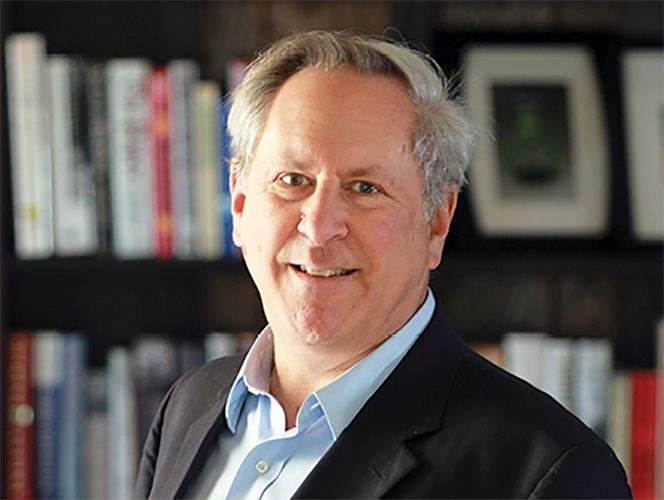
David E. Hoffman is a former contributing editor at The Washington Post. He covered the White House during the presidencies of Ronald Reagan and George H. W. Bush, and was subsequently diplomatic correspondent and Jerusalem correspondent. From 1995 to 2001, he served as Moscow bureau chief, and later as foreign editor and assistant managing editor for foreign news.
Director and Senior Fellow, Russia and Eurasia Program
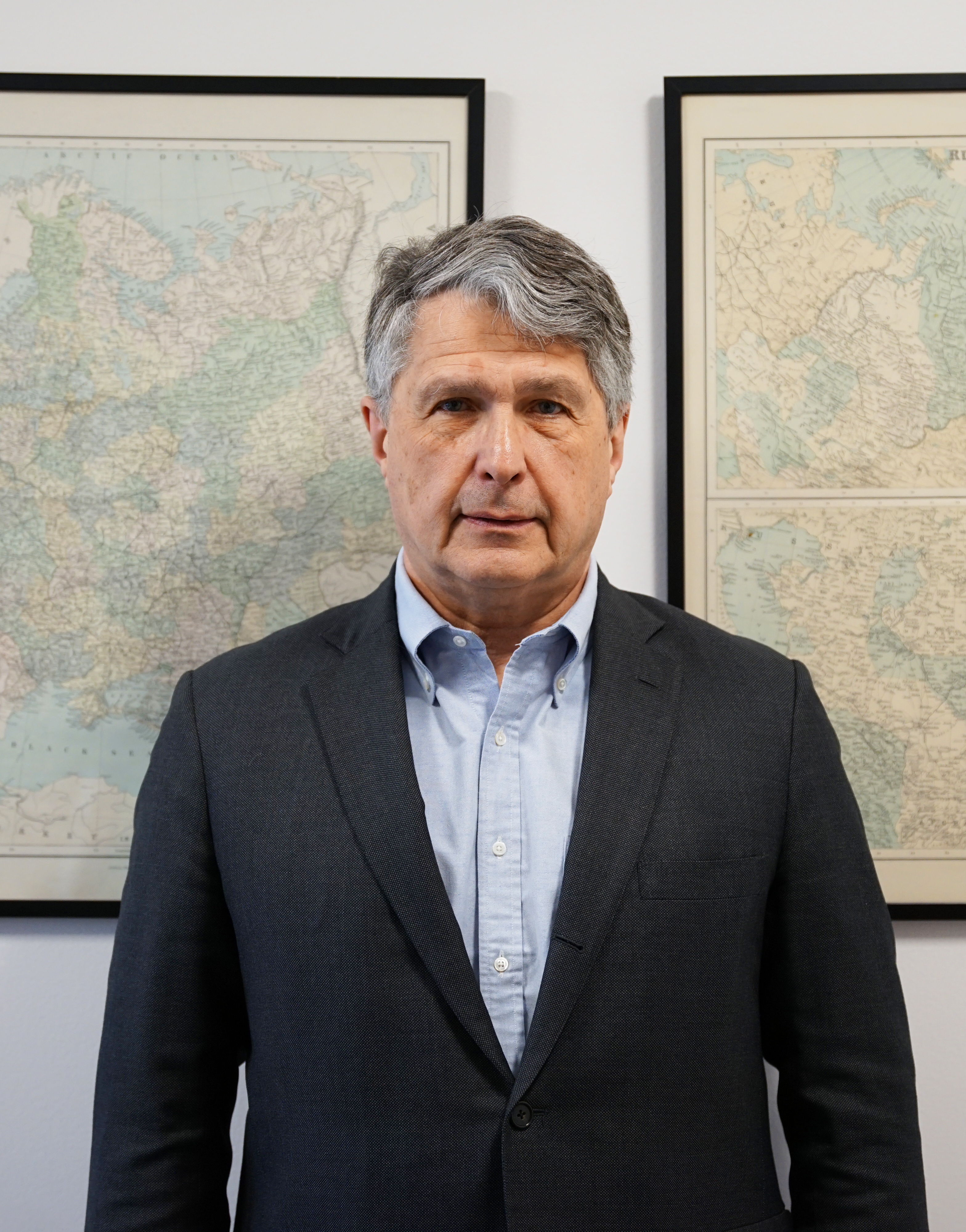
Rumer, a former national intelligence officer for Russia and Eurasia at the U.S. National Intelligence Council, is a senior fellow and the director of Carnegie’s Russia and Eurasia Program.
Senior Fellow, Russia and Eurasia Program
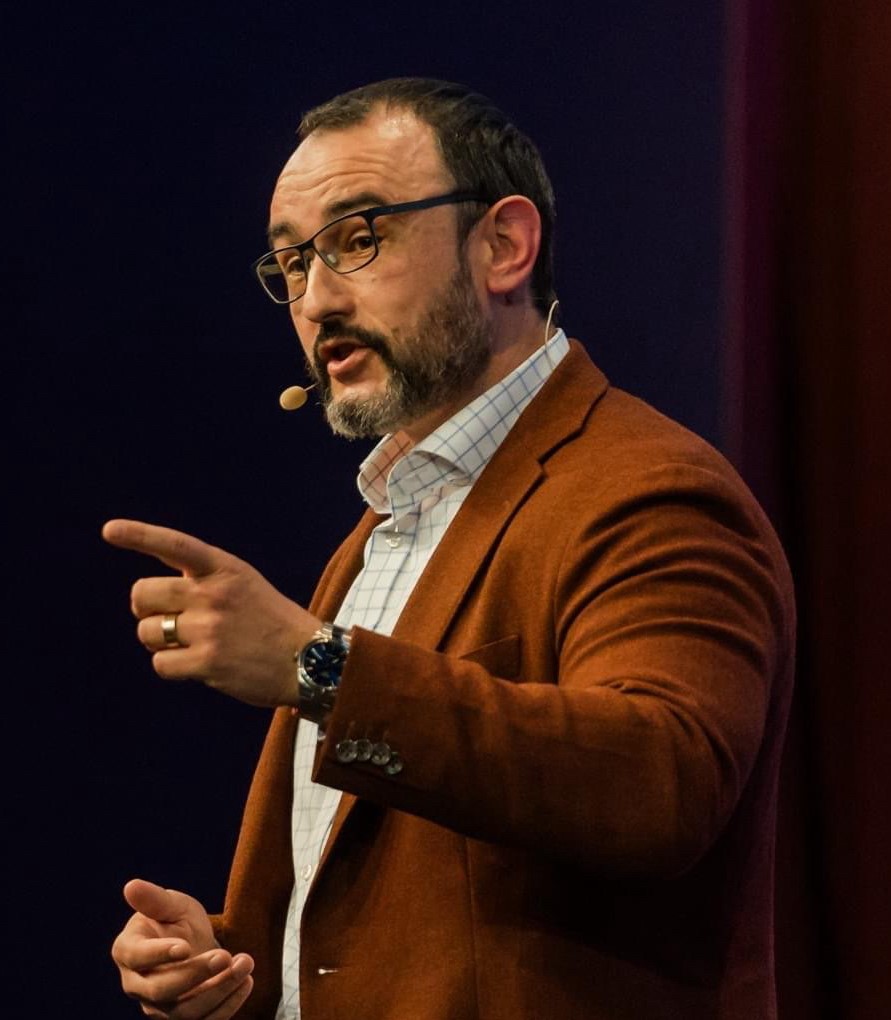
Michael Kofman is a senior fellow in the Russia and Eurasia Program at the Carnegie Endowment for International Peace, where he focuses on the Russian military, Ukrainian armed forces, and Eurasian security issues.
Senior Fellow, Russia and Eurasia Program

Dara Massicot is a senior fellow in the Russia and Eurasia Program at the Carnegie Endowment for International Peace. Her work focuses on defense and security issues in Russia and Eurasia.
Fellow, Carnegie Russia Eurasia Center

Alexandra Prokopenko is a fellow at the Carnegie Russia Eurasia Center.