

Article
This piece argues that India’s central challenge is not managing a single flashpoint but resolving the underlying tension between expansion and institutional coherency of the BRICS grouping.
Vrinda Sahai
{
  "authors": [],
  "type": "testimony",
  "centerAffiliationAll": "dc",
  "centers": [
    "Carnegie Endowment for International Peace"
  ],
  "collections": [],
  "englishNewsletterAll": "ctw",
  "nonEnglishNewsletterAll": "",
  "primaryCenter": "Carnegie Endowment for International Peace",
  "programAffiliation": "russia",
  "programs": [
    "Russia and Eurasia"
  ],
  "projects": [],
  "regions": [
    "Caucasus",
    "Russia"
  ],
  "topics": [
    "Trade"
  ]
}
REQUIRED IMAGE
Source: Carnegie
Liberty and the Rule of Law
"Leadership for America" Lecture, The Heritage Foundation, Philadelphia, PA, April 22, 1999
It is a great honor to be invited to deliver the 1999 "Leadership for America" lecture for the Heritage Foundation. It is an additional honor to do it in Philadelphia (the city we need so much these days in Europe where we see a steady accretion of power to central regulatory authorities in Brussels without anything like the original American Constitution which specified the areas of competence for federal government and left the rest to the states). And, finally, it is an honor to be asked to talk about "Liberty and the Rule of Law" for someone who comes from Central Europe and spent most of his life in an oppressive communist regime where there was neither liberty nor rule of law.
I do not want to pretend that I know more about liberty than you, that I have a comparative advantage in discussing it, but I would dare to argue that I know more about the absence of liberty, and especially about the tragic consequences of its absence. Because of my personal experience I do not take liberty for granted. I know as well that looking at human history its existence is an exception, not the rule and for that reason I may be oversensitive to the first signals of its distortions and all kinds of replacements (by something else, to put it mildly). I am as well sufficiently aware of its fragility and non-permanence.
The decade of the nineties started with many hopes connected mostly with the collapse of communism and with the end of the Cold war. It was at the same time the moment of "take-off" in many developing countries and in addition to it was the era of victory of Reaganite?Thatcherite policies in many developed countries. The liberty and free markets were on the winning side; both "hard" and "soft" variants of socialism (or communism) were visibly in retreat.
At the end of the nineties the mood is quite different. The expectations ? reality gap in transition countries is growing (and not closing). In spite of many positive achievements in most of the countries which may be empirically documented the expectations have grown much faster. The communist era has become more or less forgotten and everyone already wants to enjoy all the advantages of living in a mature and rich capitalist society and economy without taking into consideration the past, relatively slow evolutionary process in human society, and especially the unavoidable trade-offs.
Emerging developing markets in Asia, Latin America or Africa ? after several successful years ? surprisingly and unexpectedly fell into a new, dangerous reform trap. Rapid growth was replaced by stagnation, excess demand by excess supply, inflow of capital by its outflow, the belief in free markets by belief in government intervention, optimism by pessimism.
The developed countries in Europe and North America have become suddenly dominated by socialist governments, by new methods of and arguments for government intervention, by myriads of regulations, controls, and prohibitions, by fashionable speculations about "Third Ways", by fantasies about liberalism (in European meaning) "with a human face", by seductive slogans of communitarism, by fallacies of environmentalism, etc.
Liberty and free markets are faced with insidious threats as before or, perhaps, more than before. This is, of course, not the slightest reason for giving up, for not continuing our never-ending struggle for liberty and responsibility, for liberty and its accompanying preconditions which include the general moral order on the one hand and the rule of law on the other.
I would like now ? instead of preaching the ideas and values most of us share ? to make a few comments concerning some of the causes of the situation existing at the turn of the century. Their selection undoubtedly reflects my perspective, my experience and the limits of my intellectual horizons.
1. I would not underestimate the fact that the defense of liberty and free markets is out of fashion. The influential intellectuals have written and published their important books and they already occupied all the niches in the complicated and very oligopolistic market of ideas. The demand for new products of the old variety is declining and the law of diminishing returns is very powerful in the field of ideas as in any other human activity. The profession of "scribes" moved to another topic. We should not forget that and should increase our own activities.
2. After several decades of analyzing and criticizing the enormous government failure which was more visible and tangible in Soviet-type economies than in other parts of the world, the socialists of all types returned to the concept of market failure and equipped with very sophisticated economic techniques and instruments they succeeded in changing the prevailing atmosphere. They have got new arguments by seeing the current complications of various emerging markets where weak, shallow, and therefore not fully efficient markets, released from the old bondages by radical liberalization, deregulation, and privatization, do not demonstrate the same results as markets created by long, uninterrupted spontaneous evolution. They should ? together with all of us ? welcome and support the on-going changes but, they ? with their high?brow, arrogant approach ? prefer to dismiss them as "an experiment in instant capitalism". Such simplifications and misinterpretations of history should be refuted. It is, however, quite often accepted together with an ahistoric criticism of imperfect markets, societies, laws and constitutions.
I was recently struck while reading an article written by one of the gurus of the new statist approach, by Joseph Stiglitz (who as vice-president of the World Bank has an enormous influence) where he sees "the philosophies of the 1970?s and 1980?s as a fallacy" because "the central role that government played in planning and programming was seen as part of the problem of development rather than as part of the solution" (see his "Development Based on Participation ? A Strategy for Transforming Societies" in "Transition", World Bank, Vol. 9, No. 6, December 1998). I am afraid our response to it is not sufficient and is not loud and self-confident enough.
3. In addition to the traditional anti-market attacks on freedom and liberty we are facing the emergence of two new powerful ideologies which are gradually gaining ground ? environmentalism on the one hand and communitarism on the other. I consider both of them as a great problem.
Environmentalism with its "Earth First!" arguments represents "Leviathan Two" (as someone called it recently) menace which may become even more dangerous than old socialism. The environmentalist´s goals are easy to raise and defend (and they are shared by many of us) but they are not suggested as competing goals which can be only partially realized. Their advocates do not accept that it is not possible to get something for nothing and do not accept the crucial economic concepts that include the idea of opportunity costs, the idea of Pareto optimality, and the idea of trade-offs.
Environmentalism is above all an ideology that implicitly or explicitly sees the world as infinitely complex and interdependent. However, this is an apriori statement, not a serious analytical insight. Its supporters are victims of an old doctrine which is based on the wrong conclusion that the more complex the world is, the more government intervention, regulation and control it requires. It was rejected by Hayek who argued exactly in the opposite way (see his "Use of Knowledge in Society", the American Economic Review, 1945). The more complex the society is, the more it needs the market. Environmentalists suppose as well that because of an overwhelming interdependency we live in a world of pervasive externalities. It implies that private contracts are not sufficient and that the government has to step in. We know ? on the contrary ? that in order to preserve environment we have to enforce property rights and introduce price signals as much as possible. (Ecological disaster in countries without private property and prices is well known and I can talk about it from my own experience long time).
I see a dangerous virus of demagogy in the ambitions of communitarism (or a civic society as it is called in some countries). Communitarism ? as I see it ? represents a new version of an old anti-liberal approach to society, a shift from traditional liberal democracy to new forms of collectivism, a romantic dream and "a constructivistic attempt of imposing the moral systems of the face-to-face group on the large, anonymous society" (G. Radnitzki, The Inconsistency of Liberal Compromises, Journal des Economistes et des Etudes Humaines, 1996, No. 4, Vol. 7), a move to the dominancy of group rights and entitlements over individual rights and responsibilities. Communitarianism wants to change us, to meliorate human beings and this is very dangerous. Its advocates have the feeling that they have been chosen to advise, to moralize, to know better than the "normal" people what is right or wrong, what the people should do, what will be good for them. They want us not only to be free, but also to be good, just, moral as well. Of course, it is their definition of what is good, just and moral.
Communitarianism want to socialize us by forcing us into artificial, not genuine, not spontaneously formed groups or groupings. In this respect, it is nothing more than another version of corporativism and syndicalism and, therefore, another attack on freedom and liberty.
4. I can say ? with some simplification ? that until now I have been talking about the role of ideas. It is, however, necessary to talk about the power of vested interests as well and especially about its recent relative increase in importance. We see the new and increasing role of coalitions of interest groups which plague the legislature with sectional (very partial) demands and we see dispersed voters who have little rational incentive to organize themselves to control them. As Norman Barry put it recently: "well organized and committed minorities always have an interest in formulating policies that are inconsistent with the long-run aims and purposes of an apathetic and rationally ignorant populace" (see his "There is No Philadelphia in Europe", in The Freeman, Vol. 49, No. 2, February 1999). It means that "more democracy", which by the way brings about another version of the "soft state", is not an answer to the rent-seeking behavior.
It is very easy to talk about law and the rule of law. But we should talk more about problems connected with the formation of legislation ? in transition economies, in emerging markets, in developed democracies ? than about legislation as such. There have always been vested interests but their role now is probably higher than before even if we can quote Adam Smith or James Stuart Mills discussing them. In my part of the world the collapse of communism led to the disappearance of all past rent-seeking groups and it took ? fully in accordance with Mancur Olson hypothesis ? some time to form and organize then again. But I have to say that they are there ? in less than a decade ? again.
We see the absence of the rule of law in some parts of the world but we should not criticize it on moralistic grounds. It should be interpreted with the half of cost/benefit analysis of human behavior. Talking about liberty I am not less afraid of the misuse of the rule of law. Because of the role of vested interests and of their relative success in influencing the legislation the law becomes in many fields oppressive itself. I consider as extremely significant the growing role of regulative or administrative legislation, or to put it differently, the growing role of the legislation of vertical relations as compared to the legislation of horizontal relations. This is the result of the feeling of inadequacy of horizontal relations and of the growing belief in the importance of vertical relations. We have to challenge it. There is on the one hand the "sacredness" of the legislation and on the other the "dubiety" (or problematicality) of its formation. There is no perfect system of law (which could hypothetically exist only in a vacuum, in a world without human beings). We should aim at a Pareto-optimal system that is the result of real world and of genuine human interests and their relative power.
All of that is important generally, but even more for the appropriate interpretation of the problems of transition. We are rapidly rebuilding our legislation (but we know that the system of law is a Hayekian complex system which is basically based on evolution, not construction) and we are heavily criticized for not having created a perfect system. It is more complicated than our critics assume.
5. We live in an era of globalization (whatever this misused term means) but we ? at the same time ? see an undeniable growth of regionalism. My continent is a good example.
Europe is currently ? at least nominally ? preoccupied with two parallel processes: one of them is the deepening of the European integration process, the movement towards unification and the other is the widening, the expansion of EU to the East. I deliberately said "nominally" because both processes do not represent true interests, dreams and ambitions of the European citizens. They are ? both of them ? more or less in the interests of universalistic (if not cosmopolitan) intellectuals and of one very powerful rent-seeking group, the group of European bureaucrats who are and will be the only net benefactors of both processes. There is ? at the same time ? no concentrated group that could play the role of a countervailing power. With uninvolved and indifferent majority of Europeans, who live in a nirvana of unconsciousness of what is going on and who maximize the pleasures coming from a relatively easy life of mature, rich and in many dimensions "unconstrained" society which is unaware of its limits (and of its strong rivals and competitors), a small minority can have a decisive power.
The same decisive minority has no interest in the only European project which is worth of being done ? in redefining Europe along classical liberal ideas, in dismantling "soziale Marktwirtschaft" (social market economy), in breaking down paternalism and corporativism flourishing these days in Western Europe more than in any other part of the world.
The recent most important European "deepening" project is the EMU. Some of us know the microeconomic assumptions that are necessary for the existence of an optimum currency area. Empirical data do not confirm the hypothesis that Europe is an optimum currency area which implies that the EMU is a political project to create a political union by means of introducing single currency before the necessary preconditions are met and without estimating the costs of such an arrangement.
As is well known, monetary union in Europe was created without prior existence of a political and fiscal one. I do not believe it can bring a stable solution ? it will either collapse (which I do not expect) or will require transforming EU into a political and fiscal union.
Some European citizens want it, some do not. Both is legitimate but the European political union should not be sold with a different price tag. It should not be pretended that Europeans get a life without exchange rate for nothing. There will be non-zero price for it. Euroland is not a nation, it has no President, no Congress, no Treasury Department, and it has only common central bank that is not enough. I am afraid that the Maastricht "Eintopf" (not perfectly translated as hotchpotch) is not the American melting pot (which, in the meantime, ceased to exist) and that it can bring about a new wave of instability and can increase an European democratic deficit. I take it very seriously.
* * *
To conclude, there is no need for pessimism. But there is no room for passivity and inactivity. We have to continue our endless fight for liberty and the rule of law and I am sure we will do it.

This piece argues that India’s central challenge is not managing a single flashpoint but resolving the underlying tension between expansion and institutional coherency of the BRICS grouping.

Vrinda Sahai

This piece examines India’s response to U.S. sanctions and tariffs, specifically assessing the immediate market consequences, such as alterations in import costs, and the broader strategic implications for India’s energy security and foreign policy orientation.
Vrinda Sahai
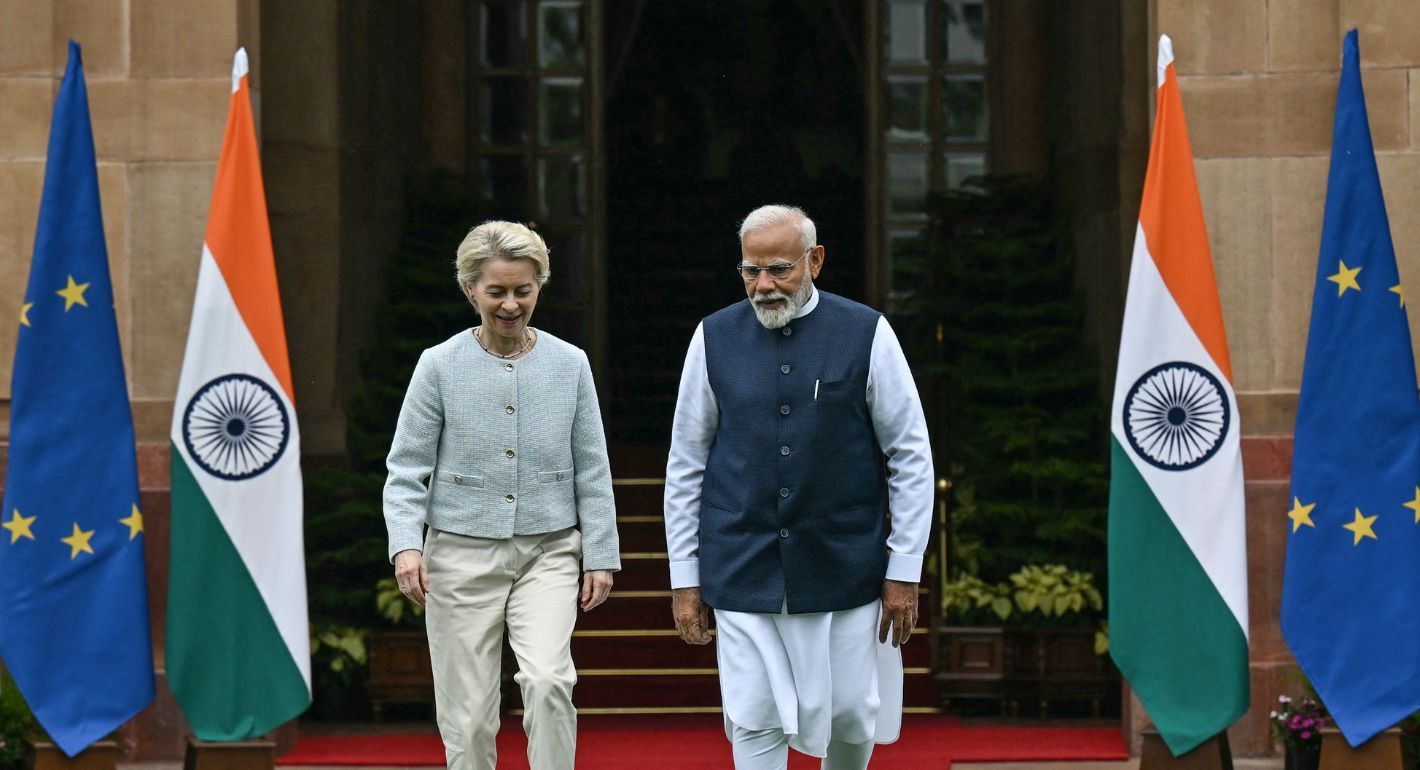
This article argues that the geopolitical circumstances have never been more conducive, not merely for the early conclusion of the free trade agreement (FTA) between India and the EU, but also for crafting a substantive and comprehensive strategic partnership.
Mohan Kumar

China’s central bank has plans to roll out a digital yuan, which could circumvent the U.S. dollar in important global financial transactions. Here are some ways the digital yuan could pose a challenge to the dollar’s prominence.
Rajesh Bansal, Somya Singh
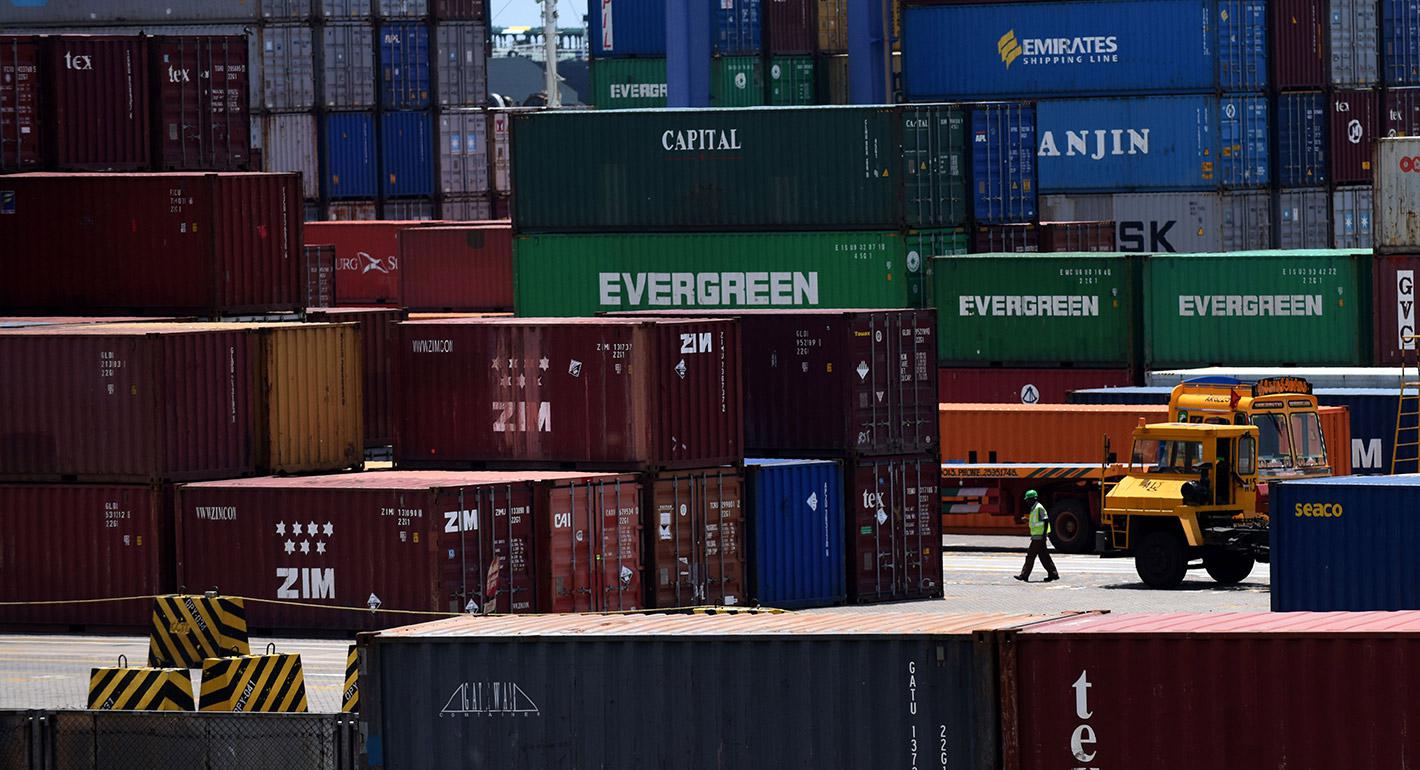
The World Trade Organization’s Trade Facilitation Agreement has placed trade facilitation initiatives high on the agenda of international governments. This case study of India studies what trade facilitation may mean for a fast-paced economy.

Vijay Singh Chauhan, Sruti Vijayakumar