

Article
Леонид Гозман, Michael McFaul
{
  "authors": [
    "Michael McFaul"
  ],
  "type": "legacyinthemedia",
  "centerAffiliationAll": "dc",
  "centers": [
    "Carnegie Endowment for International Peace"
  ],
  "collections": [],
  "englishNewsletterAll": "ctw",
  "nonEnglishNewsletterAll": "",
  "primaryCenter": "Carnegie Endowment for International Peace",
  "programAffiliation": "russia",
  "programs": [
    "Russia and Eurasia"
  ],
  "projects": [],
  "regions": [
    "Caucasus",
    "Russia"
  ],
  "topics": [
    "Foreign Policy"
  ]
}
REQUIRED IMAGE
Source: Carnegie
Washington Post, January 23, 2001
A wave of Soviet nostalgia is sweeping Russia. A former KGB official now runs
the country. His comrades still in the KGB (now called the FSB) have revived
old Soviet practices of harassing and arresting journalists, academics, human
rights activists and nonofficial religious leaders. When President Putin called
for the reinstatement of the Soviet hymn as the Russian national anthem, the
parliament endorsed his idea without pause.
Now Putin's team is waiting for the final piece of the Soviet era to fall into place -- a more realpolitik relationship with the United States. Putin supporters have even coined a term for it -- neo-Nixonism.
Russia's state media openly championed the benefits of a George W. Bush victory for Russia. Under Bush, so Putin's people believe, the United States will no longer care about domestic politics in Russia, such as human rights, independent media or the war in Chechnya. With Bush in power, so the thinking goes in Moscow, the Kremlin will have a free hand to roll back democracy in the name of restoring law and order.
They also believe that Russia once again will be treated like a great power. They are nostalgic for the good old days of detente -- superpower summits, arms control and discussions about balancing American and Russian power in regional conflicts.
Obviously, Putin and his people have a cartoonized understanding of the new Bush administration's foreign policy philosophy, a crude reading of how foreign policy is made in the United States and a flawed historical reading of Nixon's policy toward the Soviet Union. It is not the job of the new Bush team to give history lessons or civics courses about the U.S. policy process to its Russian counterpart. But it is imperative that the new Bush foreign policy team signal clearly and immediately to Moscow its true intentions regarding Russia, which above all else should reflect no nostalgia for the "good old days" of the Cold War era.
To be sure, the new Bush team should assign greater emphasis to traditional strategic issues in the U.S.-Russia relationship. The era for international micromanagement of Russia's domestic reforms ended long ago. In consultation and cooperation with their Russian counterparts, members of the new Bush team should give first priority to reducing nuclear arsenals, increasing control over the proliferation of weapons of mass destruction, checking Russia's hegemonic aspirations toward its neighbors and beginning a real dialogue on national missile defense. But this set of priorities should in no way be cast or interpreted as a return to the old practices of superpower detente.
Previous administrations, Republican and Democratic alike, have mastered multi-track diplomacy when issues of human rights and religious freedom were pressed vigorously, though not always publicly, at the same time that strategic issues were being negotiated. The Russians need to understand that the Bush administration can devote greater attention to these strategic issues while at the same time continuing to promote democracy.
In introducing his future secretary of state, Colin Powell, Bush stated clearly that "our stand for human freedom is not an empty formality of diplomacy but a founding and guiding principle of this great land. By promoting democracy we lay the foundation for a better and more stable world." The Russians did not seem to hear this part of the speech or similar rhetoric during the Bush campaign. It needs to be communicated loud and clear and soon.
Support for democratization abroad, including Russia, has strong bipartisan support on Capitol Hill. Because their own parliament is so weak, Kremlin officials underestimate the role of Congress in the making of foreign policy. The Bush team should signal quickly to its Russian colleagues that it has no intention of challenging this bipartisan support, especially when the new administration is seeking bipartisan coalitions on other issues.
The Bush foreign policy team also would do well to politely remind Kremlin officials that Russia has changed dramatically since the days of detente. Not only is Russia radically weaker today in traditional power measures but Russian society is much stronger. During the Nixon era, the United States had only one real point of contact in the Soviet Union, the state. Working with Kremlin leaders was not a choice; it was the only option. Today, though weak and embattled, a private sector, a civil society and a political class independent of the Kremlin exist in Russia. These new pockets of independent power offer the United States a wide range of contact points to engage the Russian people. The Bush administration should cut all democratic and economic aid to the state and redirect these funds to Russian society.
Through state-to-state channels, the Bush team must pursue strategic issues with Putin and his team. Through societal channels, however, the new administration can promote market and democratic ideas within Russia.
From Wilson to Reagan, American support for democracy abroad endured as a bipartisan theme of American foreign policy, and it will not disappear with a change in administration. The sooner the new Bush team communicates this message to the Russians the better.
The writer is a senior associate at the Carnegie Endowment for International Peace and an assistant professor and Hoover fellow at Stanford University.
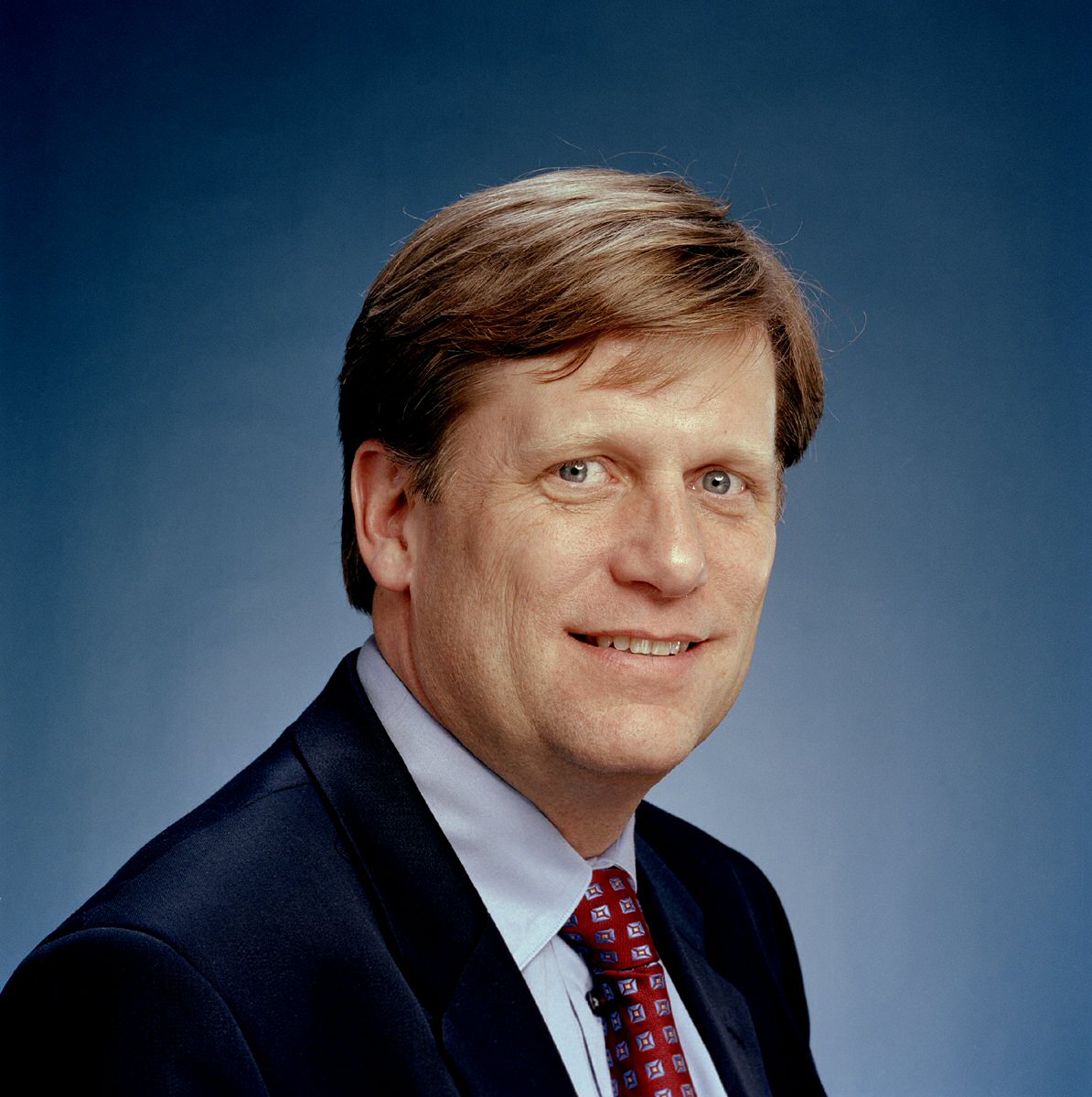
Former Senior Associate
In addition to his role at Carnegie, McFaul is Peter and Helen Bing Senior Fellow at the Hoover Institution and associate professor of political science at Stanford University.
Recent Work
Леонид Гозман, Michael McFaul
Michael McFaul, Sanja Tatic
Carnegie India does not take institutional positions on public policy issues; the views represented herein are those of the author(s) and do not necessarily reflect the views of Carnegie, its staff, or its trustees.

After the chill in ties between 2020 and 2024 that brought India–China relations to their lowest point in several decades, the two countries have engaged each other afresh. This paper argues that there are predominantly four imperatives guiding India’s approach to China, and they exist in an order of priority.

Saheb Singh Chadha

This piece argues that India’s central challenge is not managing a single flashpoint but resolving the underlying tension between expansion and institutional coherency of the BRICS grouping.

Vrinda Sahai

A partnership between India, a country of subcontinental size, and Africa, a continent of fifty-four countries, may seem asymmetric until one notes that both are home to nearly the same number of people—1.4 billion. This essay spells out the existing challenges to the partnership, its optimal potential, and the possible pathways to realize it over the next quarter-century.

Rajiv Bhatia

The India–EU Free Trade Agreement (FTA) is shaping up to be one of the most consequential trade negotiations, both economically and strategically. But, what’s in the agreement, what’s missing, and what will determine its success in the years ahead
Vrinda Sahai, Nicolas Köhler-Suzuki

Trump 2.0 has unsettled India’s external environment—but has not overturned its foreign policy strategy, which continues to rely on diversification, hedging, and calibrated partnerships across a fractured order.



Milan Vaishnav, ed., Sameer Lalwani, Tanvi Madan, …