

In The Media
Michele Dunne, Robert Kagan
{
  "authors": [
    "Robert Kagan"
  ],
  "type": "legacyinthemedia",
  "centerAffiliationAll": "",
  "centers": [
    "Carnegie Endowment for International Peace"
  ],
  "collections": [],
  "englishNewsletterAll": "",
  "nonEnglishNewsletterAll": "",
  "primaryCenter": "Carnegie Endowment for International Peace",
  "programAffiliation": "",
  "programs": [],
  "projects": [],
  "regions": [],
  "topics": [
    "Security"
  ]
}
REQUIRED IMAGE
Source: Carnegie
Originally published in the Washington Post, January 29, 2002
In his State of the Union Address tonight, President Bush will ask us for patience and fortitude in the long, difficult struggle against international terrorism. He should also ask for more than that. It's time to start talking not only about what we need to do to win the war on terrorism but also about how to shape a world where terrorists find no haven and where democratic peoples can flourish. The president should declare a renewed commitment to American global leadership, a new internationalism based on democratic purpose, active engagement and military strength.
That broader purpose has been missing so far from the administration's otherwise impressive campaign. It is understandable that we have focused first and foremost on getting those who attacked us -- just as Americans after Pearl Harbor focused on defeating Hitler and Imperial Japan. Even before World War II ended, however, American statesmen knew that true victory required creating postwar institutions that could prevent another horrendous world war. Even as they were fighting, they launched the United Nations and the Bretton Woods international financial system, in part to ensure that the United States would never again turn inward but would extend its power and influence around the globe and provide international leadership to ensure a lasting peace.
The generation of the 1940s built its internationalism around lessons learned from the failures of the 1930s. Our generation must now draw its own lessons from the past decade. The 1990s were an era of missed opportunities. At a time when technology and trade were enmeshing Americans with the outside world in unprecedented fashion, we were divided and confused about our nation's global role. The first President Bush, after his great if incomplete victory in the Gulf War, ran away from foreign policy. The congressional Republican Party veered toward neo-isolationism. Republican strategists insisted on a narrow, "realist" definition of the national interest very different from what had guided the statesmen of the postwar era.
Skeptical about the exportability of American principles, hostile to "nation-building" and "international social work," disdainful of the multilateral institutions erected during and after World War II, many Republicans after the Cold War, like many after World War I, called for a "return to normalcy" and a curtailment of American activism abroad.
The Clinton administration embraced internationalism rhetorically but was timid, hesitant and naive in its execution. At times it put too much faith in multilateral institutions and arms control regimes as a substitute for American leadership. With some exceptions, such as expanding NATO and stopping genocide in the Balkans, it often failed to deploy American strength on behalf of the internationalist principles it proclaimed. For all its political success in the 1990s, the Democratic Party remained haunted and hobbled by the ghosts of Vietnam.
The child of this unhappy bipartisan union was a post-Cold War foreign policy of inadequacy and underachievement. Fearful of "quagmires," we let nations implode in regions of the world deemed outside the perimeter of the "national interest" -- places such as Afghanistan, Somalia, Rwanda and, for too many years, the Balkans. Preferring the comforting illusion of stability to the risks of change, we squandered a chance after the Gulf War to press for more democratic reform in the Arab world. Unwilling to take political and military risks, we responded inadequately to the first terrorist attacks launched against us by Osama bin Laden and al Qaeda, and by Saddam Hussein.
Now we need to chart a more ambitious agenda. Sept. 11 should teach us that neither timid multilateralism nor narrow realism is good enough. Osama bin Laden struck from an Afghanistan we had abandoned, acting with the financial and spiritual support of an Arab world whose failed, tyrannical political systems we had helped prop up. In the 1940s, the challenge was to save democracy in Europe. Today it is to promote democracy in the Arab world as an antidote to radical Islam. Illegitimate anti-Western governments inch closer every day to acquiring weapons of mass destruction, posing a threat to millions. Must we wait for another attack, perhaps involving these awful weapons, before we use our power and influence to compel change?
This is not a strategic challenge we can or should meet alone. We need to strengthen the traditional alliances that can stand with us over the long haul, not neglect them in favor of temporary ad hoc coalitions. We have to build up and modernize our military forces and devote more money and attention to the political, diplomatic and economic elements of our power. Above all, we need a broader understanding of our true national interest. Sept. 11 has taught us that troublesome regions once labeled "too hard" or "too messy" can no longer be neglected except at our peril. Many in both parties would rather not raise the bar so high. They'd prefer to search out and destroy the terrorists and their networks, and then go back to business as usual, the reluctant sheriff holstering his gun and waiting for the next gang of outlaws to ride into town. But it is too dangerous to wait for trouble to come to us.
Instead, we need to build a new bipartisan internationalist consensus, both to wage the present struggle and to build a safer future. When Osama bin Laden is in his grave, we'll still have a duty to ourselves and to the world to use our power to spread democratic principles and deter and defeat the opponents of our civilization. This is not a crusade. It's a foreign policy of enlightened self-interest. Just as the Korean War, Pearl Harbor and the sinking of the Lusitania taught us that we can't immunize ourselves against the world's problems, Sept. 11 must spur us to launch a new era of American internationalism. Let's not squander this opportunity.

Former Senior Associate
Kagan, author of the recent book, The Return of History and the End of Dreams (Knopf 2008), writes a monthly column on world affairs for the Washington Post and is a contributing editor at both the Weekly Standard and the New Republic.
Recent Work

Michele Dunne, Robert Kagan
Robert Kagan, Michele Dunne
Carnegie India does not take institutional positions on public policy issues; the views represented herein are those of the author(s) and do not necessarily reflect the views of Carnegie, its staff, or its trustees.

In any defense establishment, change is an ongoing process. However, despite the best of intentions, existing bureaucracies, bound by habit and years of socialization, have their limits in implementing transformative change.

Anit Mukherjee

After the chill in ties between 2020 and 2024 that brought India–China relations to their lowest point in several decades, the two countries have engaged each other afresh. This paper argues that there are predominantly four imperatives guiding India’s approach to China, and they exist in an order of priority.

Saheb Singh Chadha

This piece argues that the present Indian strategy, based on opportunistic diversification and utilization of limited strategic reserves, remains inadequate when confronting supply disruptions. It evaluates India’s options in the short, medium, and long terms.

Vrinda Sahai

This piece examines India’s response to U.S. sanctions and tariffs, specifically assessing the immediate market consequences, such as alterations in import costs, and the broader strategic implications for India’s energy security and foreign policy orientation.
Vrinda Sahai
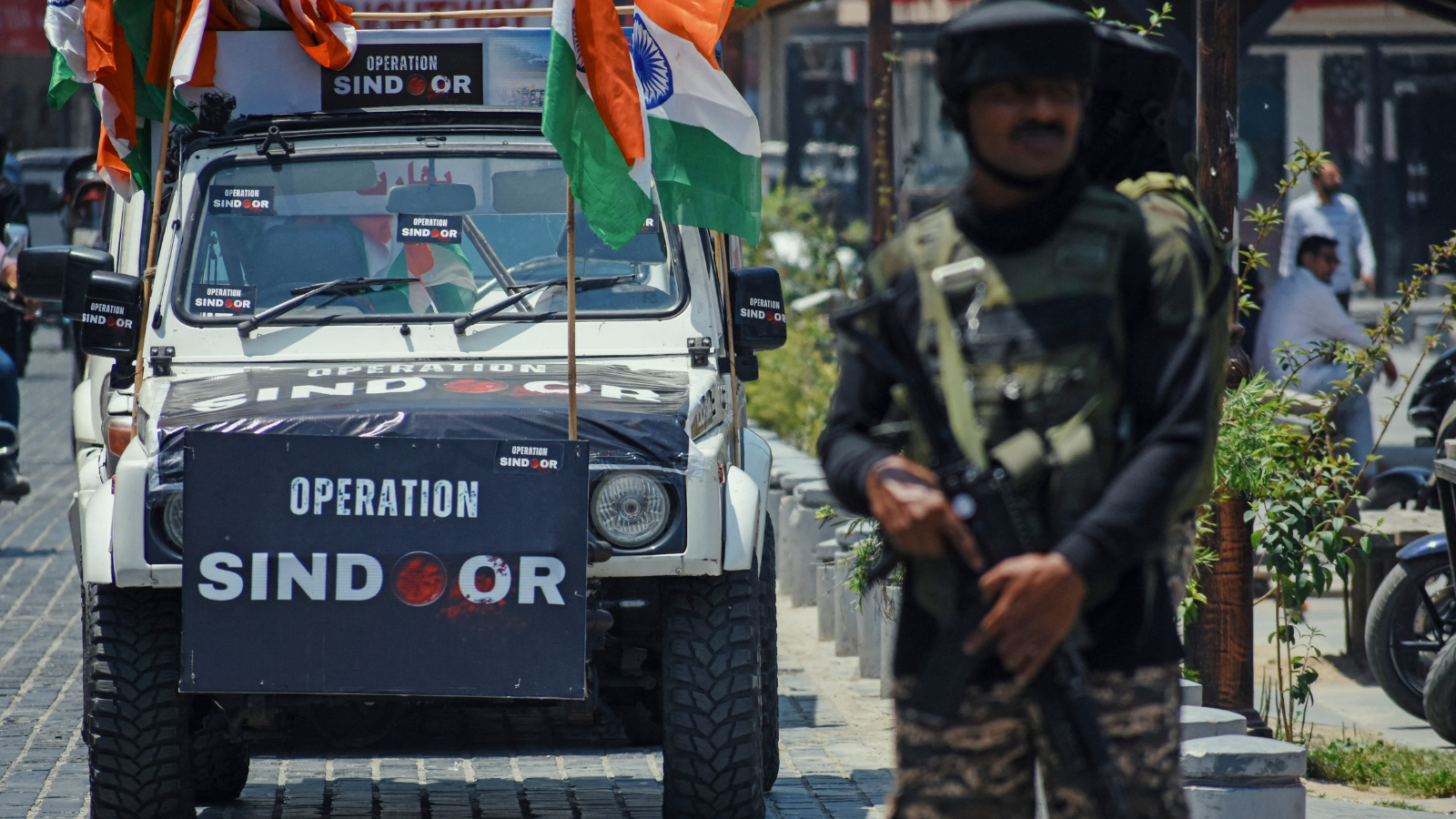
The India-Pakistan conflict that played out between May 6 and May 10, 2025, offers several military lessons. This article presents key takeaways from Operation Sindoor and breaks down how India’s preparations shaped the outcome and what more is needed to strengthen future readiness.

Dinakar Peri