

In The Media
Martha Brill Olcott
{
  "authors": [
    "Martha Brill Olcott"
  ],
  "type": "legacyinthemedia",
  "centerAffiliationAll": "dc",
  "centers": [
    "Carnegie Endowment for International Peace"
  ],
  "collections": [],
  "englishNewsletterAll": "ctw",
  "nonEnglishNewsletterAll": "",
  "primaryCenter": "Carnegie Endowment for International Peace",
  "programAffiliation": "russia",
  "programs": [
    "Russia and Eurasia"
  ],
  "projects": [],
  "regions": [
    "Afghanistan",
    "Central Asia"
  ],
  "topics": [
    "Security"
  ]
}
REQUIRED IMAGE
Source: Carnegie
This article first appeared in The Christian Science Monitor on April 22, 2002. All rights reserved.
WASHINGTON - The United States is scoring a major victory against terrorism in the war in Afghanistan, but until the US successfully tackles that country's drug-trafficking problem it cannot call the victory permanent.
Drug dealers and arms traders are natural allies; their presence in Afghanistan and throughout Central Asia undermines already-weak states and gives militant Islamic groups the means for self-financing.
Afghanistan has been the world's largest grower of poppies for opium and heroin, largely destined for sale in Europe. Though cultivation was banned briefly by the Taliban, Afghan drug dealers are back in business.
US bombing raids never directly targeted Afghanistan's drug-storage or heroin-producing facilities, and Afghanistan's drug dealers were fast off the mark, distributing seed or cash to purchase it in the fall. They are now primed to buy up the crop, and are inciting local farmers to oppose violently the government's efforts to seize it.
Meanwhile, there is still no US strategy to deal with Afghanistan's return to narco-trafficking and only a trickle of assistance money in the pipeline to counter it. The US timetable for rebuilding Afghanistan must coincide with the way in which risks are generated and not merely be fashioned after Washington's annual budget cycle.
Unless the growing opium and heroin trade from Afghanistan through Central Asia is curbed, anti-state groups will continue to have a ready source of funding, including groups in Russia and Kazakhstan.
Afghan interim leader Hamid Karzai has banned opium-growing, but lacks the money and capacity to enforce his policy successfully. Most local warlords still profit from narco-trafficking by taxing the crop or its transit. Until a national military and police force is trained, Afghanistan must rely on outsiders to enforce the ban, or see it largely ignored.
Current US policy ensures that the latter will be the case, or worse, that the ban will help destabilize the Karzai government, since the Bush administration opposes the creation of a large international security force, whose mandate spans all of Afghanistan.
Tolerating the rebirth of the drug trade transforms the tragedy of Afghanistan's poverty into a problem of regional and eventually global security. One should not minimize how difficult it would be to cut drug protection sharply in Afghanistan. The network of drug dealers is fully intertwined with the traditional local elite. No crop will produce the same income, nor allow a rapacious elite the same easy riches.
Working with the provisional government, the US should work aggressively to halt poppy cultivation in Afghanistan. Crop-substitution projects must gain priority; Afghan farmers should be offered reasonable cash subsidies for destroying the harvest in the field, or for turning it over for destruction. Those who comply should qualify for agricultural reform programs, while those who refuse should lose priority for receiving all forms of development assistance.
Alongside the provisional government, the US should also destroy current stores of opium and then close down heroin factories. Warlords allied with the US's Afghan military effort must pledge to remain "drug free," the US must devote the intelligence resources to monitoring this.
Otherwise, the US may wind up being the inadvertent regulator of the very drug trade that it should be stamping out, as US forces could have to adjudicate between feuding warlords.
Although some funds were recently allocated for eradicating the current crop, the US approach emphasizes interdiction on Central Asia's borders, since more than half of Afghan drugs exit into those states. But current allocations and their promised supplements meet a fraction of these countries' training needs. Tajikistan and Turkmenistan already qualify as "narco-states," as their governments have credibly been accused of sifting profits from the drug trade. And although Tajikistan's new national drug-control agency has sharply improved interdiction rates, funds for this UN-sponsored project run out this year.
Afghanistan's drug trade feeds on Central Asia's poverty. Without concerted action, these fragile states' problems could fester just when the West is planning to tap Caspian oil and gas reserves – reserves whose delivery could be compromised by instability in this land-locked region.
The fight against terrorism cannot hope to succeed unless the US remains as alert to preventing tomorrow's terrorists from consolidating as it is to defeating the current threat. As in the other battlefields of the war on terror, the US must be prepared to deal a blow to the Afghan drug trade, even if Washington must assume a disproportionate share of the financial burden.

Former Senior Associate, Russia and Eurasia Program and, Co-director, al-Farabi Carnegie Program on Central Asia
Olcott is professor emerita at Colgate University, having taught political science there from 1974 to 2002. Prior to her work at the endowment, Olcott served as a special consultant to former secretary of state Lawrence Eagleburger.
Recent Work
Martha Brill Olcott
Martha Brill Olcott
Carnegie India does not take institutional positions on public policy issues; the views represented herein are those of the author(s) and do not necessarily reflect the views of Carnegie, its staff, or its trustees.

In any defense establishment, change is an ongoing process. However, despite the best of intentions, existing bureaucracies, bound by habit and years of socialization, have their limits in implementing transformative change.

Anit Mukherjee

After the chill in ties between 2020 and 2024 that brought India–China relations to their lowest point in several decades, the two countries have engaged each other afresh. This paper argues that there are predominantly four imperatives guiding India’s approach to China, and they exist in an order of priority.

Saheb Singh Chadha

This piece argues that the present Indian strategy, based on opportunistic diversification and utilization of limited strategic reserves, remains inadequate when confronting supply disruptions. It evaluates India’s options in the short, medium, and long terms.

Vrinda Sahai

This piece examines India’s response to U.S. sanctions and tariffs, specifically assessing the immediate market consequences, such as alterations in import costs, and the broader strategic implications for India’s energy security and foreign policy orientation.
Vrinda Sahai
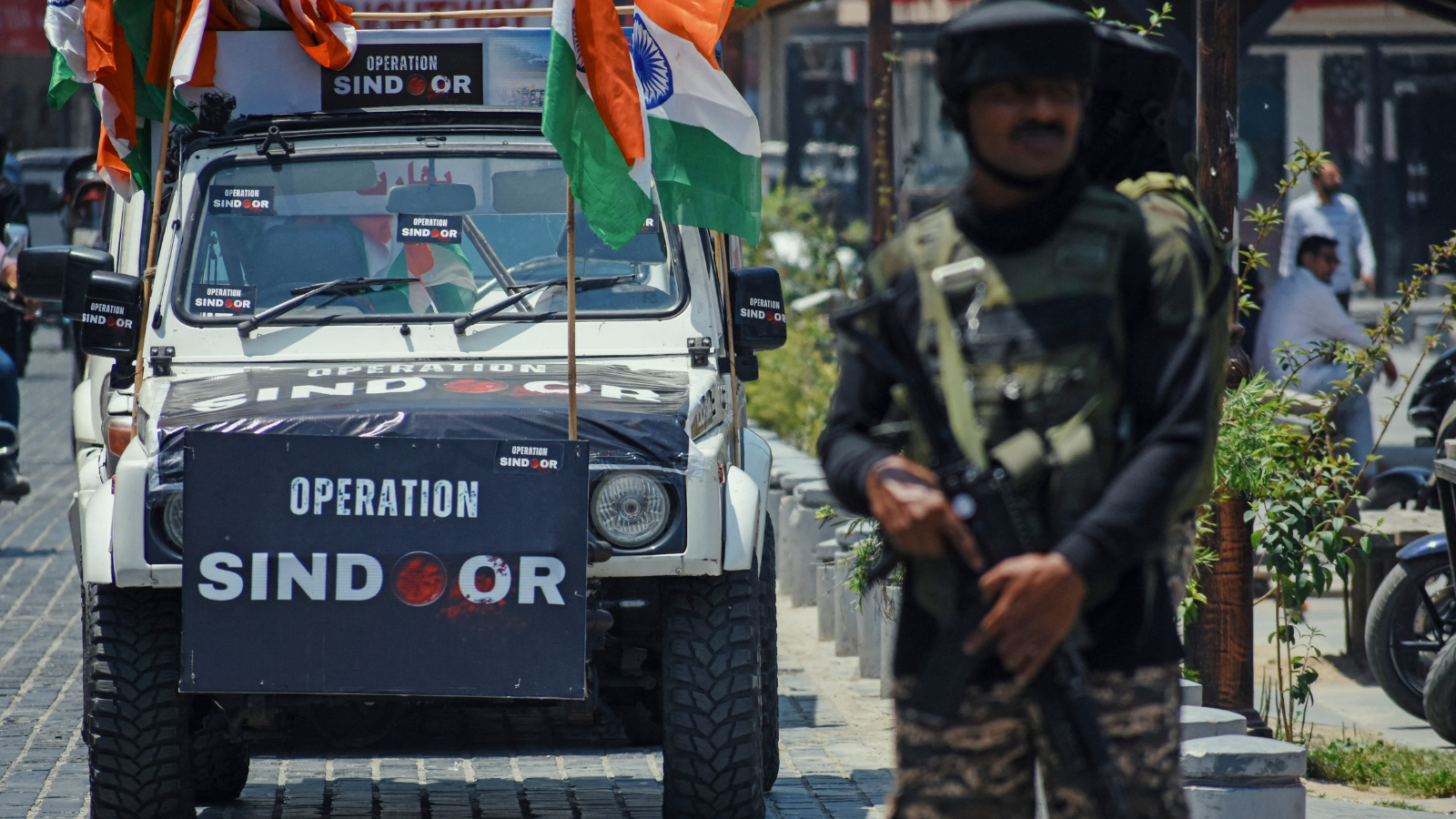
The India-Pakistan conflict that played out between May 6 and May 10, 2025, offers several military lessons. This article presents key takeaways from Operation Sindoor and breaks down how India’s preparations shaped the outcome and what more is needed to strengthen future readiness.

Dinakar Peri