

In The Media
Minxin Pei
{
  "authors": [
    "Minxin Pei"
  ],
  "type": "legacyinthemedia",
  "centerAffiliationAll": "dc",
  "centers": [
    "Carnegie Endowment for International Peace"
  ],
  "collections": [],
  "englishNewsletterAll": "asia",
  "nonEnglishNewsletterAll": "",
  "primaryCenter": "Carnegie Endowment for International Peace",
  "programAffiliation": "AP",
  "programs": [
    "Asia"
  ],
  "projects": [],
  "regions": [
    "China"
  ],
  "topics": []
}
REQUIRED IMAGE
Source: Carnegie
Reprinted with permission by The Straits Times, October 28, 2002
WASHINGTON - Expectations for the summit between presidents George W. Bush and Jiang Zemin last Friday in Crawford were so low that many pundits derided it as purely 'symbolic' or 'ceremonial'.
Such thinking is based mainly on the premise that Washington and Beijing have such divergent interests that a 90-minute meeting cannot narrow differ-ences on issues such as Taiwan, human rights and what China calls 'American global hegemony'.
Cynics on both sides believe long-term ties remain uncertain at best despite the common position on terrorism and Mr Bush's obsession with Iraq, which compels him to be conciliatory towards Beijing.
In Washington, influential right-wingers believe China is the primary threat to the US in the future if not now.
And in Beijing, many are disturbed by Washington's new hawkish posture, such as Mr Bush's new doctrine of pre-emptive strikes and implicit warning to China not to challenge America's military might.
To the belligerents on both sides, it was a disappointment that the Crawford summit should have taken place at all.
The hawks in Washington believe that getting tough with Beijing is the best and only approach. They point to China's muted response to the substantial revision on America's Taiwan policy as proof that it understands only toughness.
To them, inviting China's top leader to Mr Bush's ranch, an honour reserved for only the most trusted allies, is a mistake.
Meanwhile, Mr Jiang's pro-America policy has its own sceptics at home, who think that a superficial summitry is unlikely to reverse Mr Bush's shift on Taiwan.
Despite all these doomsayers, Crawford did yield at least two positive surprises.
For the first time, Mr Bush announced that the US does not support Taiwan's pursuit of independence.
When he took over the White House, his office had refused to commit itself to a one-China policy.
Thus, his affirmation of a 'no-support policy' on Taiwan independence could be considered a quantum gain to Mr Jiang.
The other surprise is the announcement that Vice-President Dick Cheney will visit China next spring.
He is known to be one of the top scoffers of China in Washington. His office has reportedly allied with Pentagon's hawks in pushing for several key decisions disadvantageous to China.
Although a visit to China may not change his views, getting him to interact with China's new leaders would help bilateral dialogue.
All said, it is premature for Beijing to celebrate the achievements at Crawford.
By hosting Mr Jiang and staking much political capital on improving relations with Beijing, Mr Bush also expects cooperation on a burning issue: North Korea.
The recent disclosure that it is pursuing nuclear weapons poses a major challenge to Mr Bush.
Being North Korea's only major ally, China is seen as an important player who can pressure it to dismantle its weapons programme.
Former Adjunct Senior Associate, Asia Program
Pei is Tom and Margot Pritzker ‘72 Professor of Government and the director of the Keck Center for International and Strategic Studies at Claremont McKenna College.
Recent Work
Minxin Pei
Minxin Pei
Carnegie India does not take institutional positions on public policy issues; the views represented herein are those of the author(s) and do not necessarily reflect the views of Carnegie, its staff, or its trustees.

After the chill in ties between 2020 and 2024 that brought India–China relations to their lowest point in several decades, the two countries have engaged each other afresh. This paper argues that there are predominantly four imperatives guiding India’s approach to China, and they exist in an order of priority.

Saheb Singh Chadha

This piece argues that India’s central challenge is not managing a single flashpoint but resolving the underlying tension between expansion and institutional coherency of the BRICS grouping.

Vrinda Sahai

This paper examines the evolution of India-China economic ties from 2005 to 2025. It explores the impact of global events, bilateral political ties, and domestic policies on distinct spheres of the economic relationship.

Santosh Pai
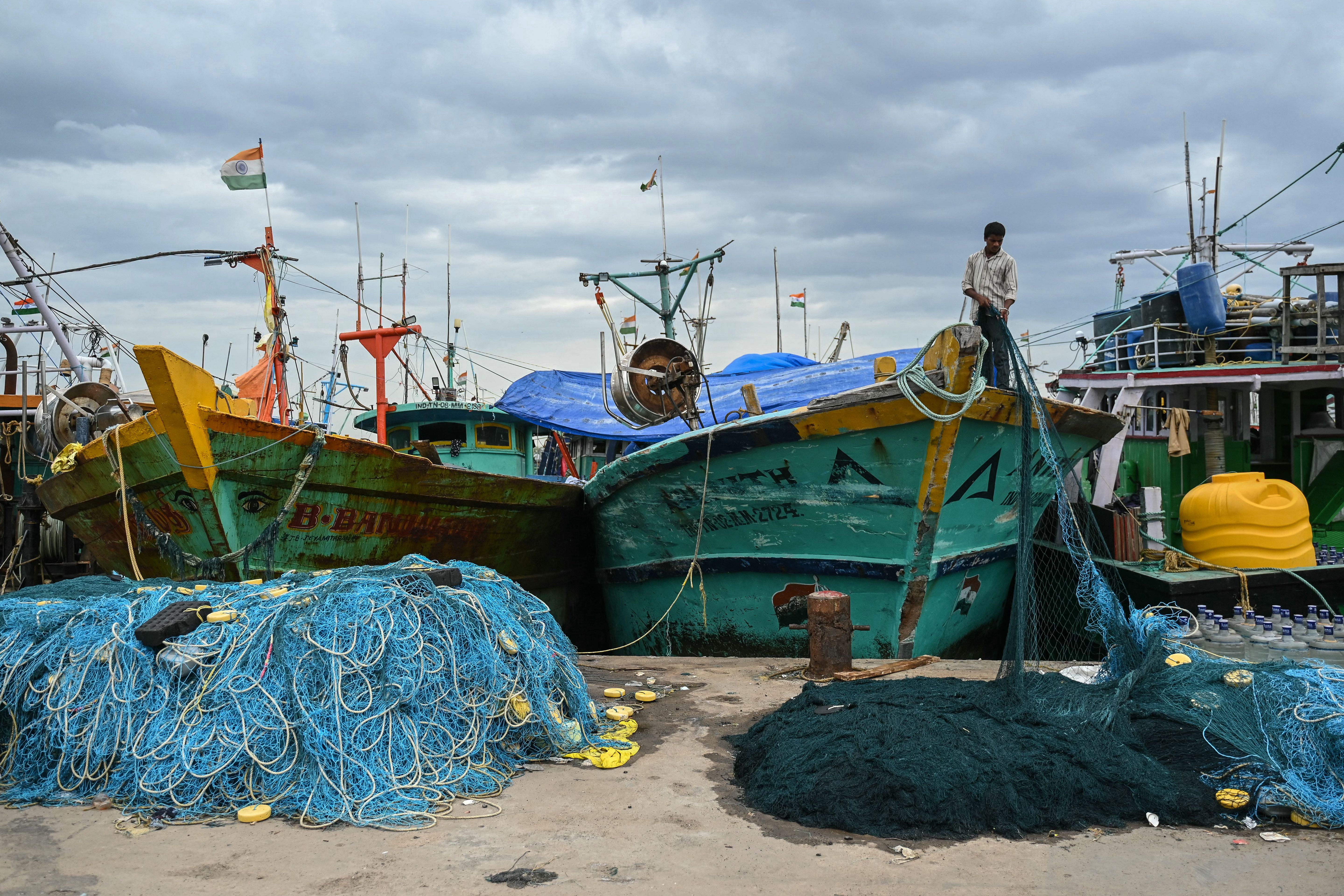
This article examines the scale and impact of Chinese IUU fishing operations globally and identifies the nature of the challenge posed by IUU fishing in the Indian Ocean Region (IOR). It also investigates why existing maritime law and international frameworks have struggled to address this growing threat.


Ajay Kumar, Charukeshi Bhatt

This compendium brings together three essays by scholars who participated in Carnegie India's Security Studies Dialogue in 2024, each examining a different aspect of China’s policies. Drawing on their expertise and research, the authors offer fresh perspectives on key geopolitical challenges.
Vijay Gokhale, Suyash Desai, Amit Kumar, …