

Other
Anders Aslund
{
  "authors": [
    "Anders Aslund"
  ],
  "type": "legacyinthemedia",
  "centerAffiliationAll": "dc",
  "centers": [
    "Carnegie Endowment for International Peace"
  ],
  "collections": [],
  "englishNewsletterAll": "ctw",
  "nonEnglishNewsletterAll": "",
  "primaryCenter": "Carnegie Endowment for International Peace",
  "programAffiliation": "russia",
  "programs": [
    "Russia and Eurasia"
  ],
  "projects": [],
  "regions": [
    "Caucasus",
    "Russia"
  ],
  "topics": [
    "Trade"
  ]
}
REQUIRED IMAGE
Source: Carnegie
This article was originally published in The Moscow Times on November 21, 2002.
Four years ago, Russia was riveted by a horrendous financial crash. Today that is difficult to believe. The standard judgment now is that this was precisely the wake-up call that the country needed.
Russia is not only a very stable economy but also a remarkably dynamic one. After three years of average economic growth of 6.5 percent per year, the worry is that economic growth will stop at 4 percent this year. The budget is in surplus; trade and current account surpluses are huge, and the government's external debt has fallen below 40 percent of GDP. Seldom has a crisis been resolved more successfully.
Strangely, in his much-hyped new book, "Globalization and Its Discontents," the Nobel prize-winning economist Joseph Stiglitz has a chapter titled "Who Lost Russia?" Stiglitz's answer is the International Monetary Fund and the U.S. Treasury Department, which encouraged Russia to pursue the policies of the "Washington consensus," involving price and trade liberalization, financial stabilization and privatization. His overall judgment is "that Russia's kind of ersatz capitalism did not provide the incentives for wealth creation and economic growth but rather for asset stripping" -- a statement that is soundly contradicted by the current reality.
Stiglitz complains that the IMF compelled Russia to undertake excessively radical market reforms, but objective measurements undertaken by the European Bank for Reconstruction and Development show that Russia carried out its reforms far slower than the early reformers in Central Europe and the Baltics. Reforms were impeded by the Communists and their allies in the State Duma. Only after Russia's reforms had advanced sufficiently far did they breed economic growth, and the August 1998 crisis helped the country cross the critical threshold.
While Stiglitz accuses the IMF of complete failure in the financial crisis, the IMF action appears a remarkable success in hindsight. Russia's problem patently was an excessive budget deficit of about 8 percent of GDP. To finance it, the government took too many domestic and foreign credits, which was the main cause of the August financial crash.
Stiglitz argues that the exchange rate was grossly overvalued, but in fact Russia never had a current account deficit. Another alleged problem was tax collection, but the government has persistently collected one-third of GDP in taxes -- exactly the U.S. level.
Instead, the real budgetary problem was the enormous, corrupt subsidies handed out to enterprises, and the main regulatory problem has been the arbitrary and lawless extraction of taxes.
In the summer of 1998, Russia had a reformist government under Prime Minister Sergei Kiriyenko. Together with the IMF and the World Bank, his government concluded a radical economic crisis program. The IMF issued a first loan of $4.8 billion, showing that it was serious about helping Russia. Alas, although the country was on the brink of disaster, the parliament refused to adopt the necessary fiscal legislation.
The gravediggers consisted of three powerful groups: the "oligarchs," regional governors and the Communist Party.
As a consequence, the state's finances had become untenable by August 1998. The IMF and the U.S. Treasury concluded that the political mandate for the necessary fiscal tightening was absent and refused to provide more funds. The government defaulted on its domestic debt and devalued sharply, and society was dealt a tremendous shock. At first, it appeared as if market reforms were over, as several Communists entered the government -- but soon the tables were turned.
The oligarchs lost both money and reputation, and have since been distanced from central power. The regional governors, who were rightly perceived as the kingpins of corruption, have since lost half their financial resources to the federal government. The Communist Party felt the political wind before the December 1999 parliamentary elections and adopted a market economic program, but even so it lost badly in the elections. For the first time, the parliament emerged with a solid reformist majority, which has driven reform ever since.
Immediately after the crash, the government had little choice but to cut public expenditures -- essentially the huge enterprise subsidies -- as all sources of financing had dried up. By insisting on payments in real money, the government swiftly reduced barter.
The new parliament and newly-elected President Vladimir Putin seized on this wave of market economic sentiment, undertaking one fundamental reform after another. They introduced a flat personal income tax of 13 percent and a corporate profit tax of 24 percent, undertook judicial reform, legislated private ownership of land and adopted new banking laws, a new labor code and much more. Surprise, surprise, it turned out that capitalism worked in Russia as well.
Today, it is all too evident. The financial crash of 1998 taught Russia the necessary lesson. It demonstrated how socially costly it is to abandon the narrow path of good economic policy, and a broad market economic consensus has penetrated the Russian mind.
In effect, the Kiriyenko-IMF program of July 1998 has been implemented ever since, and the results are impressive by any standard, showing that a market economy can work wonders in Russia as well. The country has returned two-thirds of the credits it received from the IMF.
Many economists have disputed the importance of speedy privatization, but the Russian economic expansion is entirely driven by private enterprises with concentrated ownership.
The original form of privatization, which is Stiglitz's main preoccupation, appears ever less significant, as many corporations have changed hands many times (because private property can be transferred through sales or bankruptcy). The emerging conclusion is, on the contrary, that it does not matter how an enterprise is privatized -- no strategic restructuring appears possible before its privatization.
Anders Aslund, a senior associate of the Carnegie Endowment for International
Peace and author of "Building Capitalism: The Transformation of the Former
Soviet Bloc," contributed this comment to The Moscow Times.
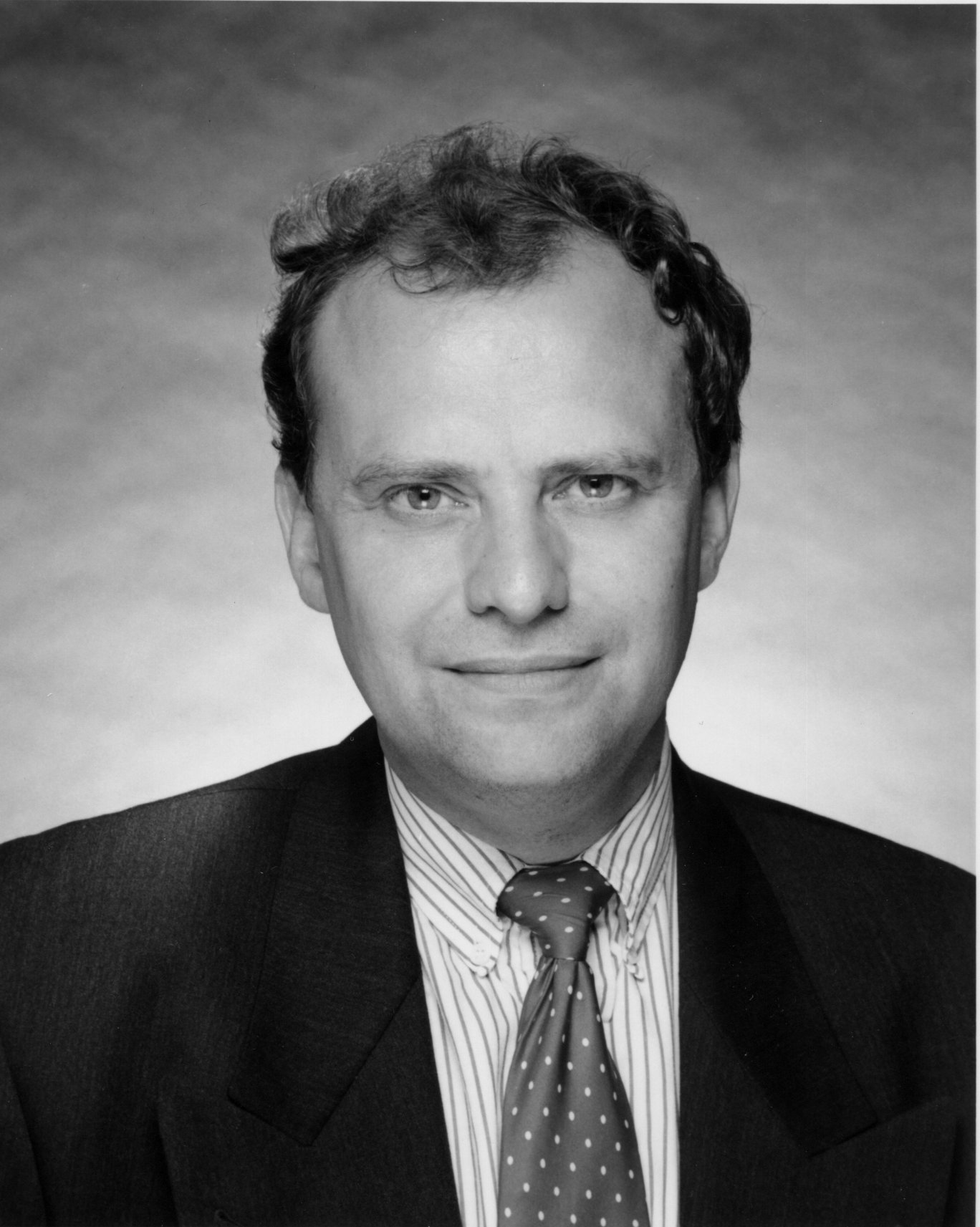
Former Senior Associate, Director, Russian and Eurasian Program
Recent Work
Anders Aslund
Anders Aslund

This piece argues that India’s central challenge is not managing a single flashpoint but resolving the underlying tension between expansion and institutional coherency of the BRICS grouping.

Vrinda Sahai

This piece examines India’s response to U.S. sanctions and tariffs, specifically assessing the immediate market consequences, such as alterations in import costs, and the broader strategic implications for India’s energy security and foreign policy orientation.
Vrinda Sahai
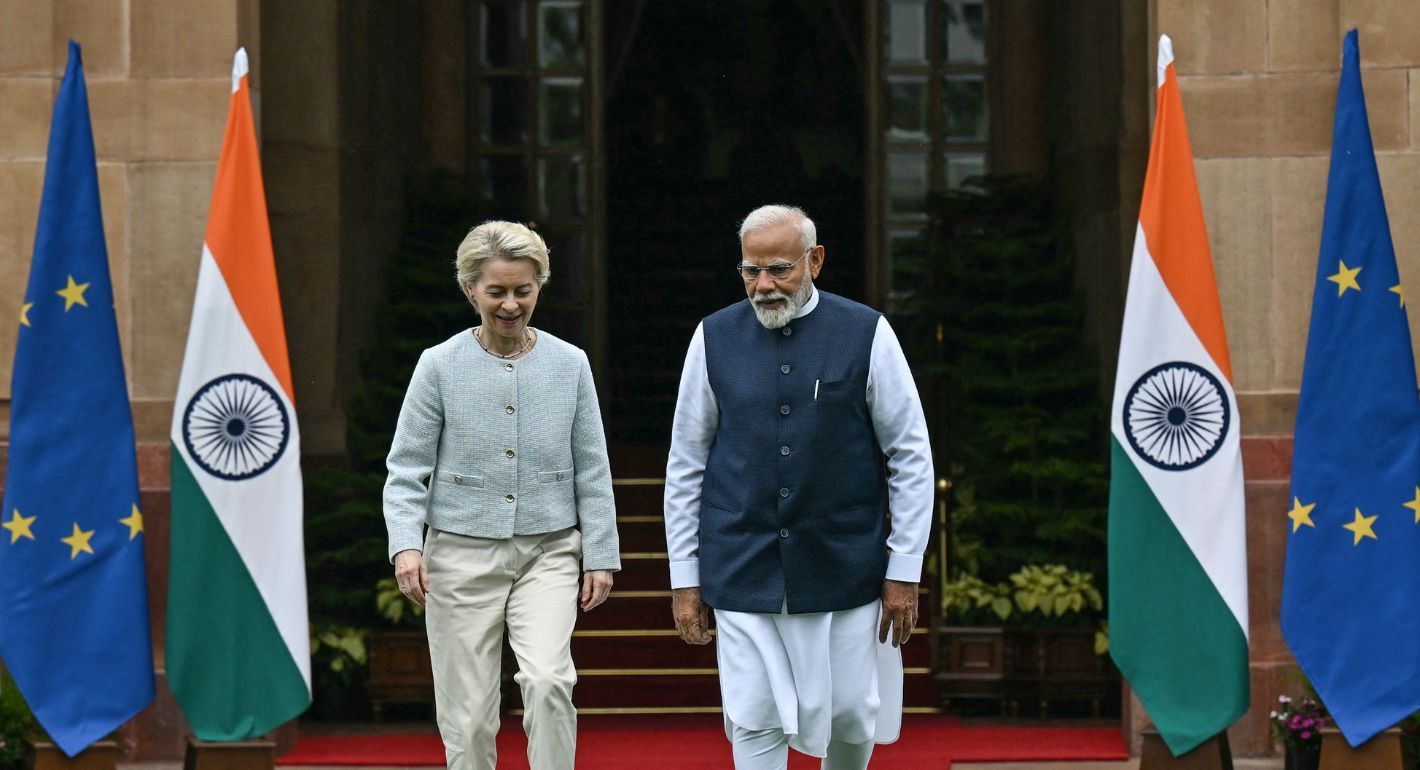
This article argues that the geopolitical circumstances have never been more conducive, not merely for the early conclusion of the free trade agreement (FTA) between India and the EU, but also for crafting a substantive and comprehensive strategic partnership.
Mohan Kumar

China’s central bank has plans to roll out a digital yuan, which could circumvent the U.S. dollar in important global financial transactions. Here are some ways the digital yuan could pose a challenge to the dollar’s prominence.
Rajesh Bansal, Somya Singh
The World Trade Organization’s Trade Facilitation Agreement has placed trade facilitation initiatives high on the agenda of international governments. This case study of India studies what trade facilitation may mean for a fast-paced economy.

Vijay Singh Chauhan, Sruti Vijayakumar