

In The Media
Minxin Pei
{
  "authors": [
    "Minxin Pei"
  ],
  "type": "legacyinthemedia",
  "centerAffiliationAll": "dc",
  "centers": [
    "Carnegie Endowment for International Peace"
  ],
  "collections": [],
  "englishNewsletterAll": "asia",
  "nonEnglishNewsletterAll": "",
  "primaryCenter": "Carnegie Endowment for International Peace",
  "programAffiliation": "AP",
  "programs": [
    "Asia"
  ],
  "projects": [],
  "regions": [
    "China"
  ],
  "topics": []
}
REQUIRED IMAGE
Source: Carnegie
Originally published in the Financial
Times, May 7, 2003.
Beijing's dramatic reversal of policy in confronting the crisis caused by severe
acute respiratory syndrome (Sars) has raised hopes that this may portend even
bolder steps towards political openness in the future.
On the surface, such optimism may seem justified. After trying to cover up a
public health crisis for five months, Beijing abruptly changed course when it
became clear that deception and denial were making matters worse. Two senior
officials blamed for the cover-up have been fired. Competent officials associated
with Zhu Rongji, the reformist former premier, have been put in charge of containing
the disease. Detailed data on its spread are released daily and inspectors from
the World Health Organisation have been granted unimpeded access.
To project a new image, Hu Jintao, the president, and Wen Jiabao, the premier, are shown on Chinese television as leaders in the mould of Rudolph Giuliani, New York's much-admired former mayor. Mr Hu made a high-profile trip to Guangdong, the source of the epidemic. When much of Beijing was gripped by panic, Mr Wen ate lunch with students at Beijing University, where an entire hospital was quarantined, to calm the public.
Calls for systemic political reform to improve the government's responsiveness and accountability have appeared in some newspapers. Even in China's tightly censored internet chat rooms, veiled criticisms of the government's handling of the crisis are permitted.
The openness appeared to reach new heights last week when the government admitted, for the first time, a naval disaster in which 70 sailors died on a submarine. These developments make one wonder whether glasnost, Chinese-style, is at last breaking out.
Such speculation may be premature. Whereas the government's policy response is decisive and pragmatic, the political message emanating from the Communist party is worryingly mixed.
In spite of the rhetoric of candour, the government has maintained tight control over how the campaign against Sars is reported. The most revealing development is the announcement that a propaganda official who suppressed media coverage of the outbreak in Guangdong has been appointed editor of China's most liberal newspaper, Southern Weekend. This move appears to underscore the party's determination to keep a tight grip on the press.
While allowing no public criticism of the cover-up that aggravated the outbreak, the official media have cast the party as the bulwark in the unfolding crisis. In a crude public relations stunt, 30 doctors and nurses who had treated Sars patients in Guangzhou were admitted into the party on May Day in a public ceremony. Government rhetoric has equated fighting Sars to a test of China's "national spirit", apparently in an attempt to divert attention from its earlier failings.
Inexplicably, the party has even insisted that the new ideology known as the "three represents" should be the guiding principle in the fight against Sars. The doctrine is a welcome attempt by the party to broaden its social base. But on a practical level, it has no relevance to a public health emergency. Because the "three represents" is the brainchild of Jiang Zemin, the former party chief who retains decisive political influence as China's commander-in-chief, one suspects that considerations of power, rather than effective public policy, still dominate the thinking of China's ruling elite.
However, the mixed political messages from Beijing do not rule out the possibility of change. In the past, leadership or policy changes have followed crises of similar magnitude. In the case of Sars, the crucial variable is its duration. If it lasts into the autumn, more changes in the highest government echelons are likely.
Indeed, even if Beijing successfully contains the epidemic, the crisis has disrupted the new leadership's agenda and publicly demonstrated the failings of the system. Tensions appear to be bubbling inside the regime over who should take responsibility for Sars. Those allied with Mr Jiang seem to fear that new leaders such as Mr Hu and Mr Wen will gain political strength if they quickly get the epidemic under control. A power struggle at the top could erupt sooner than expected.
The resulting disunity within the elite could create an opening for real change. If that happens, China will score a victory against a different strain of Sars - "sclerotic authoritarian regime syndrome".

Former Adjunct Senior Associate, Asia Program
Pei is Tom and Margot Pritzker ‘72 Professor of Government and the director of the Keck Center for International and Strategic Studies at Claremont McKenna College.
Recent Work
Minxin Pei
Minxin Pei
Carnegie India does not take institutional positions on public policy issues; the views represented herein are those of the author(s) and do not necessarily reflect the views of Carnegie, its staff, or its trustees.

This piece argues that India’s central challenge is not managing a single flashpoint but resolving the underlying tension between expansion and institutional coherency of the BRICS grouping.

Vrinda Sahai

This paper examines the evolution of India-China economic ties from 2005 to 2025. It explores the impact of global events, bilateral political ties, and domestic policies on distinct spheres of the economic relationship.

Santosh Pai
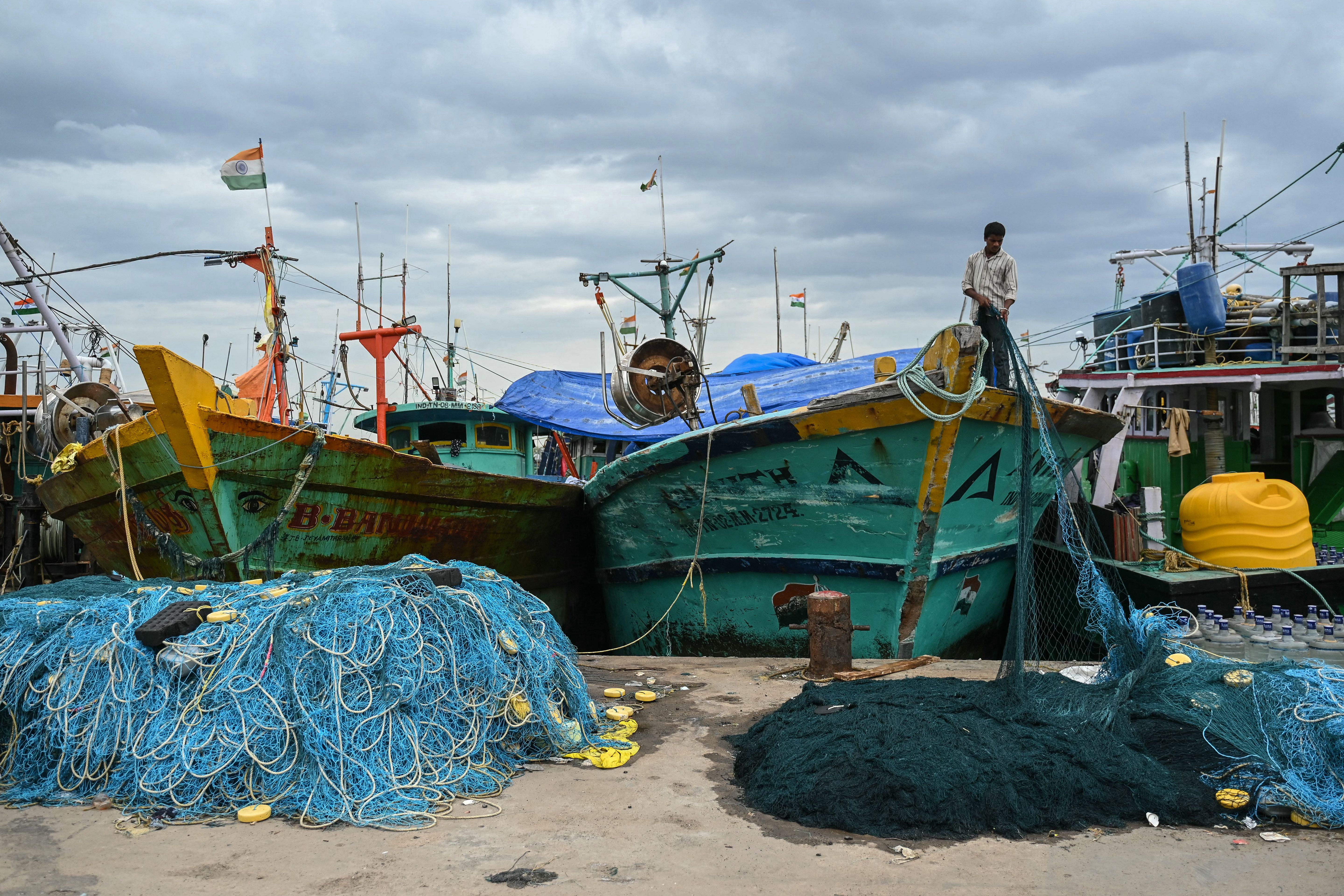
This article examines the scale and impact of Chinese IUU fishing operations globally and identifies the nature of the challenge posed by IUU fishing in the Indian Ocean Region (IOR). It also investigates why existing maritime law and international frameworks have struggled to address this growing threat.


Ajay Kumar, Charukeshi Bhatt

This compendium brings together three essays by scholars who participated in Carnegie India's Security Studies Dialogue in 2024, each examining a different aspect of China’s policies. Drawing on their expertise and research, the authors offer fresh perspectives on key geopolitical challenges.

Vijay Gokhale, Suyash Desai, Amit Kumar, …

This commentary explores the likely actions of the Trump administration and driving forces on issues of deregulation, the United States’ leadership in AI, national security, and global engagements on AI safety.


Shatakratu Sahu, Amlan Mohanty