• Research
  • About
  • Experts
Carnegie India logoCarnegie lettermark logo
AI
{
  "authors": [],
  "type": "pressRelease",
  "centerAffiliationAll": "",
  "centers": [
    "Carnegie Endowment for International Peace"
  ],
  "collections": [],
  "englishNewsletterAll": "",
  "nonEnglishNewsletterAll": "",
  "primaryCenter": "Carnegie Endowment for International Peace",
  "programAffiliation": "",
  "programs": [],
  "projects": [],
  "regions": [],
  "topics": [
    "Economy",
    "Trade"
  ]
}
REQUIRED IMAGE

REQUIRED IMAGE

Press Release

Press Release: New Proposal Urges U.S. to Open Markets to the Poorest Countries

Link Copied
Published on Jul 11, 2006

FOR IMMEDIATE RELEASE: July 11, 2006
CONTACT: Jennifer Linker, jlinker@carnegieendowment.org, 202/365-1490

In a new Policy Outlook, Nickel and Diming the Poor: U.S. Implementation of the LDC Initiative, Carnegie Associate Viji Rangaswami argues that the U.S. should provide open access for least developed country (LDC) exports, which would yield real benefits to the global poor and allow the U.S. to reclaim its leadership position in the struggling WTO Doha round. Rangaswami outlines the issues and interests at stake and offers a proposal to provide the poorest countries open access while addressing U.S. policymakers’ concerns. Click here to read.

The Doha Round promised to focus on development and had explicit commitments to promote the development interests of least developed or poorest countries. Any realistic outcome of the round, however, will only produce marginal gains—in some cases losses—for the poorest countries. Rangaswami argues that such a result is not only unacceptable but also avoidable. At the December 2005 WTO meeting, wealthy countries agreed to open their markets to poor country exports by eliminating tariffs and quotas, a move that would dramatically alter the outcome of the round for the global poor by producing tangible gains for countries like Bangladesh, Cambodia, Malawi and Tanzania.

The current U.S. position on access for the poorest countries jeopardizes these potential gains says Rangaswami. The United States sought the right to exclude up to three percent of poor country exports from the open access commitment in order to shield its textile and sugar producers. 

Rangaswami urges U.S. policymakers to reconsider their position. She offers four recommendations on how the United States should open its market to the poor. She also analyzes the prospects for action by the U.S. Congress, and argues that broad based congressional support can be found. Rangaswami emphasizes that it is time for U.S. policymakers to work across aisles to defeat narrow interests seeking to exclude the products of greatest importance to the poorest countries.  

Direct link to pdf: http://www.carnegieendowment.org/files/Rangaswami_formatted.pdf

Viji Rangaswami is an associate in the Trade, Equity, and Development Project at the Carnegie Endowment. She was formerly minority trade counsel to the Committee on the Ways and Means in the U.S. House of Representatives. Her work focuses on how multilateral and regional trade agreements, as well as unilateral preference programs, can promote development particularly among the least developed countries.

www.CarnegieEndowment.org/trade
 
Press Contact:
Jennifer Linker,
jlinker@CarnegieEndowment.org, +1 202/939-2372
###

EconomyTrade

Carnegie India does not take institutional positions on public policy issues; the views represented herein are those of the author(s) and do not necessarily reflect the views of Carnegie, its staff, or its trustees.

More Work from Carnegie India

  • Article
    India’s Press Note 3 Gamble: Opening the FDI Door to China

    On March 10, 2026, India’s Union Cabinet approved amendments to Press Note 3, a regulation that mandated government approval on all foreign direct investment (FDI) from countries sharing a land border with India. This amendment raises questions primarily about whether its stated benefits will materialize and if the risks have been adequately weighed. This piece will address the same.

      Konark Bhandari

  • Commentary
    The Impact of U.S. Sanctions and Tariffs on India’s Russian Oil Imports

    This piece examines India’s response to U.S. sanctions and tariffs, specifically assessing the immediate market consequences, such as alterations in import costs, and the broader strategic implications for India’s energy security and foreign policy orientation.

      Vrinda Sahai

  • Paper
    India-China Economic Ties: Determinants and Possibilities

    This paper examines the evolution of India-China economic ties from 2005 to 2025. It explores the impact of global events, bilateral political ties, and domestic policies on distinct spheres of the economic relationship.

      Santosh Pai

  • Commentary
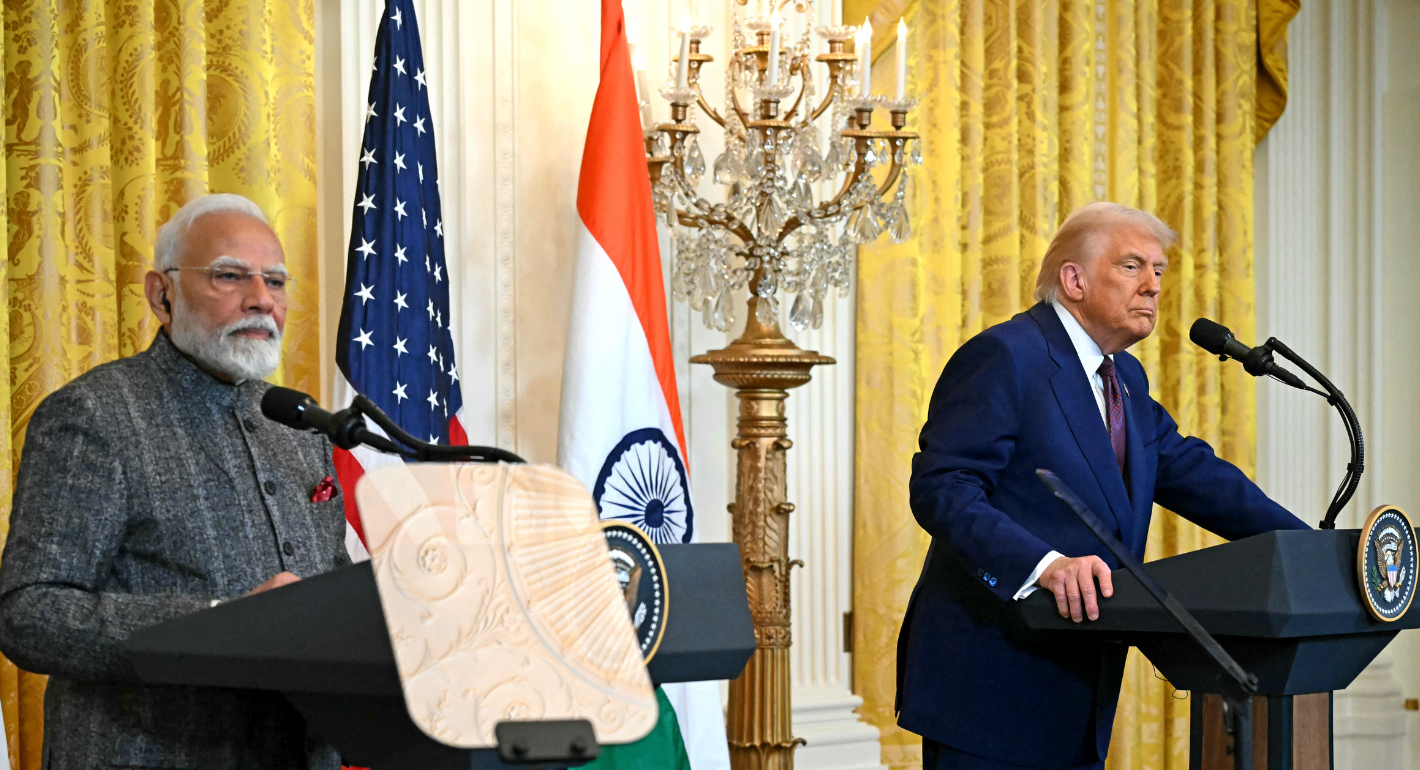
    TRUST and Tariffs

    The India-U.S. relationship currently appears buffeted between three “Ts”—TRUST, Tariffs, and Trump.

      Arun K. Singh

  • Article
    Can Geopolitical Alignment Seal the India-EU FTA?

    This article argues that the geopolitical circumstances have never been more conducive, not merely for the early conclusion of the free trade agreement (FTA) between India and the EU, but also for crafting a substantive and comprehensive strategic partnership.

      Mohan Kumar

Get more news and analysis from
Carnegie India
Carnegie India logo, white
Unit C-4, 5, 6, EdenparkShaheed Jeet Singh MargNew Delhi – 110016, IndiaPhone: 011-40078687
  • Research
  • About
  • Experts
  • Projects
  • Events
  • Contact
  • Careers
  • Privacy
  • For Media
Get more news and analysis from
Carnegie India
© 2026 Carnegie Endowment for International Peace. All rights reserved.