

• Research
  • About
  • Experts
Carnegie India logoCarnegie lettermark logo
Technology
{
  "authors": [
    "Uri Dadush",
    "Lauren Falcão"
  ],
  "type": "other",
  "centerAffiliationAll": "",
  "centers": [
    "Carnegie Endowment for International Peace"
  ],
  "collections": [],
  "englishNewsletterAll": "",
  "nonEnglishNewsletterAll": "",
  "primaryCenter": "Carnegie Endowment for International Peace",
  "programAffiliation": "",
  "programs": [],
  "projects": [],
  "regions": [
    "Bahrain",
    "Kuwait",
    "Qatar",
    "Saudi Arabia",
    "United Arab Emirates",
    "North America"
  ],
  "topics": [
    "Political Reform",
    "Economy",
    "Trade"
  ]
}

Source: Getty

Other

Regional Arrangements in the Arabian Gulf

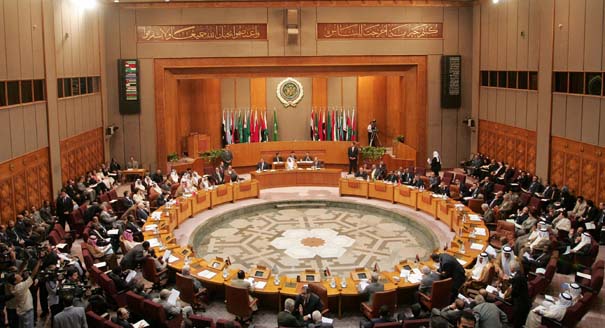
The economic success of Gulf regional integration depends on increased cooperation within the service sector and improved administrative capacity in GCC countries.

Link Copied
By Uri Dadush and Lauren Falcão
Published on Aug 10, 2009

The Gulf Cooperation Council (GCC) represents one of the oldest and most ambitious regional trading agreements. Its member states—Saudi Arabia, Bahrain, Kuwait, Oman, Qatar, and the United Arab Emirates—account for some 40 percent of world oil reserves.

The Gulf Cooperation Council's (GCC) ability to fulfill its role as driver of economic growth in the region would be enhanced by the following action points:

  • To facilitate greater trade in goods, the GCC must work to improve logistics and reduce non-tariff barriers to trade.
     
  • The remaining big gains to be had from Gulf regional integration are likely to stem not from trade in goods, but from increased integration of the service sector.
     
  • Measures for better integration of services are largely embedded in the 2001 Economic Agreement, but they must be better executed.
     
  • The weak administrative capacities of the GCC countries—as well as the political obstacles facing the GCC as an institution—add further complexity to an already extensive and ambitious agenda of economic reform. Improving administrative capacity is key.

About the Authors

Uri Dadush

Former Senior Associate, International Economics Program

Dadush was a senior associate at the Carnegie Endowment for International Peace. He focuses on trends in the global economy and is currently tracking developments in the eurozone crisis.

Lauren Falcão

Former Junior Fellow, Trade, Equity, and Development Program

Authors

Uri Dadush
Former Senior Associate, International Economics Program
Uri Dadush
Lauren Falcão
Former Junior Fellow, Trade, Equity, and Development Program
Political ReformEconomyTradeBahrainKuwaitQatarSaudi ArabiaUnited Arab EmiratesNorth America

Carnegie India does not take institutional positions on public policy issues; the views represented herein are those of the author(s) and do not necessarily reflect the views of Carnegie, its staff, or its trustees.

More Work from Carnegie India

  • Commentary
    The Impact of U.S. Sanctions and Tariffs on India’s Russian Oil Imports

    This piece examines India’s response to U.S. sanctions and tariffs, specifically assessing the immediate market consequences, such as alterations in import costs, and the broader strategic implications for India’s energy security and foreign policy orientation.

      Vrinda Sahai

  • Paper
    India-China Economic Ties: Determinants and Possibilities

    This paper examines the evolution of India-China economic ties from 2005 to 2025. It explores the impact of global events, bilateral political ties, and domestic policies on distinct spheres of the economic relationship.

      Santosh Pai

  • Commentary
    TRUST and Tariffs

    The India-U.S. relationship currently appears buffeted between three “Ts”—TRUST, Tariffs, and Trump.

      Arun K. Singh

  • Article
    Can Geopolitical Alignment Seal the India-EU FTA?

    This article argues that the geopolitical circumstances have never been more conducive, not merely for the early conclusion of the free trade agreement (FTA) between India and the EU, but also for crafting a substantive and comprehensive strategic partnership.

      Mohan Kumar

  • Source: iStock
    Commentary
    What’s Next for U.S. AI Policy?

    This commentary explores the likely actions of the Trump administration and driving forces on issues of deregulation, the United States’ leadership in AI, national security, and global engagements on AI safety.

      Shatakratu Sahu, Amlan Mohanty

Get more news and analysis from
Carnegie India
Carnegie India logo, white
Unit C-4, 5, 6, EdenparkShaheed Jeet Singh MargNew Delhi – 110016, IndiaPhone: 011-40078687
  • Research
  • About
  • Experts
  • Projects
  • Events
  • Contact
  • Careers
  • Privacy
  • For Media
Get more news and analysis from
Carnegie India
© 2026 Carnegie Endowment for International Peace. All rights reserved.