• Research
  • About
  • Experts
Carnegie India logoCarnegie lettermark logo
AI
{
  "authors": [
    "Shimelse Ali"
  ],
  "type": "legacyinthemedia",
  "centerAffiliationAll": "",
  "centers": [
    "Carnegie Endowment for International Peace"
  ],
  "collections": [],
  "englishNewsletterAll": "",
  "nonEnglishNewsletterAll": "",
  "primaryCenter": "Carnegie Endowment for International Peace",
  "programAffiliation": "",
  "programs": [],
  "projects": [],
  "regions": [
    "Southern, Eastern, and Western Africa",
    "North America"
  ],
  "topics": [
    "Economy"
  ]
}

Source: Getty

In The Media

Biofuels Threaten Food Security for the Poor

International food prices remain high and the use of food commodities for biofuels production is increasing, aggravating the food security problem of the poor.

Link Copied
By Shimelse Ali
Published on Apr 23, 2010

Source: ActionAid UK

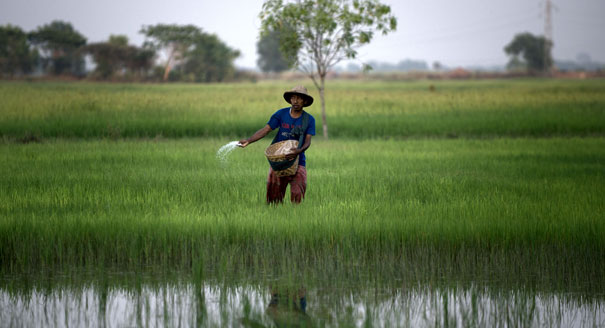
Biofuels Threaten Food Security for the PoorThe global food crisis is not over. International food prices remain high and staple food prices in developing countries have actually continued to increase in recent months, aggravating the food security problem of the poor. The continued increase in the use of food commodities for biofuels production, which several studies cite as the major driver of food prices, and the likelihood of higher oil prices point to further price increases and may threaten food security in developing countries.
 
International food prices remain well above pre-crisis and historical levels. Corn and soybean prices were about 40 percent above their 2002–2007 average in February, and the price of rice had more than doubled from its 2002–2007 average. The World Bank's food price index rose 17 percent in 2009, surpassing its 2007 level by 11 percent.
 
Even staple foods have seen large price increases in developing countries recently. The most vulnerable countries are those with large portion of their population living in poverty. Out of the twenty developing countries with the largest poor populations, ranked according to the size of their population living under $1.25 a day poverty line, average domestic staple food prices in twelve were higher in 2009 than in 2008. Over that period, domestic prices rose most dramatically in Mozambique, where the price of cassava increased by 47 percent. The Philippines, Kenya, and Zambia saw prices increase between 20 percent and 26 percent from 2008 to 2009. Such price surges have severe implications for food security as most poor people—who typically spend more than 50 percent of their incomes on food—lose as very high food prices curtail their purchasing power.
 
A resurgence of rising oil prices and the continued diversion of food commodities into biofuels, on top of bad weather conditions, could lead to another spike in food prices in the near-term.  The price of corn has been strongly and significantly correlated with ethanol production since 2006 as the use of corn for biofuels production surged. In the 2009/2010 crop year, approximately one third of U.S. corn will go to biofuels production, about three times the 2002–2005 average. This will have serious implications for international corn prices as the United States accounts for about a third of global corn production and two-thirds of global exports. The price of oil has now moved to over $80 per barrel, after averaging between $70 and $80 for more than five months, as the global economic recovery gains traction. This will further boost the demand for biofuels, raising the demand for—and price of—grains even more.
 
Advanced economies, mainly the United States and European Union, should reassess policies that promote biofuels production, which is economically inefficient, adds to carbon emissions, and is proving disastrous for poor countries. Serious consideration should be given to the trade-offs with food prices. At the same time, the increased demand for biofuels associated with rising oil prices underlines the need for conservation measures to reduce energy use and considerable investment in agriculture in developing countries.

About the Author

Shimelse Ali

Shimelse Ali
EconomySouthern, Eastern, and Western AfricaNorth America

Carnegie India does not take institutional positions on public policy issues; the views represented herein are those of the author(s) and do not necessarily reflect the views of Carnegie, its staff, or its trustees.

More Work from Carnegie India

  • Article
    India–Africa Strategic Partnership: Challenges, Potential, and Possible Pathways

    A partnership between India, a country of subcontinental size, and Africa, a continent of fifty-four countries, may seem asymmetric until one notes that both are home to nearly the same number of people—1.4 billion. This essay spells out the existing challenges to the partnership, its optimal potential, and the possible pathways to realize it over the next quarter-century.

      Rajiv Bhatia

  • Article
    India’s Press Note 3 Gamble: Opening the FDI Door to China

    On March 10, 2026, India’s Union Cabinet approved amendments to Press Note 3, a regulation that mandated government approval on all foreign direct investment (FDI) from countries sharing a land border with India. This amendment raises questions primarily about whether its stated benefits will materialize and if the risks have been adequately weighed. This piece will address the same.

      Konark Bhandari

  • Commentary
    The Impact of U.S. Sanctions and Tariffs on India’s Russian Oil Imports

    This piece examines India’s response to U.S. sanctions and tariffs, specifically assessing the immediate market consequences, such as alterations in import costs, and the broader strategic implications for India’s energy security and foreign policy orientation.

      Vrinda Sahai

  • Paper
    India-China Economic Ties: Determinants and Possibilities

    This paper examines the evolution of India-China economic ties from 2005 to 2025. It explores the impact of global events, bilateral political ties, and domestic policies on distinct spheres of the economic relationship.

      Santosh Pai

  • Commentary
    TRUST and Tariffs

    The India-U.S. relationship currently appears buffeted between three “Ts”—TRUST, Tariffs, and Trump.

      Arun K. Singh

Get more news and analysis from
Carnegie India
Carnegie India logo, white
Unit C-4, 5, 6, EdenparkShaheed Jeet Singh MargNew Delhi – 110016, IndiaPhone: 011-40078687
  • Research
  • About
  • Experts
  • Projects
  • Events
  • Contact
  • Careers
  • Privacy
  • For Media
Get more news and analysis from
Carnegie India
© 2026 Carnegie Endowment for International Peace. All rights reserved.