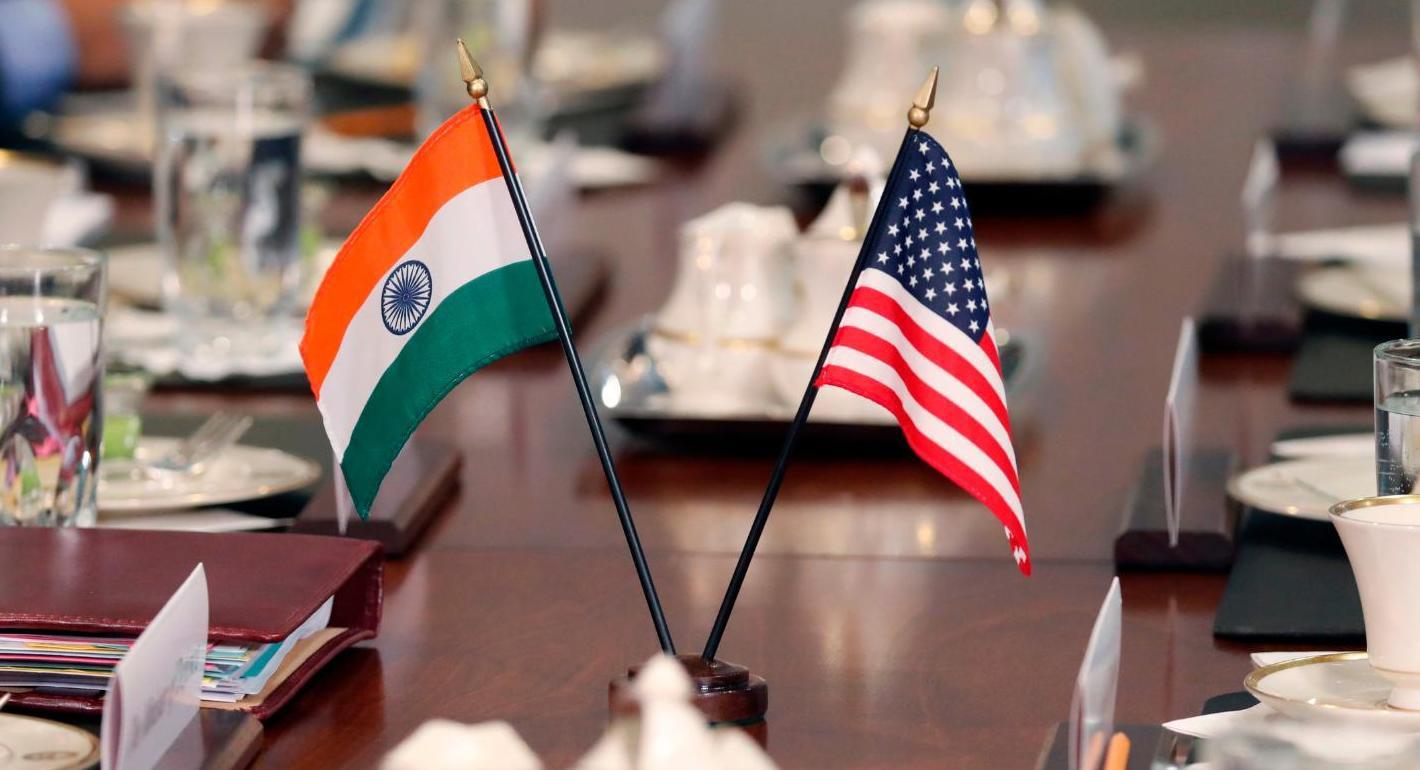
This commentary explores the likely actions of the Trump administration and driving forces on issues of deregulation, the United States’ leadership in AI, national security, and global engagements on AI safety.
Shatakratu Sahu, Amlan Mohanty

{
"authors": [],
"type": "pressRelease",
"centerAffiliationAll": "",
"centers": [
"Carnegie Endowment for International Peace"
],
"collections": [],
"englishNewsletterAll": "",
"nonEnglishNewsletterAll": "",
"primaryCenter": "Carnegie Endowment for International Peace",
"programAffiliation": "",
"programs": [],
"projects": [],
"regions": [
"North America"
],
"topics": []
}REQUIRED IMAGE
Carnegie's Moisés Naím was honored with the 2011 Ortega y Gasset Journalism Award for Outstanding Professional Career.
WASHINGTON—Carnegie's Moisés Naím was honored yesterday with the 2011 Ortega y Gasset Journalism Award for Outstanding Professional Career.
The awards are the most prestigious in Spanish journalism and recognize the best work published in Spanish in 2010. Naím was named “most outstanding professional” thanks to his “independence” and the “enormous strength and analytical capability” of his weekly columns which, according to the jury, are “an essential reference in the Spanish language.”
Naím, a senior associate in the Carnegie International Economics Program, is the chief international columnist for El Pais, Spain's largest newspaper, and his weekly column is published worldwide. Before joining the Carnegie Endowment, Naím was the editor in chief of Foreign Policy for fourteen years where he helped to shape the magazine into one of the world's most influential publications in international affairs. In addition, Naím served as Venezuela’s minister of trade and industry in the early 1990s, director of Venezuela's Central Bank, and executive director of the World Bank.
NOTES
Press Contact: Karly Schledwitz, +1 202 939 2233, pressoffice@ceip.org
Carnegie India does not take institutional positions on public policy issues; the views represented herein are those of the author(s) and do not necessarily reflect the views of Carnegie, its staff, or its trustees.
This commentary explores the likely actions of the Trump administration and driving forces on issues of deregulation, the United States’ leadership in AI, national security, and global engagements on AI safety.
Shatakratu Sahu, Amlan Mohanty
Since its launch nearly a year ago, the INDUS-X has marked many milestones in the India-U.S. relationship. Much has been achieved, but there is room to further enhance defense cooperation between the two countries in the coming years.
Ajay Kumar, Tejas Bharadwaj
This article explicates what iCET is and what it should not be mistaken for. The initiative is not designed to deliver a single deal. Instead, it involves multiple streams for cooperation and collaboration between the United States and India on critical and emerging technologies.
Rudra Chaudhuri
Based on preliminary research and stakeholder discussions, this article features four areas of biosafety and biosecurity that could potentially become concrete agenda items for collaboration between the United States and India under the iCET.
Shruti Sharma
The article highlights critical takeaways from the unofficial discussions led by Carnegie India on the iCET with officials from both the countries, industry leaders, technologists, fund managers, entrepreneurs, and academics.
Rudra Chaudhuri, Konark Bhandari, Ashima Singh