

Article
Deborah Gordon, Stephen D. Ziman
{
  "authors": [
    "Deborah Gordon"
  ],
  "type": "legacyinthemedia",
  "centerAffiliationAll": "dc",
  "centers": [
    "Carnegie Endowment for International Peace",
    "Carnegie Europe"
  ],
  "collections": [],
  "englishNewsletterAll": "ctw",
  "nonEnglishNewsletterAll": "",
  "primaryCenter": "Carnegie Endowment for International Peace",
  "programAffiliation": "SCP",
  "programs": [
    "Sustainability, Climate, and Geopolitics"
  ],
  "projects": [],
  "regions": [
    "Western Europe",
    "Europe",
    "North America"
  ],
  "topics": [
    "Climate Change",
    "Foreign Policy"
  ]
}
Source: Getty
The European Union should adopt fuel economy standards for trucks and other heavy vehicles, which would both increase energy independence and reduce carbon emissions.
Source: EurActiv

While the way forward may be uncertain, the end point is clear. By 2050, the EU roadmap aims to cut greenhouse gas emissions by 80-95% below 1990 levels. Transportation will play a critical role in meeting this overall goal, with a targeted 54-67% reduction in transport carbon emissions by 2050. In order to meet this directive, the EU must tackle trucks.
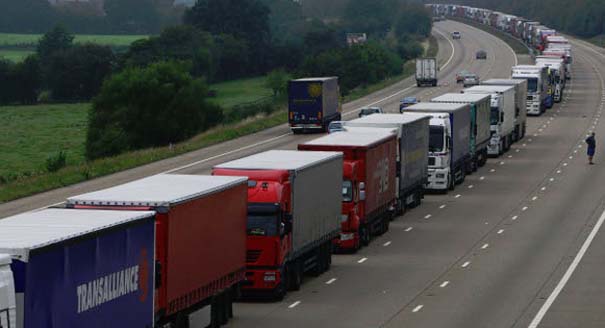
Trucks haul over 70% of freight in the EU and reliance on them is growing. By 2030, the number of trucks in the EU is projected to increase by 31%, which will likely increase climate emissions by 15% percent.
The EU currently has no policy directive that deals directly with HDV fuel use and carbon emissions. The carbon-pricing Emissions Trading Scheme (ETS) only targets light-duty cars and vans, and not trucks. Still, high fuel prices throughout the EU have helped moderate diesel use and slowly curb carbon emitted from EU trucks.
But there are limits to what market forces alone can do to push technological innovation. There is a strong case to be made for new standards to hasten the pace of technology deployment so that EU trucks can pave the way for fuel-saving and carbon-cutting efforts around the globe.
Japan, China, Canada, Mexico, and the United States have implemented - or are in the process of adopting - greenhouse gas and/or fuel economy standards for HDVs. US studies project as much as a 50% reduction in fuel consumption and associated carbon emissions through better truck engines, tyres, aerodynamic designs, hybrid drives, and other enhancements. The burning question is: will the EU follow suit, and if so, when?
This is a touchy subject in a tough economic climate where the short-term goal is to do no harm. But business-as-usual trucking practices will bring undue risks. In addition to climate forcing, growing diesel demands from trucks raise concerns for energy and economic security.
New HDV standards would reduce dependence on dwindling diesel supplies and oil imports in the EU, which are expected to account for 90% of consumption by 2030. Such standards, in turn, will protect the EU against instability in global oil markets.
While ample opportunities remain to reduce fuel use by, and carbon emissions from, EU trucks, realising these gains is a matter of technology, cost, and timing. If oil prices surge to $150 per barrel, as presented in an oil production-constrained scenario by the International Energy Agency, the EU will be in a more competitive position if it implements HDV fuel economy standards in short order.
But consumers and shippers - those who stand to gain the most from high-efficiency trucks - are not in the driver's seat. The majority of freight operators are small businesses, with 85% having fewer than ten vehicles. Besides labour, fuel accounts for the largest share of operating expenses. So fuel price spikes wreak havoc with freight shippers, who pass on a portion of their inefficient fuel use to consumers.
Herein lies the wrinkle. The uptake of technology is largely determined by a small number of major truck manufacturers who account for 93% of EU truck registrations. DAF (the Netherlands), Daimler (Germany), M.A.N. (Germany), Renault (France), Scania (Sweden), Volvo (Sweden), and Iveco (Italy) not only dominate the truck market in the EU, they also account for an estimated 40% of worldwide HDV production.
The disconnect between a few major truck manufacturers and numerous small shipping firms in the EU creates market barriers that limit technological innovation in new long-haul, regional, and urban delivery trucks. For example, current plans entail only one percent annual improvements in HDV fuel economy.
Cost-effective technologies and operational changes, however, are available today that would double or triple the autonomous rate of energy efficiency improvements in the European truck fleet.
The good news is that the EU can benefit from what other nations are learning as they regulate HDV fuel economy and greenhouse gas emissions. In doing so, EU truck manufacturers will more likely maintain their competitive position as global leaders in a market bracing itself for higher fuel prices and increased climate forcing.
EU policymakers have the opportunity to leapfrog other nations, setting their own stringent greenhouse gas standard to establish as much as a 50% fuel economy improvement. In doing so, they can either establish EU-specific methods or align and harmonise their standards with others.
Business-as-usual trends will bring growing truck dominance, growing diesel demands, and growing climate burdens to the EU. Policymakers must meet these challenges head on with HDV GHG/fuel economy standards that protect public health, and enhance energy and economic security.
The market alone is not up to the challenge. And the current array of EU transport strategies - from 'clean vehicle' directives to green car initiatives - are useful but not sufficient to transform trucks. Member states will do their part to develop economic and other supporting truck policies that promote efficient, low-carbon operations - such as establishing truck tolls, promoting old truck replacement, establishing truck eco fees, and investing in infrastructure for more efficient freight movement.
But only the EU can set, implement, and enforce HDV standards that apply across the continent. These standards cannot be left to individual member states that lack regulatory power over long-haul and regional truck activities.
Policymakers must act despite technical complexities and resistant stakeholders. Going slowly is at odds with being prepared. The first generation of EU HDV standards will likely not be the last. Models and methods, no matter how extensively they are studied, will never precisely capture real-world conditions.
Moreover, new standards will influence technology uptake, manufacturer behaviour, and on-road truck performance. This is a two-way street. Regulators will gain experience over time as manufacturers meet the challenges of new HDV performance standards.
The instinct to proceed cautiously in difficult times is understandable. But when it comes to ensuring the secure movement of goods in a global economy, the risks of policy inaction loom large. The EU should not delay the adoption of HDV standards while the rest of the world acts. Instead, EU leaders should make the most of their opportunity to lead the way on tomorrow's greener trucks.

Former Director and Senior Fellow, Energy and Climate Program
Gordon was director of Carnegie’s Energy and Climate Program, where her research focuses on oil and climate change issues in North America and globally.
Recent Work
Deborah Gordon, Stephen D. Ziman
Deborah Gordon, Smriti Kumble, David Livingston
Carnegie India does not take institutional positions on public policy issues; the views represented herein are those of the author(s) and do not necessarily reflect the views of Carnegie, its staff, or its trustees.

After the chill in ties between 2020 and 2024 that brought India–China relations to their lowest point in several decades, the two countries have engaged each other afresh. This paper argues that there are predominantly four imperatives guiding India’s approach to China, and they exist in an order of priority.

Saheb Singh Chadha

This piece argues that India’s central challenge is not managing a single flashpoint but resolving the underlying tension between expansion and institutional coherency of the BRICS grouping.

Vrinda Sahai
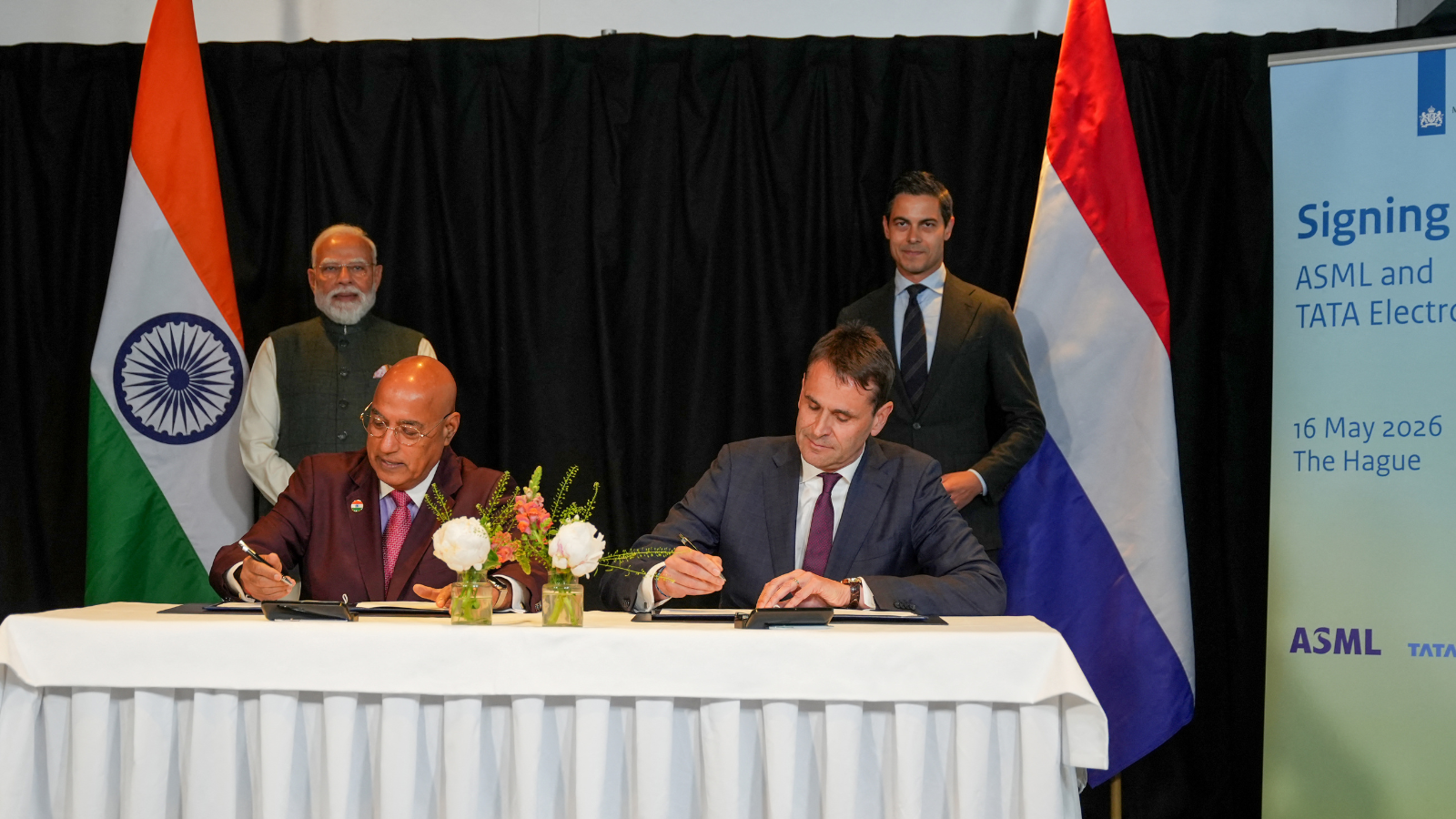
The ASML MoU with Tata Electronics is an indicator of how far the Indian semiconductor ecosystem has come. This ecosystem has been years in the making and represents real commercial logic.

Konark Bhandari

A partnership between India, a country of subcontinental size, and Africa, a continent of fifty-four countries, may seem asymmetric until one notes that both are home to nearly the same number of people—1.4 billion. This essay spells out the existing challenges to the partnership, its optimal potential, and the possible pathways to realize it over the next quarter-century.

Rajiv Bhatia

The India–EU Free Trade Agreement (FTA) is shaping up to be one of the most consequential trade negotiations, both economically and strategically. But, what’s in the agreement, what’s missing, and what will determine its success in the years ahead
Vrinda Sahai, Nicolas Köhler-Suzuki