

{
  "authors": [
    "Natalia Bubnova"
  ],
  "type": "legacyinthemedia",
  "centerAffiliationAll": "",
  "centers": [
    "Carnegie Endowment for International Peace",
    "Carnegie Russia Eurasia Center"
  ],
  "collections": [],
  "englishNewsletterAll": "",
  "nonEnglishNewsletterAll": "",
  "primaryCenter": "Carnegie Russia Eurasia Center",
  "programAffiliation": "",
  "programs": [],
  "projects": [],
  "regions": [],
  "topics": []
}
Source: Getty
Christmas Spirit Can Give Russia a Lift
As Russians move toward the long New Year and Christmas holidays, they hope that the coming year will offer positive change.
Source: The Moscow Times

We celebrate Christmas according to the Orthodox tradition on Jan. 7. This date is due either to the two-week difference between the Julian and Gregorian calendars or to the Orthodox belief that Jan. 7 is indeed the birthday of Jesus and was altered by Roman authorities in the fourth century to coincide with the existing official holiday.
"Isn't two millennia enough to prove our point? Shouldn't we move along with the rest of the world?" a student of mine from Russia pursuing his master's degree in the United States once asked me.
But for many years under the totalitarian state, when Christmas was celebrated, it was done quietly and only in families. For the first decades after the 1917 Revolution, even Christmas trees were forbidden. Then they were allowed to reappear but under the name of "New Year's fir trees" to be set up and decorated specifically for the New Year's celebration.
The New Year was thus designated the main official holiday. This celebration became the biggest event of the year, even more important than the official Soviet holidays. In one way, it conveyed the spirit and warmth of Christmas. In another, it reminded the older generation of what they were missing. It became the one date that all Russians agree upon in addition to Victory Day on May 9.
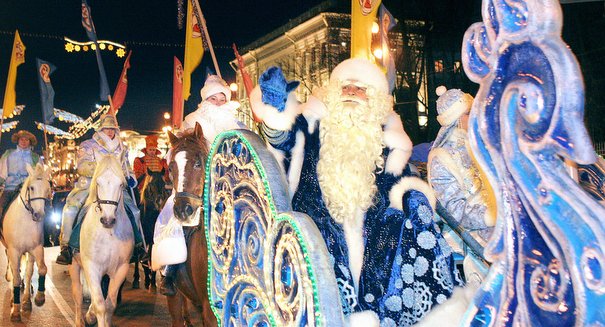
The Soviet state tried to take attention away from Christmas as much as possible. To distract young people from going to church services, movie theaters were open late on Christmas Eve, showing cherished Western films rarely available in the Soviet Union, one after another until long past midnight. In schools, theaters and recreation centers, performances, balls and masquerades were all centered around New Year's Eve. "Father Frost" — instead of Santa Claus, but looking just like him, except for the blue color instead of red — and the "Snow Maiden," a Russian fairy tale character, were supposed to come during the festivities, light the fir tree, bring presents and fulfill wishes.
Now, Christmas services are transmitted over national television with state leaders present. This may be an inappropriate overreaction since, according to the Constitution, the church is supposed to be separate from the state. This is an especially important point in a country with more than 100 different ethnic groups, many of which observe religions other than Christianity. But the good thing is that people do go to church. The churches around the country, including inside the Kremlin walls and on Red Square, have long been returned to use by the Russian Orthodox Church, and the beautiful ceremonies last for hours, until early morning of Christmas Day.
Russians are known for their endless partying and for their ability to embrace other people's cuisines, symbols and traditions — whether it is St. Patrick's Day, Halloween or Japanese sushi, now among the most popular foods in Moscow restaurants. We continue to celebrate the New Year as the year's main holiday and have happily "appropriated" the Western Christmas as well. As a result, we now have almost two weeks of celebration, starting from Dec. 25 and extending through the New Year and the Russian Orthodox Christmas. Sometimes, it is extended even further to the still-celebrated "Old New Year" on Jan. 14, another result of the calendar change after the 1917 Revolution.
With these long holidays ahead and the cold Russian winter, the protests that we have seen since the Dec. 4 State Duma elections will most likely subside gradually. Indeed, the winter is not the best time for a Russian spring. But nor do we want a revolution. It is not accidental that the mention of revolution by one of the speakers on Bolotnaya Ploshchad was met with a burst of boos.
The wish I have for the New Year is for great change, not great shock. I would like the authorities to drop "political technologies." Also, if they give protesters Bolotnaya Ploshchad to stage a rally, they should give them the full square, not just a narrow, hard-to-access strip of land along the Moscow canal as they did on Dec. 10. This looked like an underhanded attempt to undermine the protest because the crowd was split in several parts and separated by the canal, and most people couldn't hear the speeches.
The authorities should not lie and insult people as they do when they suggest that participants get paid for taking part in the protests. Similarly, journalists should declare that black and gray PR is an unethical professional practice, and they should pledge not to use it.
Besides politics, my personal wish list to Father Frost would also include a focus on culture: reinstitute literature as a mandatory subject in schools for children, do away with the Unified State Exam, disown trash television, resume financing for festival-quality movies and support schools that specialize in music, arts, math and sciences.
When the snow is falling, it is peaceful and seems that vsyo poluchitsa — everything will come out OK in the end. We might benefit from borrowing some of the niceties of the consumer society and the comfort and peace of Western Christmas — ornaments and lights, music in the streets, mulled wine and Christmas fairs. But we should also aim to retain the things that have always been important to us and that have always been good here: friendships, intellectual discussion, literature, theater, the eternal search for truth and meaning and the genuine feeling of hope during the holidays.
Natalia Bubnova is co-author of the recent book "20 Years Without the Berlin Wall: A Breakthrough to Freedom."
About the Author
Natalia Bubnova
Former Head of Content Production, Moscow Center
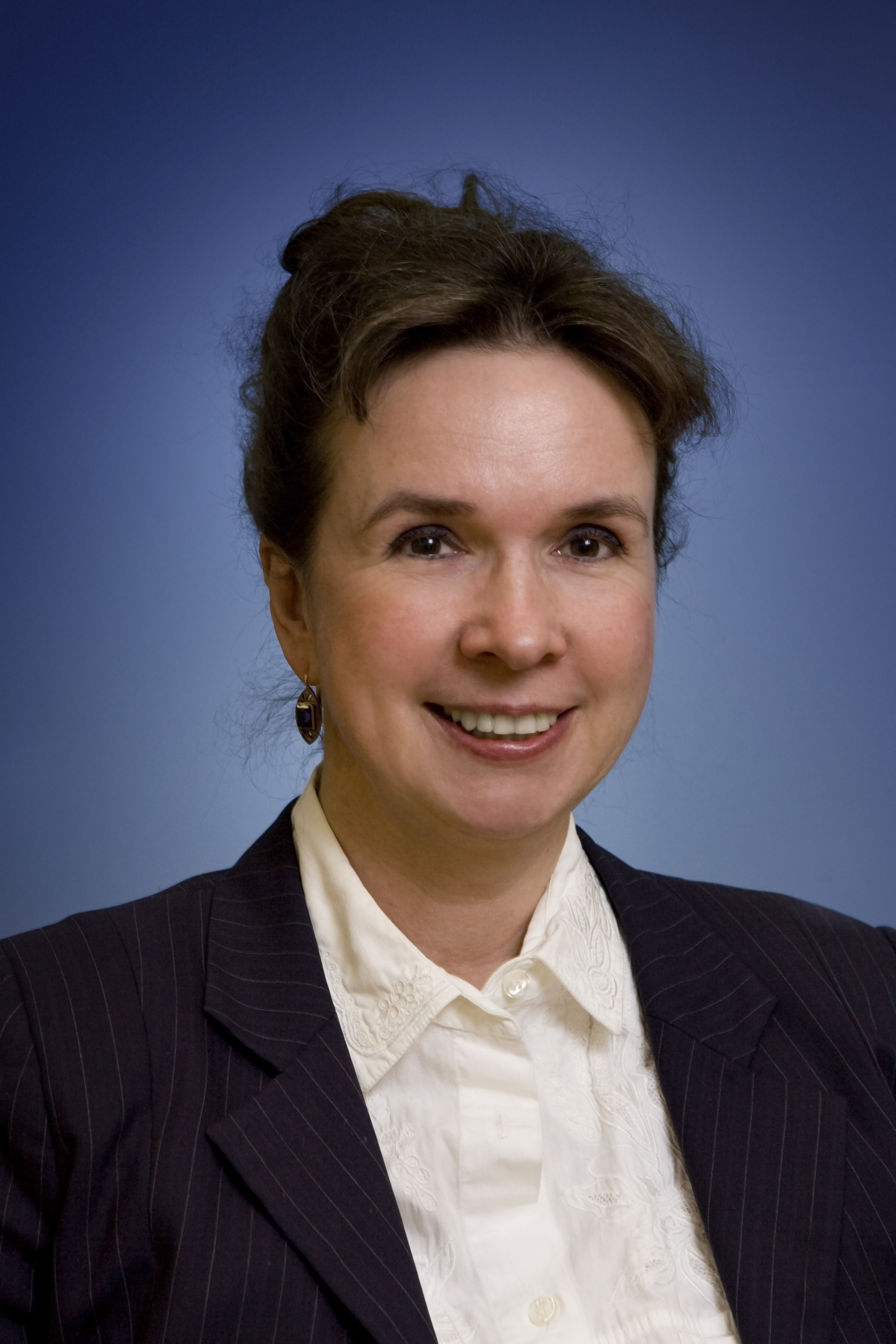
Natalia Bubnova was head of content production at the Carnegie Moscow Center. She previously served as deputy director for communications at the Carnegie Moscow Center.
Carnegie India does not take institutional positions on public policy issues; the views represented herein are those of the author(s) and do not necessarily reflect the views of Carnegie, its staff, or its trustees.